10 postpartum pelvic floor exercises to get back in shape



Article content
Wanting to get your figure back after becoming a mother mustn’t turn into an obsession. Don’t forget that for nine months your body has gone through profound physiological and hormonal changes that are completely natural. With time, a balanced diet and the right postpartum pelvic floor exercises, you’ll be able to get back in shape after giving birth.
By the way, another thing you’ll get back after the birth is your period, roughly 6 to 8 weeks after delivery. As I recommend to my patients, switch to a menstrual cup (if you don’t use one already). I use Beppy Cup, and here’s a guide to using a menstrual cup after giving birth.

Now, on to the postpartum pelvic floor exercises. As you can imagine, you can’t start a postpartum exercise routine right after giving birth. Postpartum recovery can vary depending on the type of birth you had and how physically active you were during pregnancy.
As you know, at least three days a week (sessions of about 50 minutes) of physical exercise during pregnancy are recommended. But a complete exercise routine for pregnant women, of course. Because, as we’ve seen in other posts, not every kind of physical activity is advisable during pregnancy.
So women who have exercised, for example with abdominal exercises during pregnancy, usually recover up to three times faster than women who have been inactive.
The most common postpartum exercises and the most suitable for a woman who has just given birth are: postpartum Pilates, postpartum hypopressive exercises (such as abdominals), postpartum yoga, functional training, Kegel exercises for women or swimming.
In this article I’m going to show you ten postpartum pelvic floor exercises to add to your postpartum exercise routine and get back in shape after giving birth.
When should you start a postpartum exercise routine?
If you had a vaginal birth without stitches…
How long you need to wait before starting physical activity depends on the type of birth. If you had a vaginal birth and didn’t need stitches (no episiotomy and no tear), you can start exercising straight away, after your postpartum assessment.
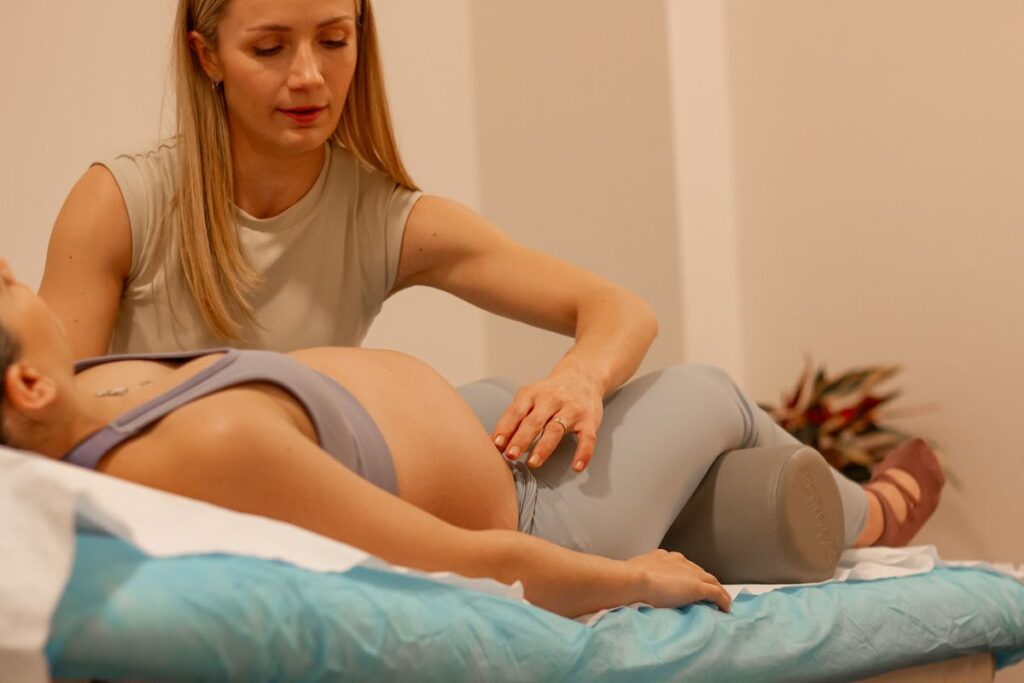
Before starting your postpartum exercise routine, the first thing is to check how your pelvic floor is. Even if you gave birth without stitches, the perineum and pelvic floor muscles have been greatly stretched.
It’s important that a physiotherapist specializing in gynecology checks that everything is fine and shows you which exercises you can do after giving birth.
If you had a vaginal birth with stitches…
If you had a vaginal birth with stitches (because of a perineal tear or an episiotomy), you need to wait at least 2 weeks before starting postpartum exercise.
First, it’s important to give the wound enough time to heal and for the stitches to come out. Then, without fail, your pelvic floor must be assessed: the depth of the scar, muscle strength, how stretched the vaginal walls are and whether the muscles contract correctly.
Sometimes, after deep vaginal cuts, deep sensation is lost and women are unable to activate their pelvic floor. That’s why, before starting postpartum pelvic floor exercises, you need to see a specialist physiotherapist.
If you had a cesarean…
Finally, if you had a cesarean, your body needs a bit more time to recover. After a cesarean you need to wait a month before you can start postpartum pelvic floor exercises. That’s the minimum time needed for the external and internal scars to close.
Bear in mind that any woman who wants to do postpartum hypopressive exercises must wait at least 6 weeks before practicing them.
10 postpartum pelvic floor exercises to help you lose weight
1. Postpartum pelvic floor exercises: go for a walk every day
 Walking briskly for 1 hour every day will help stimulate your bowels and relieve postpartum constipation. During a 60-minute walk you can also burn up to 300 calories. It will boost your metabolism and make the postpartum pelvic floor exercises you do afterward more effective.
2. Postpartum shoulder bridge
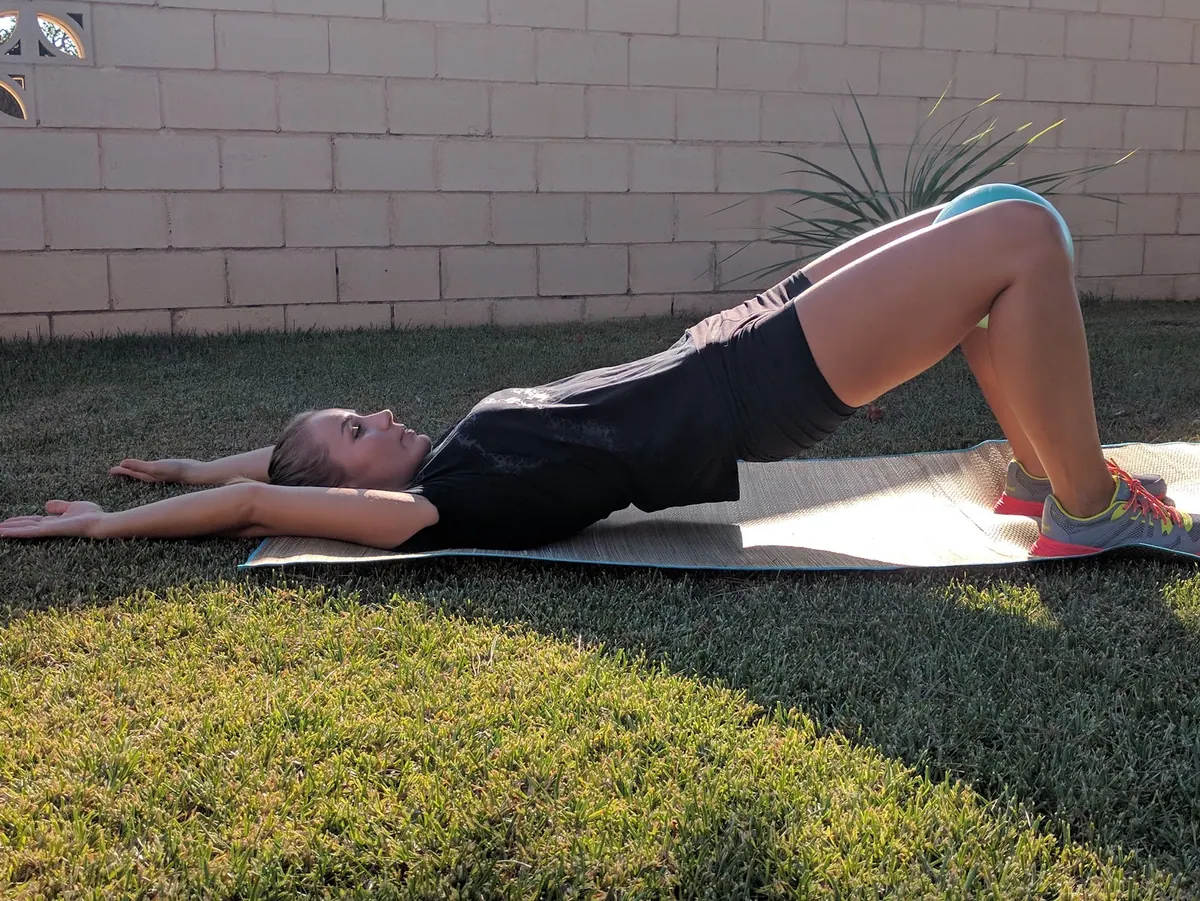
Lie on your back with your legs bent and your arms stretched back. Place a small ball (or a cushion) between your knees. Then breathe in and, as you breathe out, squeeze your glutes, squeeze the ball and lift your hips. Breathe in again (with your spine raised) and, as you breathe out, roll down to the floor one vertebra at a time.
Repeat 10 times, for a total of three sets.
3. Postpartum exercise routine: side plank
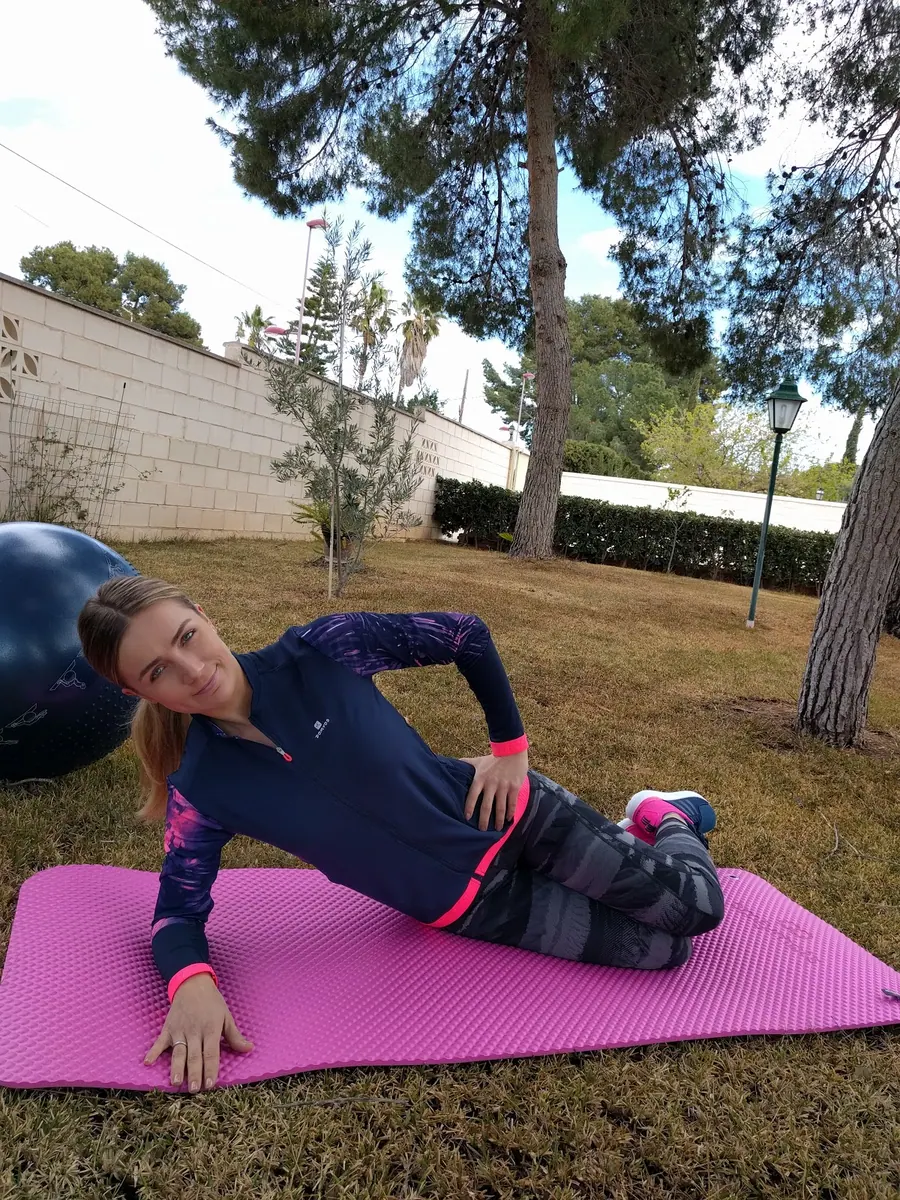
Lie on your side with your legs bent and lean on your forearm (your elbow should be under your shoulder). Take a deep breath and, as you breathe out, activate your abs (drawing them in) and lift your trunk (raising your hips off the floor by activating your abdominal wall). Breathe in as you lower back down.
Do 15 lifts on each side.
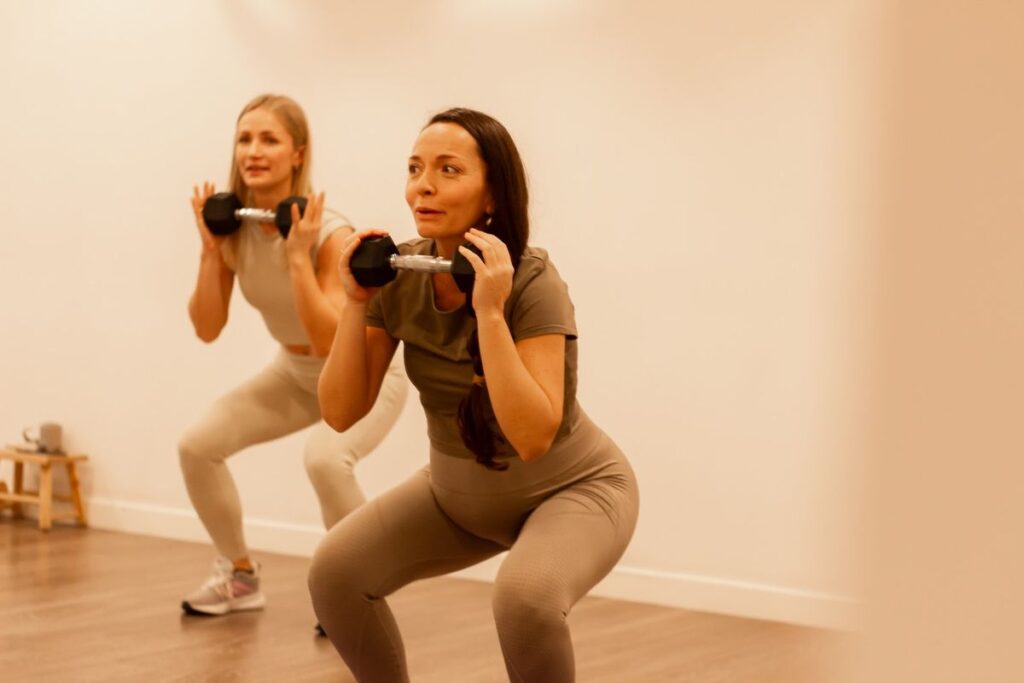
4. Postpartum exercise routine: half squat
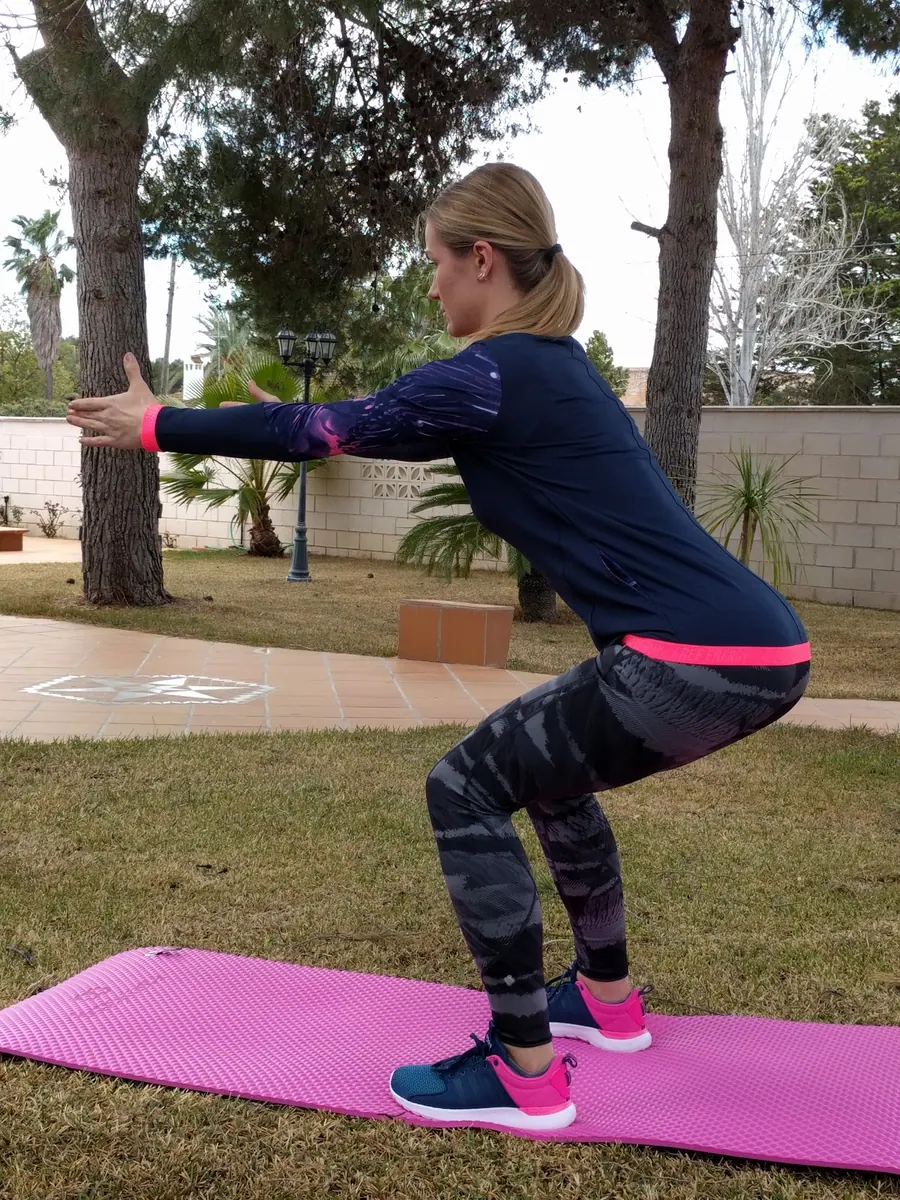
Stand up with your feet hip-width apart, take a deep breath and, as you breathe out, contract your abdominal wall (drawing your abs in) and bend your legs into a half-squat position.
As you lower your hips, stretch your arms out in front of you. Breathe in as you return to the starting position. Remember to lower your hips by pushing your buttocks back, so your knees don’t go past your toes. Repeat 30 times.
5. Front plank
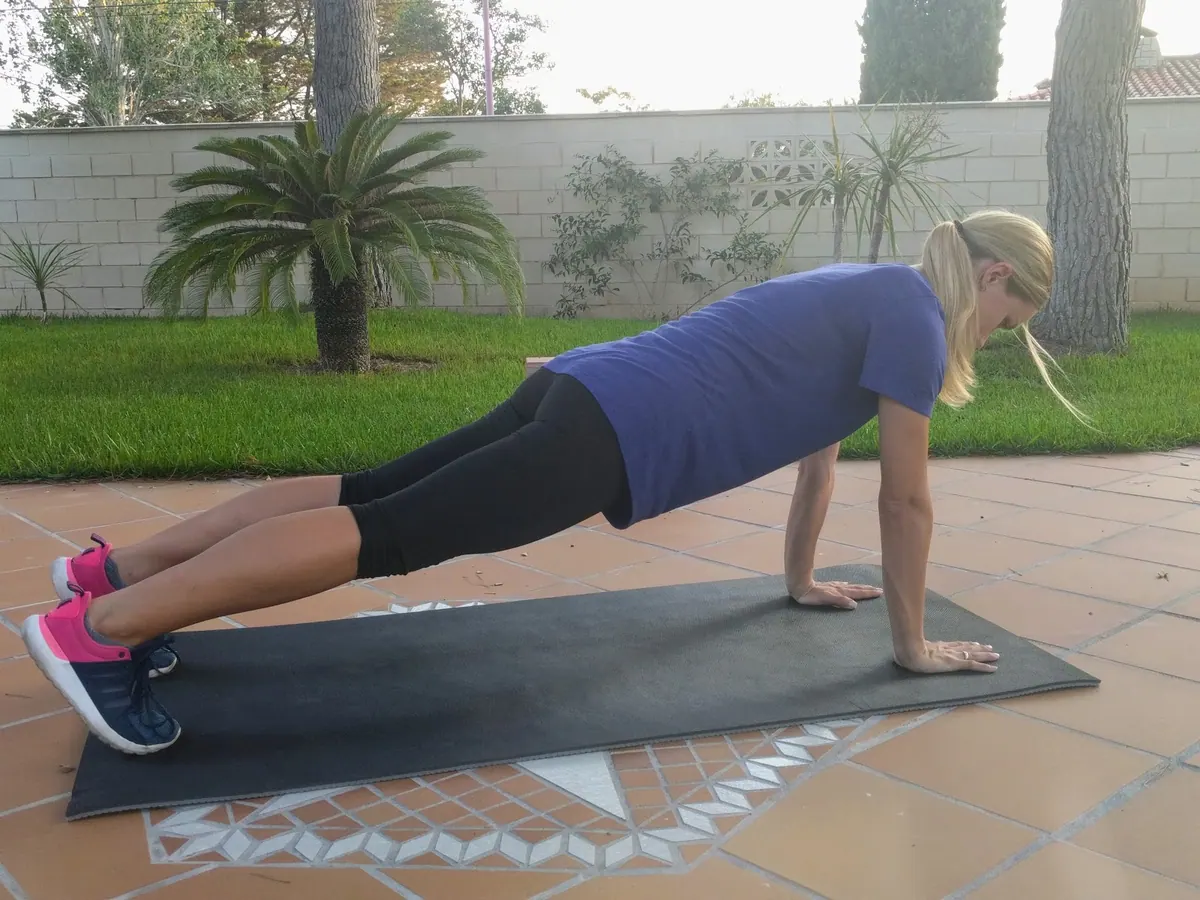
Get down on all fours, with your hands under your shoulders and your knees under your hips. Stretch your legs back and press the balls of your feet into the floor. Your body should form a diagonal line. Keep your abs drawn in the whole time. Breathe deeply and hold this position for 25 seconds. Do 3 sets, with 8 seconds’ rest between sets.
Women with postpartum abdominal diastasis should not do this exercise, as it could increase intra-abdominal pressure and stretching. Check with your physiotherapist before trying it!
6. Lunges with a resistance band
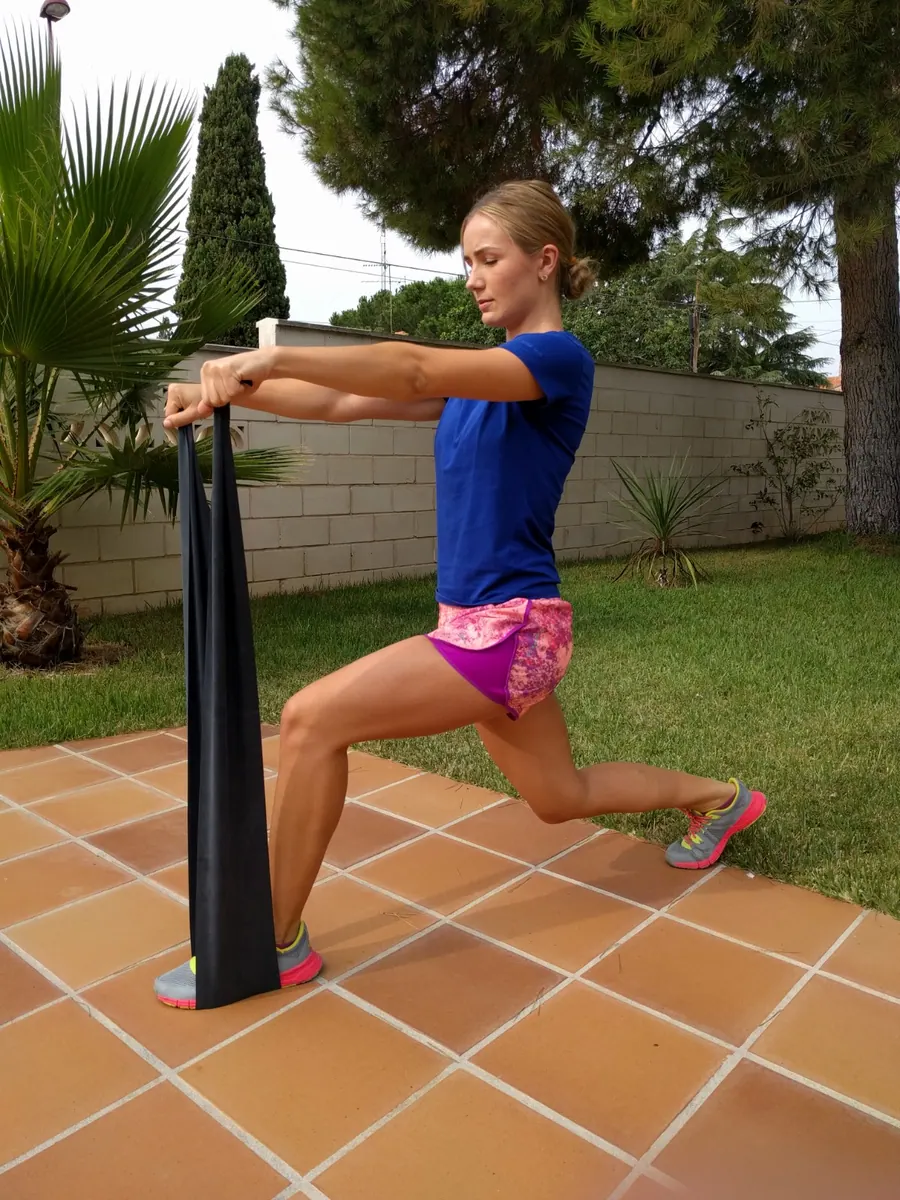
Standing, step your left leg forward and stand on the resistance band with that foot. Place your other leg behind you with the heel raised. Hold one end of the band in each hand. Take a deep breath and, as you breathe out, bend both legs and pull the band tight as you raise your arms in front of you. You should bend both knees to 90 degrees. Breathe in as you return to the starting position.
It’s important that your spine stays straight and your abs engaged the whole time.
Repeat 30 times on each leg, in sets of 10 repetitions per leg.
7. Postpartum pelvic floor exercise on an unstable surface
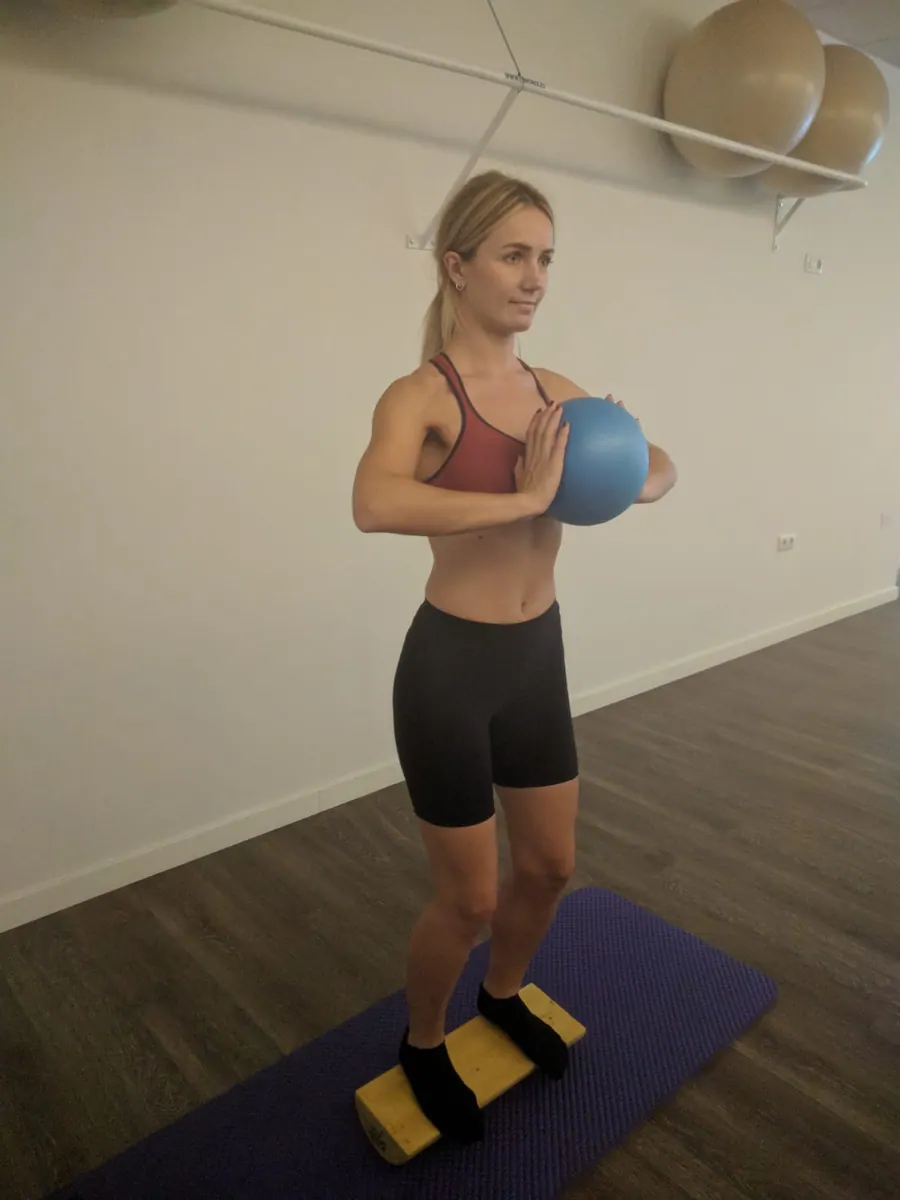
Stand on the proprioception board and hold a small soft ball with both hands at chest height. Bend your knees slightly and lengthen your spine. Take a deep breath and, as you breathe out, squeeze the ball to activate your arm and chest muscles, and contract your pelvic floor.
Keep your balance and you’ll feel your pelvic floor lift and your abdominal wall activate involuntarily. First do 15 contractions on the rounded side of the board and then 15 more repetitions on the flat side.
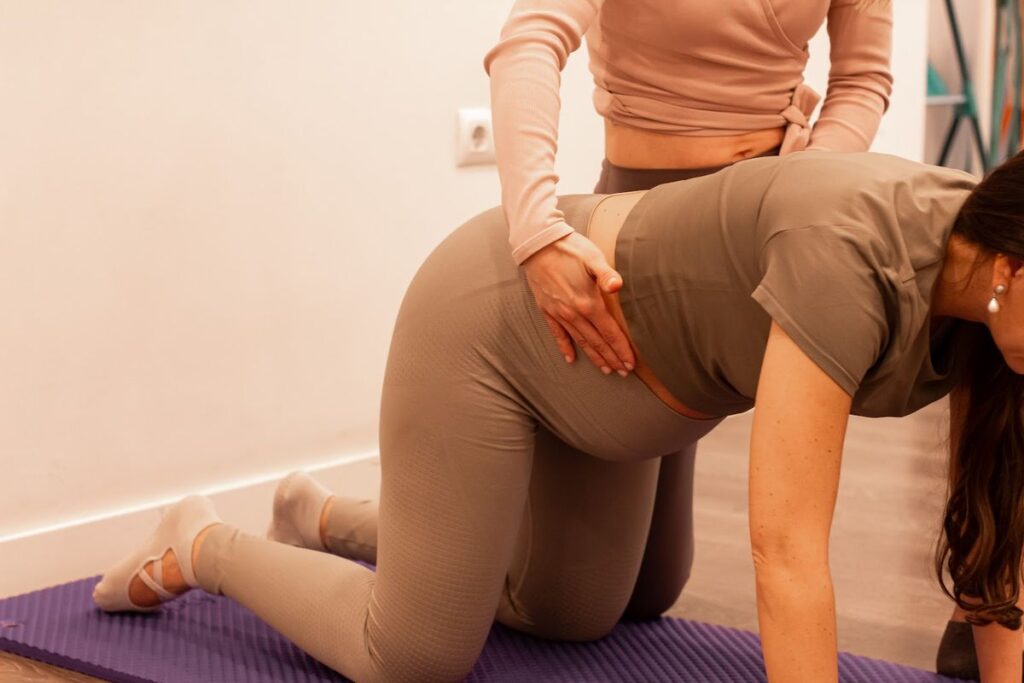
8. Postpartum hypopressive exercise on all fours
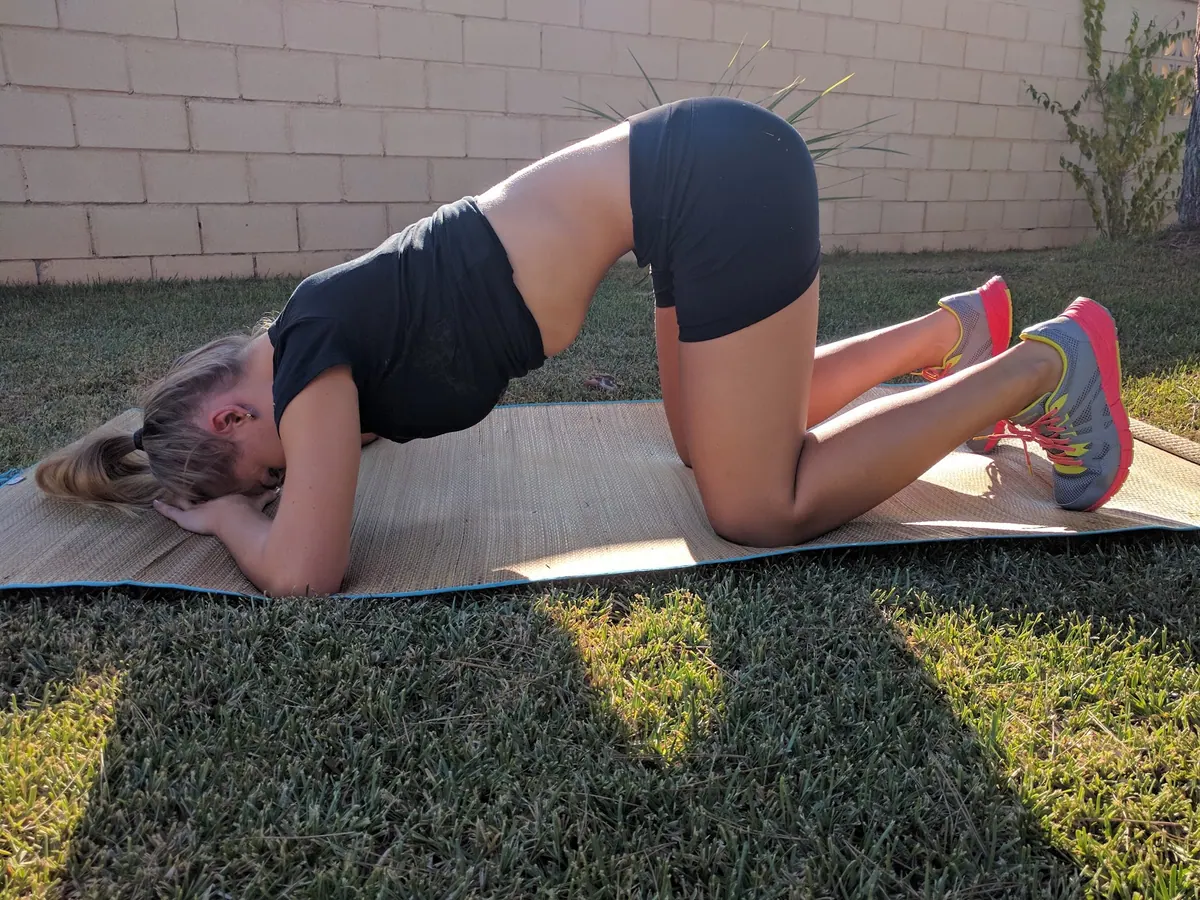
To do this postpartum hypopressive exercise, get down on all fours, rest your forearms on the floor, lower your rib cage and rest your head on your hands.
Keep your feet flexed (as in the picture) and take three deep breaths. On the last exhalation, empty your rib cage completely and, while holding your breath (without breathing), open your ribs. Hold your breath for 10 seconds, with your rib cage expanded. Repeat 10 times.
9. Front plank on a fitball
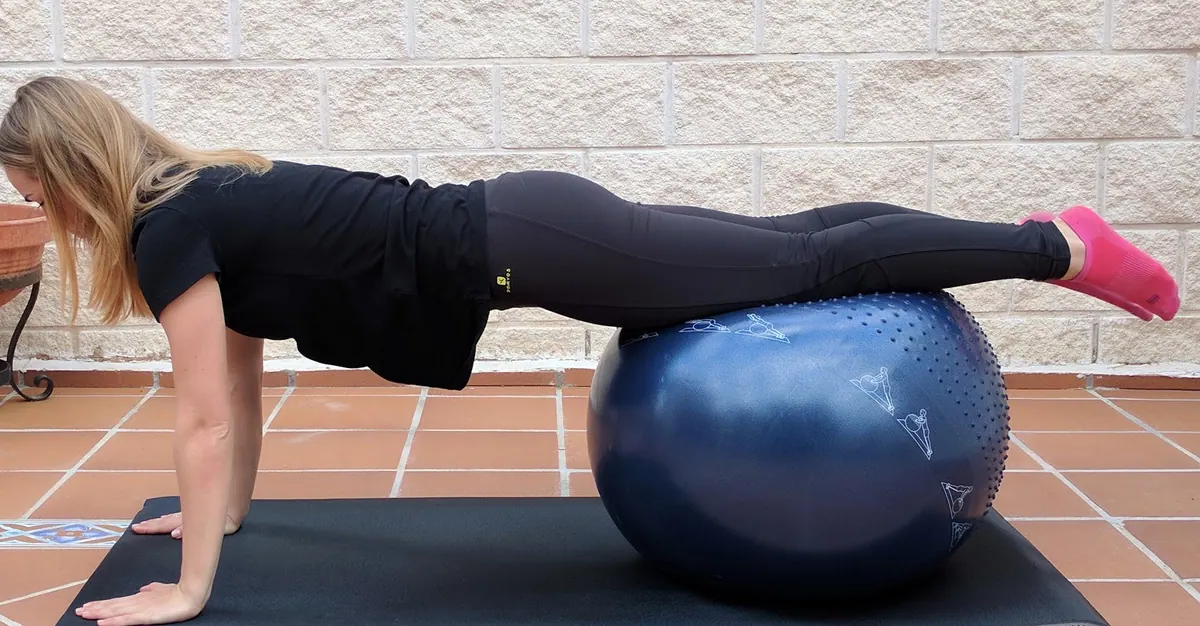
Place yourself over the Pilates ball, stretch your legs out and keep your palms under your shoulders. Your pelvis, abdomen and chest shouldn’t rest on the ball. Keep your body aligned, your legs straight and your arms extended. Draw your abdominal muscles in and activate your glutes.
Hold the position for 30 seconds and repeat three times.
10. Core exercise on all fours
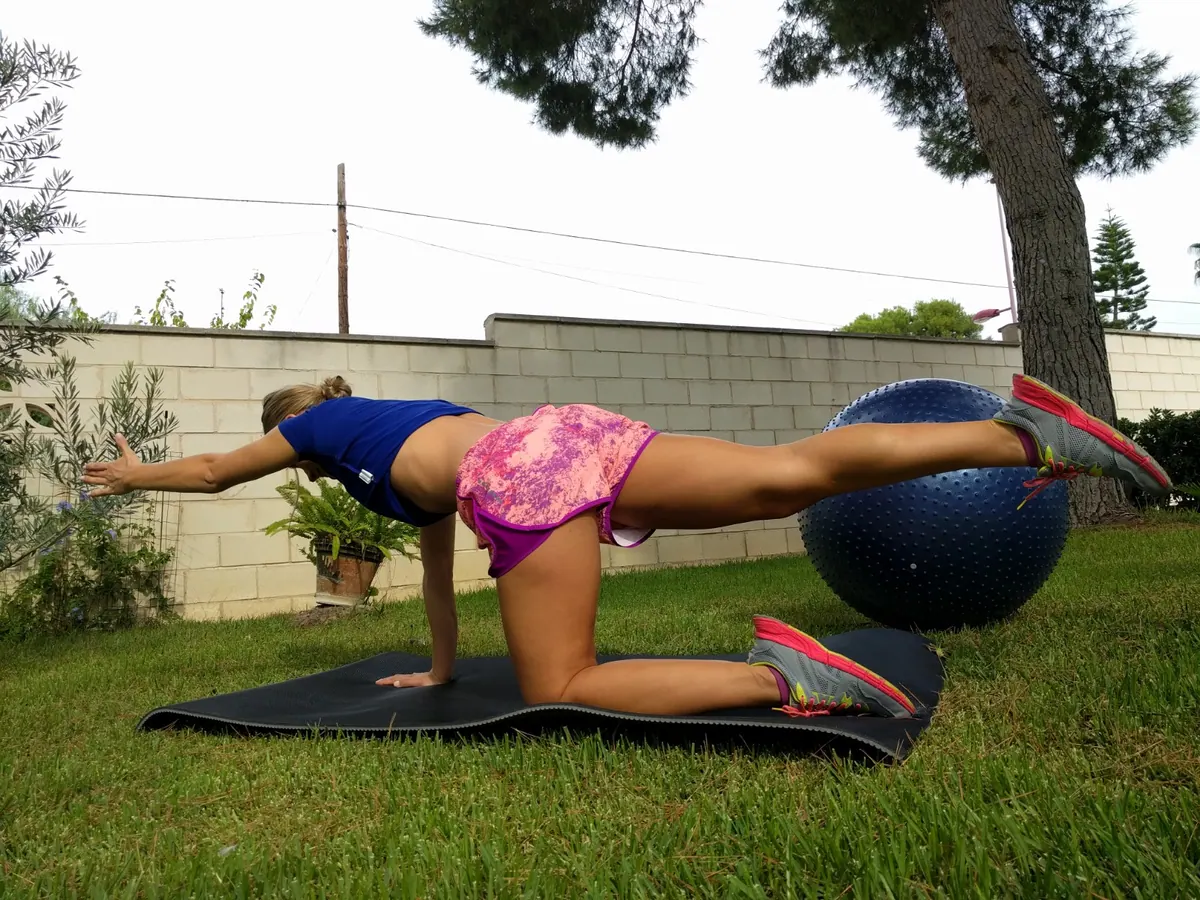
Get down on all fours. Take a deep breath and, as you breathe out, activate your transverse abdominis (drawing your abdominal muscles in) and stretch one leg back and the opposite arm forward.
Hold this position for 10 seconds and then switch sides. It’s important that your leg doesn’t go higher than your buttocks, so your lower back isn’t overloaded. Make sure your body doesn’t shift sideways, and keep your balance.
Postpartum exercises to avoid
Some exercises are harmful to a woman’s body postpartum. In fact, a woman’s physical activity during the first year after giving birth should be based on:
- Toning the pelvic floor
- Restoring tone to the abdominal muscles
- Strengthening the back
- Reducing stretching of the pelvic floor and abdomen
Certain activities upset this muscle recovery and can cause dysfunctions such as uterine prolapse, urinary incontinence or abdominal diastasis. The exercises to avoid are:
- Heavy lifting (barbell squats, Body Pump, medicine ball exercises)
- Running
- Jumping (aerobics, tennis, horseback riding, jump rope)
- Crunches that lift the trunk
If you have any questions after reading this guide to postpartum pelvic floor exercises, I encourage you to come and see me! We’ll have a chat and I’ll advise you on the best postpartum exercise routine for you. Book your appointment. I look forward to seeing you!
Below is a demonstration video with toning exercises designed to help you get back in shape after pregnancy. These easy-to-follow, safe exercises will help you stay active and comfortable during this very special time.


Recover after giving birth in Valencia
We see how you’re doing and support you at your own pace with postpartum physiotherapy, whether you had a vaginal birth or a cesarean. Can’t come to Valencia? We also see patients in an online consultation.