




Postpartum physiotherapy in Valencia
After the birth your body needs time, not pressure. We help you regain strength, control and confidence at your own pace, whether you had a vaginal birth or a cesarean.



Article content
Postpartum exercise and treatment
If you feel different inside, if your tummy feels weak or you’re afraid to start moving again, you’re not overreacting. It’s very common, and it’s not something you have to put up with. Let’s look together at how you are and what you need right now.
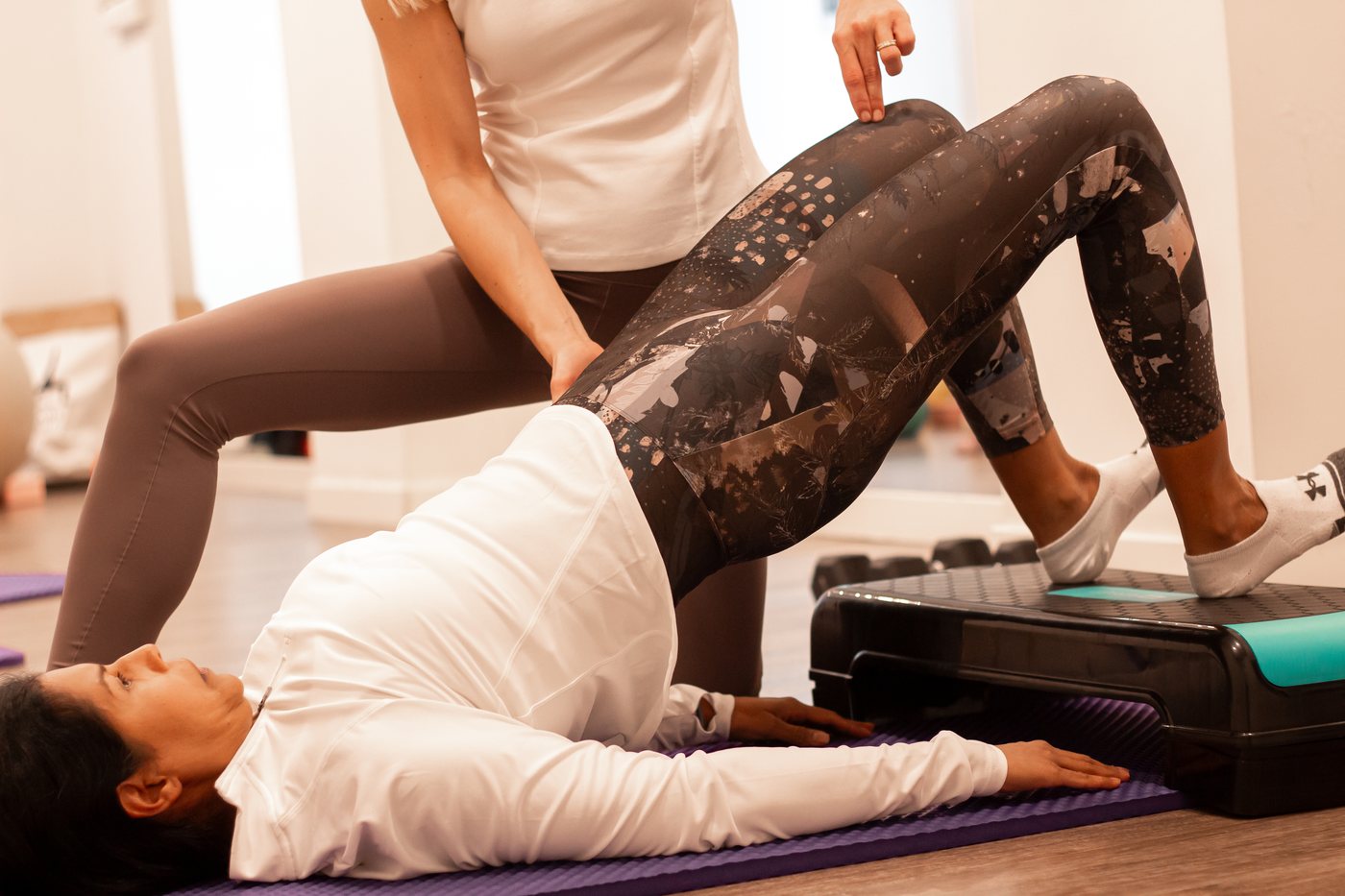
In the postpartum period, looking after your pelvic floor is essential and should become second nature in every mother’s life. That’s why we design postpartum physiotherapy treatment and postpartum exercise for after a cesarean or a vaginal birth. Our classes also include groups you can bring your baby to.
The type of birth, vaginal or cesarean, and any interventions (episiotomy, use of instruments, induction or epidural) affect how your body is after giving birth. That’s why we don’t use the same routine for everyone and every plan starts from your assessment.
Kegel exercises
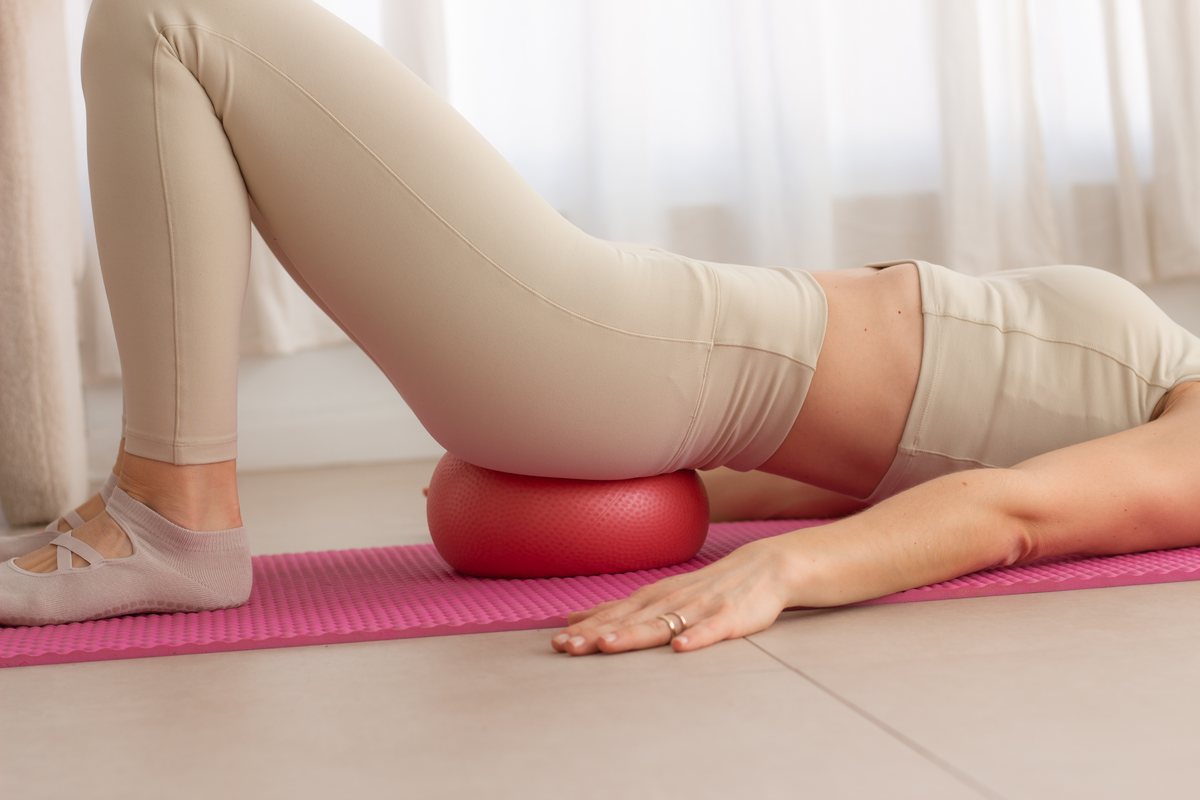
We teach you the correct technique for pelvic floor contractions with vaginal probes and vaginal biofeedback, first in one-to-one sessions and then in group classes. Kegel exercises tone the pelvic floor muscles after birth and are part of the treatment for urinary or fecal incontinence and leakage of urine, wind or stools.
Postpartum hypopressives
A method based on specific breathing techniques and postural changes, designed to work on the tone of the pelvic floor and abdominal muscles and on postural re-education after pregnancy. With hypopressive abdominal exercises we work on abdominal diastasis and pressure inside the abdomen, and they can help with constipation. We also offer hypopressive abdominal exercise classes in Valencia.
Postpartum Pilates
Our own method based on classical Pilates exercises, adapted to the period after a vaginal birth or cesarean. We offer one-to-one and group classes for women who want to get back in shape after pregnancy and strengthen their pelvic floor and abdominal muscles. The exercises in the classes also tone the back muscles, which are so important in the first months postpartum.

“In the postpartum period, looking after your pelvic floor should become second nature in every mother's life”

How we work postpartum
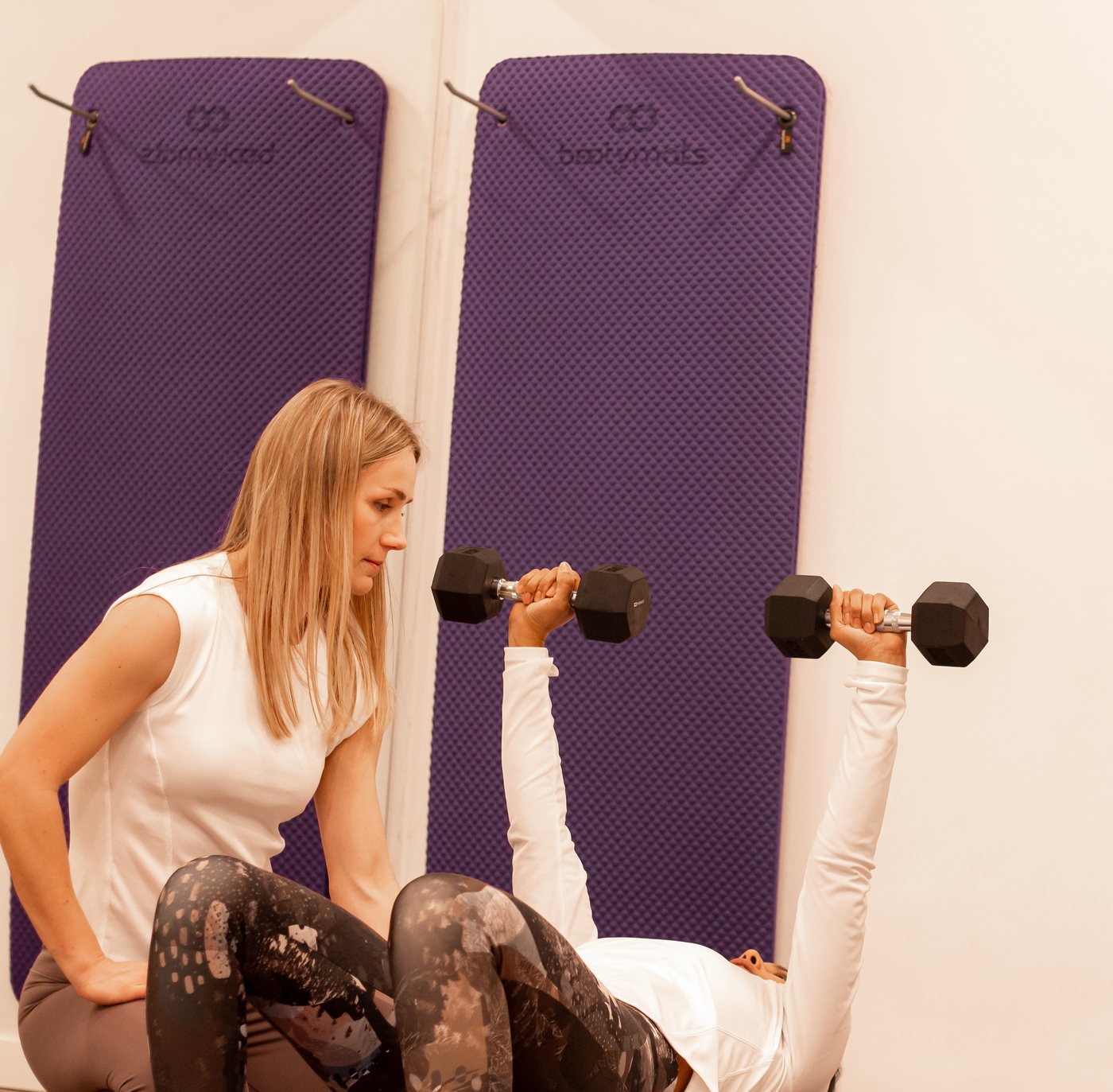
It’s the first step. We assess the tone, quality of contraction and endurance of your pelvic floor, any scar, your abdominal muscles and whether there is diastasis. With that information we design your plan.
The vaginal probe picks up the activity of the perineal muscles and you see on screen how you contract. This way you learn to locate your pelvic floor and activate it correctly before moving on to group classes.
For first- and second-degree prolapse, urinary or fecal incontinence, postpartum constipation, pelvic pain, dyspareunia or vaginal pain. We combine hypopressive exercises with manual therapy, myofascial techniques, electrical stimulation, biofeedback and perineal stretching with dilators.
We use manual and instrumental techniques to make the scar more flexible, work on tissue adhesions and improve local circulation and oxygenation of the affected muscle. Both perineal and abdominal scars are best assessed by a specialist.
We work on the transverse abdominis with specific exercises and perineal control, proprioception board exercises, diathermy and kinesiology taping during the session. You also take home an exercise plan.
Article content
The first weeks after the birth
In the first days after a vaginal birth or cesarean, rest comes first. Your body needs time, your uterus gradually returns to its size and, above all, it’s time to enjoy your baby’s arrival. Prioritize feeding, whether breast or bottle, and sleep as much as you can, even if only in snatches.
At this stage short walks, breathing exercises, gentle pelvic floor contractions coordinated with your breathing and leg movements in bed to keep your circulation going are usually recommended. If your episiotomy, tear or cesarean scar hurts, don’t start training. The first thing is to ease that pain.
When to have a pelvic floor assessment
A few weeks after the birth, and after your check-up with your gynecologist or midwife, is a good time for your first physiotherapy assessment. We recommend it in every case, whether or not you suspect something is wrong, because it determines whether it’s enough to get back in shape gradually or whether you need specific treatment.
No rush and no comparisons
Postpartum isn’t a competition. Images of mothers running again a few weeks after giving birth create a lot of pressure, but training hard while breastfeeding and sleeping little is hard to combine. In the first months it’s best to avoid traditional sit-ups, exercises with both legs raised, running, weighted squats and classes with jumping until your physiotherapist has assessed you. Listen to your body and respect what it’s asking for.


What do we work on in postpartum physiotherapy?
If you’re looking for postpartum exercises or classes in Valencia, at our clinic we offer hypopressive and pelvic floor exercises to strengthen the vaginal muscles and work on abdominal tone without overloading the area.
Our method combines instrumental treatments with hypopressive exercises to work on the function of the deep muscles of the pelvis and abdomen, the areas that change most with pregnancy and birth.
After a cesarean or vaginal birth, urinary or fecal incontinence, wind leakage, abdominal diastasis or pelvic pain can appear. For urinary or fecal incontinence after birth, the Spanish Ministry of Health’s Clinical Practice Guideline on Pregnancy and Postnatal Care (2014) suggests a pelvic floor muscle training program. Get in touch and we’ll design a postpartum treatment for you.
Strengthening the pelvic floor with Kegel exercises guided by a probe and biofeedback.
Treating episiotomy, tear or cesarean scars.
Working on diastasis and the deep abdominal muscles without overloading the pelvic floor.
Toning your back and returning to exercise step by step, in groups you can bring your baby to.



Your journey at the clinic starts like this
STEP 1.
Initial assessment
All patients start with an initial one-to-one session.
- We analyze your case in depth.
- We carry out the necessary examination.
- We explain what is happening and why.
- We design a personalized treatment plan.
- All with no further commitment.
STEP 2.
STEP 3.
Follow-up and progress
Your process doesn’t end after one session. It evolves with you.
- We regularly reassess your progress.
- We adjust the plan when necessary.
- You can combine one-to-one and group sessions depending on your progress.


Frequently asked questions
If you’re asking yourself these questions, you’re not the only one. Here we answer them clearly.
At the clinic we usually do the first assessment a few weeks after a vaginal birth or cesarean, once you’ve had your check-up with your gynecologist or midwife. Before that you can do breathing, short walks and gentle pelvic floor contractions if they don’t cause pain. If you have questions about your case, ask us.
It’s worth having it assessed. Even though the baby didn’t pass through the vaginal canal, pregnancy changes the pelvic floor and a cesarean leaves a scar through several layers of the abdomen. At the assessment we check the scar, the abdominal muscles and the pelvic floor.
It depends on each patient: your starting point, whether there is a deeper injury or condition, and how committed you are to the exercises at home. After the first session we decide on the right treatment. If you need individual follow-up, most people notice an improvement with a first pack of 5 sessions. From there, if you follow the guidelines at home, you may only need to come back for occasional check-ups. If there is a deeper injury, you may need to go beyond that first pack.
No. Pelvic floor physiotherapy complements your gynecology and midwife follow-up; it doesn’t replace it. If you notice heavy bleeding, fever, pain that’s getting worse or any symptom that worries you, see your doctor.
Yes. There is a video call consultation, adapted according to your birth report, in which we review your postpartum recovery and give you guidelines for scar care and an exercise plan adapted to you. At the end you receive a report and exercise sheets.
Of course. Many patients put it off because they’re immersed in parenting, don’t notice anything or think that slight leakage or a feeling of heaviness is normal. Physiotherapy improves your quality of life even if time has passed, so we recommend you come.