Which abdominal exercises you can do if you have abdominal diastasis



Article content
Abdominal diastasis is a problem with the rectus abdominis muscles that makes them separate. It happens during pregnancy and can remain postpartum. It’s one of the most common injuries in women who have become mothers, but because it comes in different degrees and women don’t always get medical rehabilitation, some mothers try to get back in shape with activities that actually make it worse. So let’s look at which exercises help you recover from abdominal diastasis and which don’t.
The abdominal muscles are a muscle group that wraps around the organs, stabilizes the spine and lets the trunk move. The deepest layers are made up of the transverse abdominis and internal obliques, and the superficial layers of the external obliques and rectus abdominis. The rectus abdominis is made up of two bands, left and right, running down the center of the abdomen. The rectus muscles are joined by an elastic, fibrous membrane called the aponeurosis (linea alba). It’s mainly made of collagen, which stretches a great deal during pregnancy, allowing the rectus muscles to separate and make room for the baby to grow; but this natural separation can turn into a diastasis that causes problems.
What types of abdominal diastasis are there?
There’s a classification that lets us distinguish a simple muscle separation that can be treated with rehabilitation from a more serious separation that could lead to a hernia.
- Functional diastasis: a separation of the rectus muscles because the fibrous membrane joining them is overstretched. The membrane isn’t torn, but the tissue thins, and if it isn’t treated it could become an area at risk of tearing. Functional diastasis appears in 90% of pregnant women and in most cases corrects itself after birth with the right exercises.
- Anatomical diastasis: a much larger separation than the previous one, with a tear in the aponeurosis and even loss of muscle mass in the rectus muscles. The torn connective membrane leads to hernias of the organs and intestines, visible during effort or, in more severe cases, at rest.
How is diastasis diagnosed postpartum?
The key is not to rely on self-examination, much less after reading information from non-professional videos or articles. Most of these sources are unknown and don’t give us any specific diagnosis.
Two weeks after a vaginal birth, we can see a physiotherapist specializing in gynecology for a full assessment of the pelvic floor, abdominal muscles, spine and pelvis. If we had a cesarean, this assessment can be done after a month.
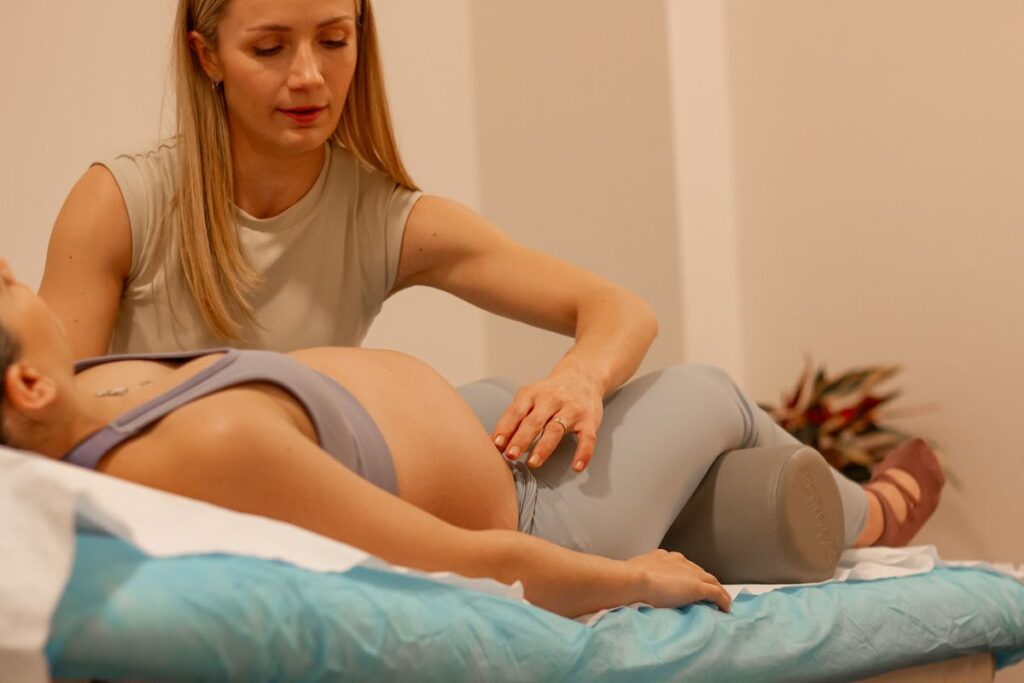
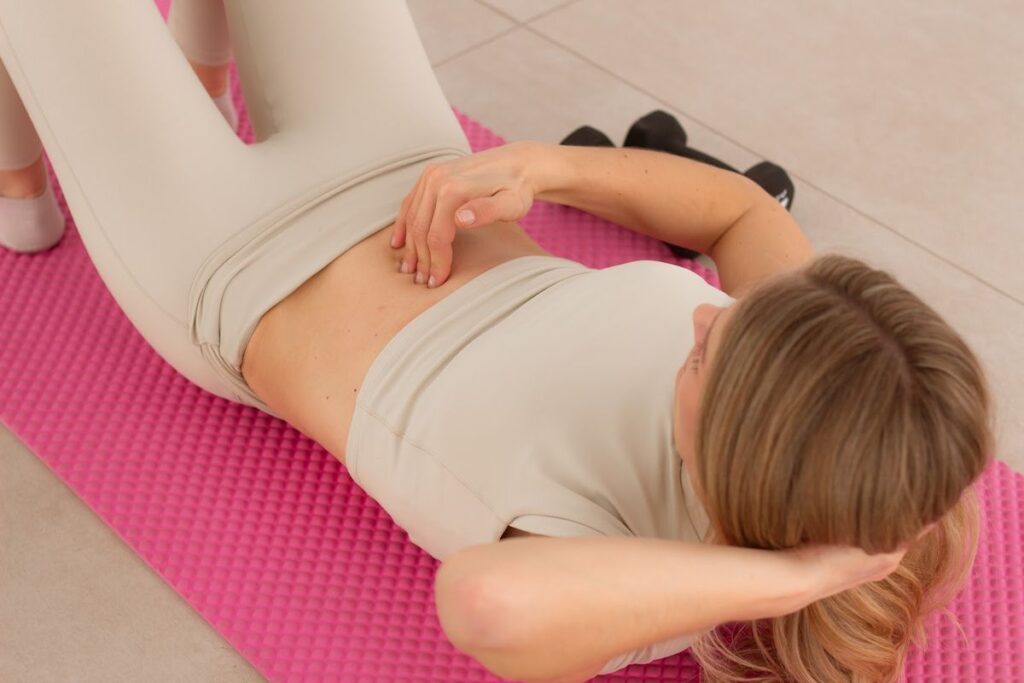
The physiotherapist will feel the abdominal area and ask us to do some simple exercises to determine how far apart the rectus muscles are. She’ll tell us whether the diastasis is functional or anatomical and how wide the gap between the muscle bands is. If we have an anatomical diastasis, an abdominal ultrasound will also be done to rule out hernias and intestinal protrusions.
What shouldn’t we do if we have diastasis?
Both if we have a separation of the rectus muscles and to prevent one, we should:
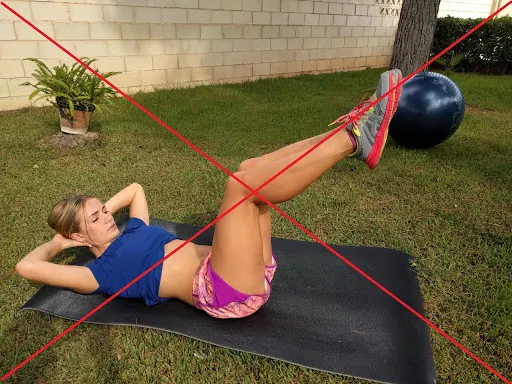
- Avoid abdominal exercises that increase abdominal pressure. These are all the exercises usually done in gyms that make the rectus muscles contract. Examples include traditional ‘crunch’ sit-ups, front planks, Pilates ab exercises, exercises for the obliques and crunches with both legs raised.
- Avoid high-impact exercise. Activities such as running, tennis, step, aerobics, sit-ups, CrossFit, horseback riding… are high-risk because they increase abdominal pressure and widen the gap between the rectus muscles.
- Avoid sudden weight gain.
- Avoid lifting with a rounded spine. We should lean the trunk by bending at the hips and keeping the spine straight.
- Avoid poor posture. Good alignment of the spine and pelvis keeps the deep abdominal muscles working and helps maintain good muscle tone.
Which exercises can I do if I have abdominal diastasis?
Rehabilitation of postpartum abdominal diastasis involves exercises focused on toning the transverse abdominis, since good tone in this muscle increases the chances of correcting the separation of the rectus muscles. Exercises for the obliques are left out, as they could increase the pull on the side fasciae of the abdominal wall and widen the gap between the rectus muscles.
The most recommended exercises are hypopressive abs. It’s an excellent restorative workout for the abdominal and pelvic muscles, recommended by many professionals specializing in postpartum recovery.
Hypopressive postures are based on lengthening the spine, breathing techniques and contracting the breathing muscles. All of this retrains and tones the abdominopelvic wall and reduces the stretching caused by pregnancy.
It’s important to see a specialist in gynecological physiotherapy to learn hypopressive techniques and the right positions for your case.
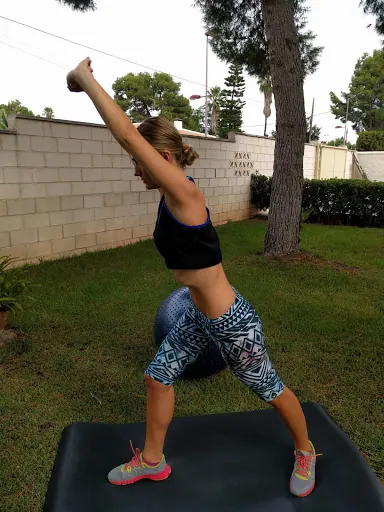
Here’s an example of a hypopressive exercise I usually teach patients with rectus diastasis postpartum.
-
Hypopressive exercise
Standing, place one leg in front and the other behind. Bend your front leg slightly so you don’t load your lower back. Lean your trunk forward, keeping your spine straight. Stretch your arms up and interlace your fingers. Your back leg, spine and arms should form a diagonal line.
Take 2–3 deep (rib cage) breaths and, on the last out-breath, let all the air out (emptying your lungs completely); then, without breathing in (holding your breath), open your rib cage. Hold your breath for 10 seconds. Repeat the cycle 5 to 8 times for each leg.
It’s important to check that your pelvis is well positioned, with your hip bones level, and to keep your chin tucked toward your throat to get a greater stretch in your neck.
-
Core exercises
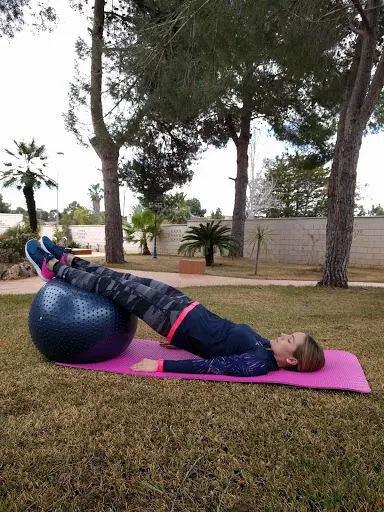
This is a group of exercises that activate the stabilizing muscles of the trunk: the transverse abdominis, the pelvic floor and the back muscles. With rectus diastasis, it’s important to do these exercises with your spine lengthened, without bending your trunk forward. One example is the shoulder bridge, which activates the abs and corrects their tone and separation. Here’s a variation of this exercise with a fitball.
Lying on your back, rest your legs on the ball and stretch your arms alongside your trunk. Take a deep breath and, as you breathe out, voluntarily activate your abdominal wall and slowly lift your spine (one vertebra at a time). Breathe in with your trunk raised and, as you breathe out, activate your abdominal wall again and lower down the same way (one vertebra at a time). Repeat 10–15 times.
-
Exercises on all fours with resistance
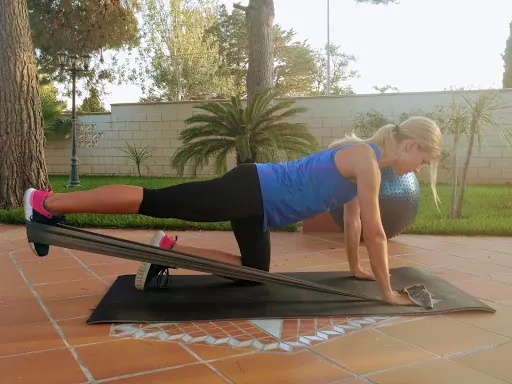
Exercises in inverted positions are very effective in rehabilitating abdominal diastasis, as the abdominal wall activates more strongly in this position. Adding resistance boosts the muscle work even further. We can do this with equipment such as resistance bands, dumbbells, ankle weights, etc.
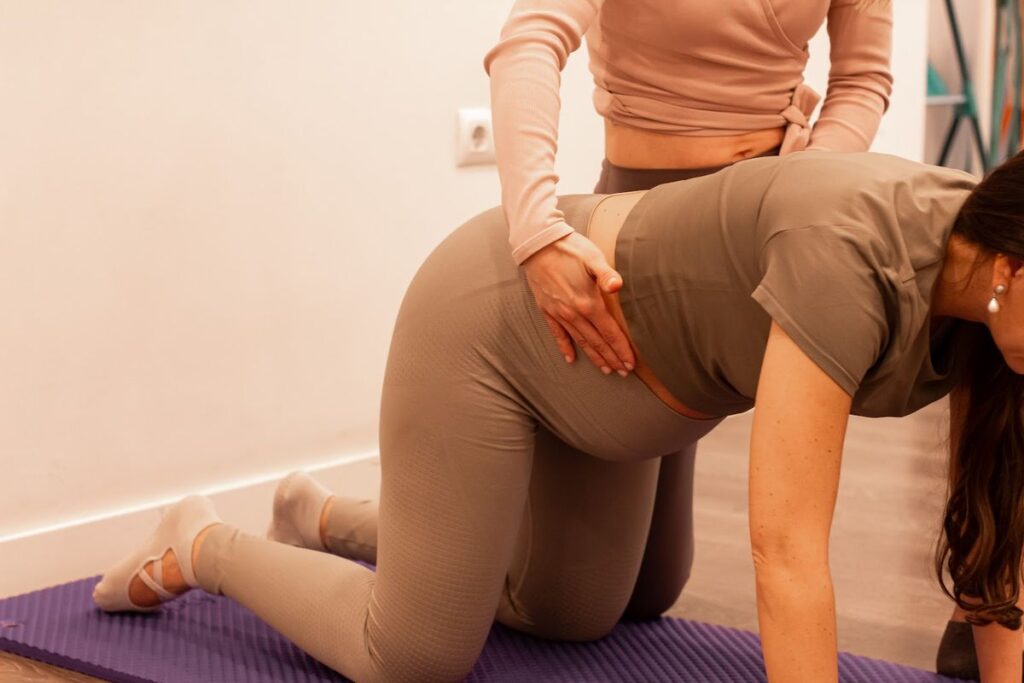
On all fours, loop the band around one foot and hold the ends with the hand on the same side. Activate your abdominal muscles, drawing your belly button in. Take a deep breath and, as you breathe out, activate your abdomen more strongly and stretch your leg back, pulling the band tight. Do 15 repetitions with each leg.
Important: keep your spine and pelvis correctly aligned. Don’t let your lower back arch.
These exercises can be done postpartum as long as we don’t have any significant pelvic floor dysfunction. If we have urinary and/or fecal incontinence, genital prolapse or spinal problems as a result of the birth, an initial assessment is recommended before starting the exercises at home.
Some exercises may vary depending on the type of pelvic floor dysfunction. A large percentage of women with a pelvic floor dysfunction also have abdominal diastasis. So treatment and exercise should focus on abdominal and pelvic recovery at the same time.
To learn more exercises to treat abdominal diastasis, or which manual or instrument-based treatments can speed up rehabilitation, you can find more information on our website.
Get your diastasis assessed in Valencia
We check your abdomen and pelvic floor and adapt your exercise with physiotherapy for abdominal diastasis. Can’t come to Valencia? We also see patients in an online consultation.