




Physiotherapy for pain during sex in Valencia
Sex shouldn’t hurt. We look for the source of your pain and work on the muscles and scars, calmly and without judgement.




Article content
What dyspareunia is
Dyspareunia is pain that appears before, during or after sex. It can also be felt during a gynecological check-up or when inserting a tampon.
It’s still rarely talked about, and many women hide it without knowing there are techniques to treat it. If it happens to you, you don’t have to put up with it.
Degrees of pain
- First degree. There is pain, but it doesn’t prevent penetration.
- Second degree. The pain sometimes prevents penetration.
- Third degree. The pain makes penetration impossible.
Why it happens
The causes can be very different. After an episiotomy or a tear, the scar can become hard and stiff and tighten the surrounding muscles. Lack of lubrication, hormonal changes, genital surgery, endometriosis, infections, too many toning exercises or vaginismus can also play a part.
When there is an emotional side, such as fear, nerves or a traumatic experience, it’s a good idea to involve a psychologist or sex therapist too.

“Pain during sex is not something you should normalize”

How we treat dyspareunia
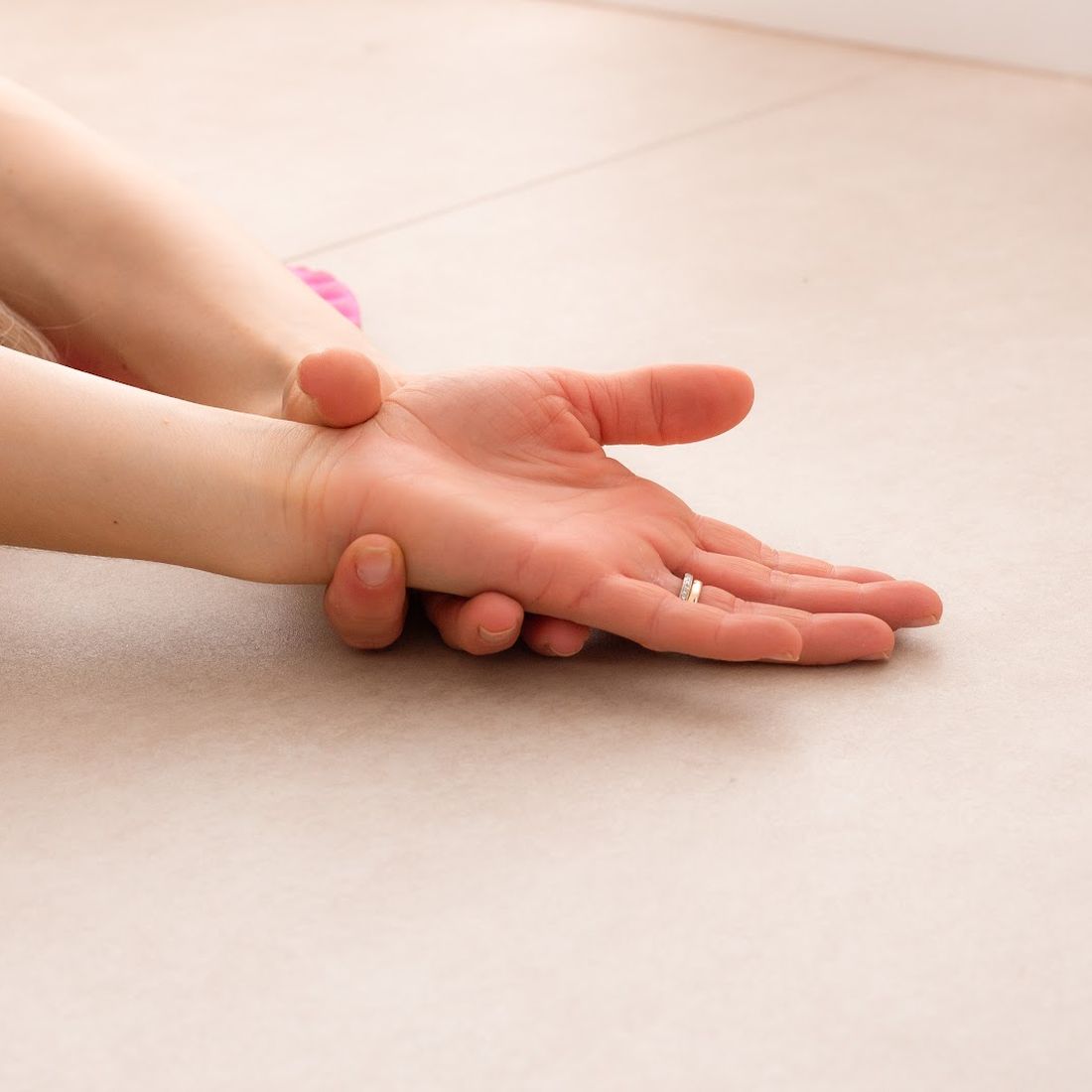
Many women know how to contract the pelvic floor but not how to release it. You learn to relax it consciously.
Internal vaginal techniques to reduce tension in the muscles and fascia. We explain every step beforehand and stop whenever you need.
It improves the flexibility of the area. We teach you how to do it so you can continue at home.
If you have an episiotomy or tear scar, we stretch and mobilize it to make it more flexible.
Exercises that work the abdominal wall and pelvic floor without increasing pressure on the perineum.
Article content
The assessment, the starting point
To find out where the pain comes from, we examine the pelvic muscles, their tone, your ability to contract and relax them and the condition of any scars. We also look for muscle knots, adhesions or tight bands. With that information we prepare your treatment plan.
If the cause is medical, such as an infection, we refer you to a gynecologist.


What do we work on in physiotherapy for dyspareunia?
When the pain has a muscular origin or is related to a scar, physiotherapy helps restore mobility and relaxation to the area. Everything is adapted to what we find in the assessment and how you feel.
Conscious relaxation of the pelvic floor.
Mobility and elasticity of scars.
Reducing muscle knots and tension points.
Guidelines and exercises to continue at home.



Your journey at the clinic starts like this
STEP 1.
Initial assessment
All patients start with an initial one-to-one session.
- We analyze your case in depth.
- We carry out the necessary examination.
- We explain what is happening and why.
- We design a personalized treatment plan.
- All with no further commitment.
STEP 2.
STEP 3.
Follow-up and progress
Your process doesn’t end after one session. It evolves with you.
- We regularly reassess your progress.
- We adjust the plan when necessary.
- You can combine one-to-one and group sessions depending on your progress.


Frequently asked questions
If you’re asking yourself these questions, you’re not the only one. Here we answer them clearly.
It’s common, but it’s not something you should normalize. If it hurts, it’s worth finding out why.
If nobody has seen you yet, that’s advisable to rule out a medical cause, such as an infection. Then we assess the muscular side.
It may be. Episiotomy or tear scars can become hard and tighten the area. We check them at the assessment.
They can help if there is dryness or lack of lubrication, but they don’t resolve muscle tension. We’ll advise you according to your case.
We’ll talk it through with you. The important thing is that it isn’t something you fear or that hurts you, and we adapt the guidelines as we go.
It depends on each patient: your starting point, whether there is a deeper injury or condition, and how committed you are to the exercises at home. After the first session we decide on the right treatment. If you need individual follow-up, most people notice an improvement with a first pack of 5 sessions. From there, if you follow the guidelines at home, you may only need to come back for occasional check-ups. If there is a deeper injury, you may need to go beyond that first pack.