




Physiotherapy for chronic pelvic pain in Valencia
Living with pain for months is exhausting, especially if nobody gives you an explanation. We listen to you, look for the muscular part of it and work with you and your medical team.




Article content
What chronic pelvic pain is
We talk about chronic pelvic pain when it lasts several months, whether it is constant or comes and goes. It can be felt in the lower belly, vagina, vulva, coccyx or lower back, and affect your sleep, your sex life and your mood.
If you have gone from one appointment to another without finding an answer, we understand that you’re tired. Your pain is real.
Related causes
Often there isn’t just one cause. It may be related to:
- Endometriosis.
- Vulvodynia or vaginismus.
- Scars and adhesions after a birth or surgery.
- Pelvic floor hypertonia.
- Digestive or urinary problems.
- Ongoing stress and tension.

“When pain lasts, the body learns to protect itself and the muscles tense up”

How we treat pelvic pain
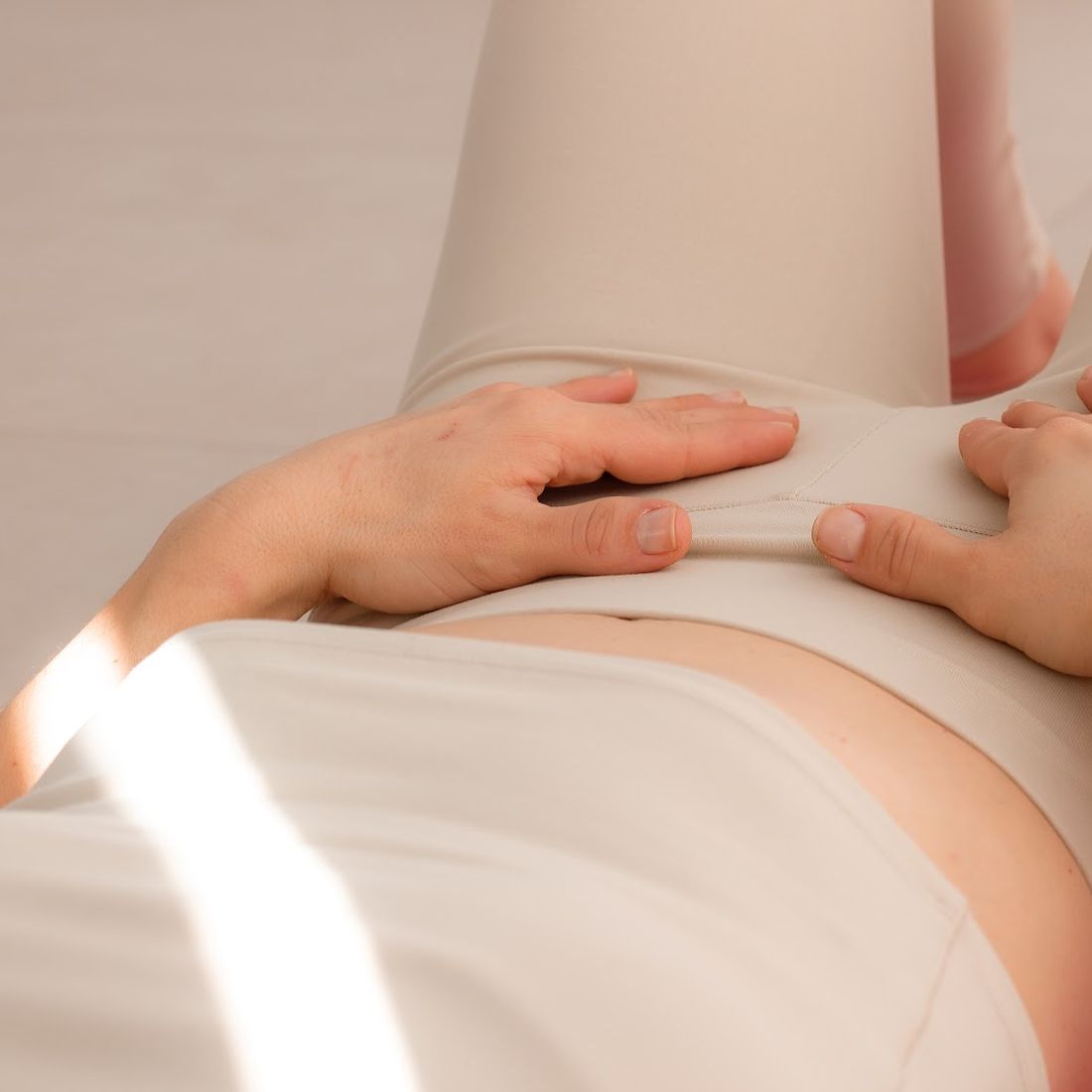
We start by understanding what your pain is like, when it appears and what you have tried so far.
We work on the pelvic floor, abdominal and pelvic muscles, always with your permission and at your pace.
You learn to release ongoing tension with breathing exercises and, if appropriate, biofeedback.
If there are any, we work on them to improve tissue mobility.
Getting back to moving without fear is part of the treatment. We take it step by step.
Article content
A team effort
Gynecology assesses the medical side, physiotherapy looks after the muscles and tissues, and psychology can help you manage what living with pain involves. When needed, we coordinate with your professionals.


What do we work on in physiotherapy for chronic pelvic pain?
Physiotherapy works on the muscular and mobility side that often comes with pain. It does not replace medical investigation, but it can help you move better and get your quality of life back.
Reducing tension in the pelvic muscles.
Breathing and relaxation.
Mobility of the pelvis, abdomen and scars.
Gradual return to movement.



Your journey at the clinic starts like this
STEP 1.
Initial assessment
All patients start with an initial one-to-one session.
- We analyze your case in depth.
- We carry out the necessary examination.
- We explain what is happening and why.
- We design a personalized treatment plan.
- All with no further commitment.
STEP 2.
STEP 3.
Follow-up and progress
Your process doesn’t end after one session. It evolves with you.
- We regularly reassess your progress.
- We adjust the plan when necessary.
- You can combine one-to-one and group sessions depending on your progress.


Frequently asked questions
If you’re asking yourself these questions, you’re not the only one. Here we answer them clearly.
Not always, but it’s important that your doctor has ruled out causes that need other treatment. If you haven’t been seen yet, we’ll guide you.
Because the pelvic floor works together with the abdomen, diaphragm and spine. Tension in one area affects the others.
We adapt everything to your pain. We explain what we’re going to do beforehand and stop whenever you need.
It can, because it keeps the muscles tense. That’s why we also work on breathing and relaxation.
Yes, and it usually helps, always adapted to where you are. We adjust it with you as we go.
It depends on each patient: your starting point, whether there is a deeper injury or condition, and how committed you are to the exercises at home. After the first session we decide on the right treatment. If you need individual follow-up, most people notice an improvement with a first pack of 5 sessions. From there, if you follow the guidelines at home, you may only need to come back for occasional check-ups. If there is a deeper injury, you may need to go beyond that first pack.