
Can I do strength training in pregnancy? Safe exercises for pregnant women and their benefits for birth



Article content
During pregnancy, many physical, psychological and hormonal changes take place that can affect a woman’s overall health. For example, from week 20 of pregnancy it’s common to develop lower back pain during pregnancy or sciatica, or to tire more easily. These changes can last throughout pregnancy and become more noticeable postpartum, so regular exercise during pregnancy helps prevent or reduce the discomfort so common among pregnant women. But can I do strength training while pregnant?
The World Health Organization itself recommends that pregnant women do at least 150 minutes of physical activity a week, provided of course there are no contraindications. By physical activity we mean workouts that reach at least moderate intensity. So strength training with weights adapted to each woman, and in positions suitable for our condition, contributes to good preparation for a vaginal birth.
And by the way, if you’re an active, sporty woman, I also recommend using a menstrual cup. I use Beppy Cup, and I published this guide answering all your questions about using a menstrual cup after giving birth.

What is strength training and what are its benefits for pregnant women?
Strength training consists of doing exercises with external loads or with your own body weight. Equipment of different weights is usually used, such as dumbbells, resistance bands, kettlebells, bars and weight plates. Pregnant women should do strength training 1 to 2 times a week, combined with cardiovascular exercise such as swimming, aqua fitness, walking or the elliptical. Strength exercises have important benefits, including:
- They improve posture and prevent lower back pain. Strengthening the large muscle groups such as the back or glutes helps provide better support for the lower spine and pelvis, especially in the third trimester.
- They make labor easier. Strength training done at least twice a week has been shown to reduce cesarean rates and shorten the second stage of a vaginal birth (pushing). This is due to the woman’s greater cardiovascular and muscular endurance during the effort of labor.
- They improve postpartum recovery. Strength exercise throughout pregnancy reduces the prevalence of postpartum depression and improves self-esteem and the condition of the muscles throughout the body after giving birth.
- It’s considered a tool for lowering blood glucose levels and therefore helps prevent gestational diabetes.
- It helps control the mother’s weight, preventing excess weight and low self-esteem in pregnancy.
What strength exercises can we do during pregnancy?
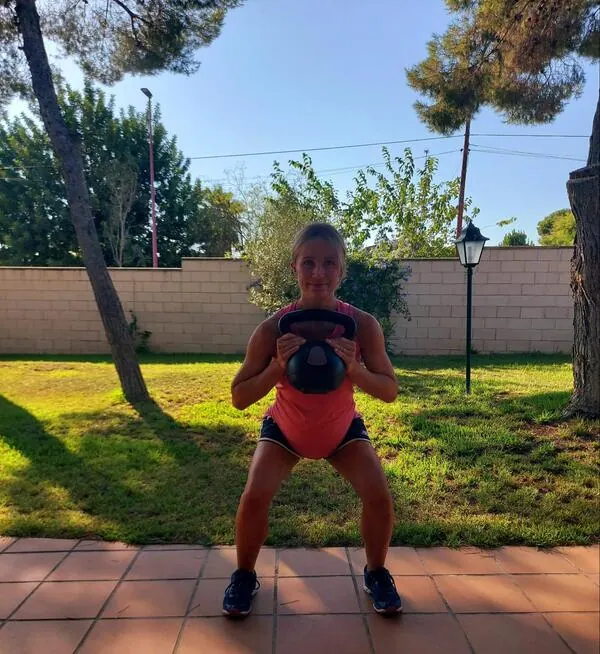
Here are several loaded exercises (with a kettlebell) that pregnant women with no contraindications to physical activity can do. They should be done with suitable footwear and correct technique and breathing. They’re suitable for every trimester of pregnancy, up to week 40.
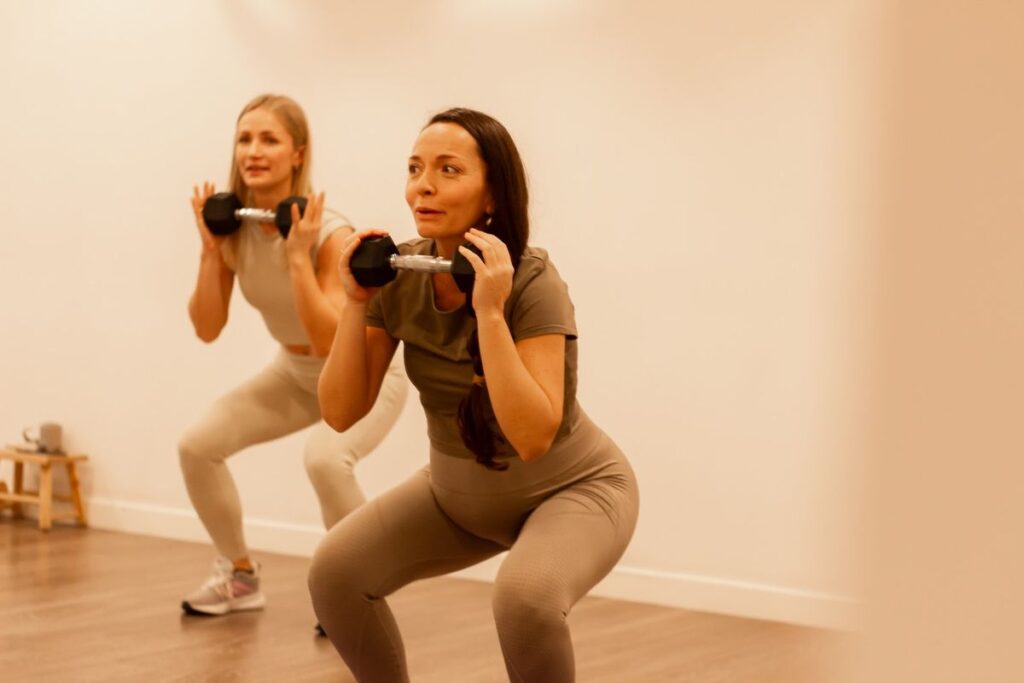
1. Squat with shoulder press (kettlebell)
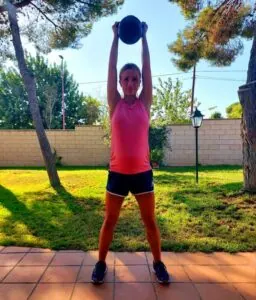
In this exercise we do a standard squat, adding a weight lift on the way up.
Place your feet shoulder-width apart. Breathing in, lower into a squat (bending your hips and knees) and, breathing out, lift the weight by straightening your arms and legs at the same time. Control your abdomen on the way up: as you breathe out, contract your transverse abdominis, “drawing your belly in and up.”
Do 3 sets of 10 to 12 squats.
2. Shoulder bridge (kettlebell)
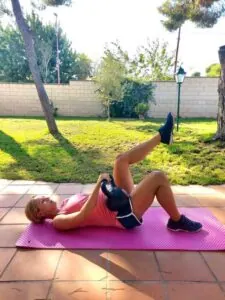
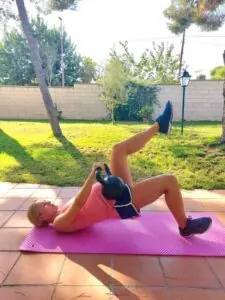
In this exercise we lift the lower trunk until we’re resting on our shoulder blades and shoulders. It can be done with one leg raised or with both feet on the floor. Place the weight on your hip, on the side of the supporting leg. As you breathe out, slowly lift your hips and trunk. Breathing in, lower back to the floor.
Do 10–15 lifts on each leg, 3 sets.
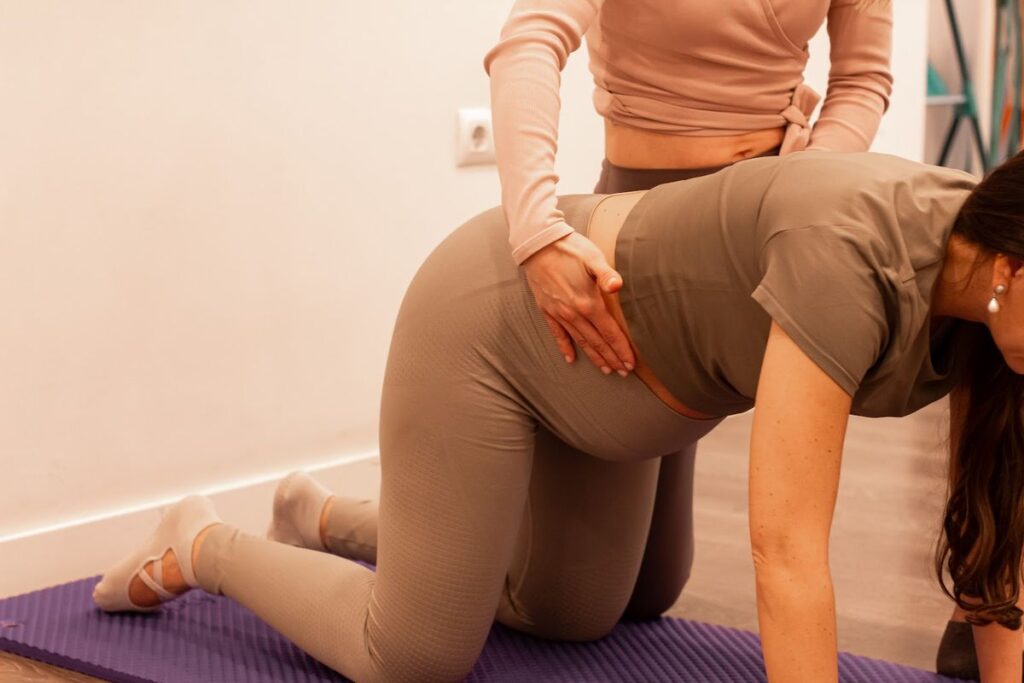
3. Isometric abdominal exercise on all fours (no weight)
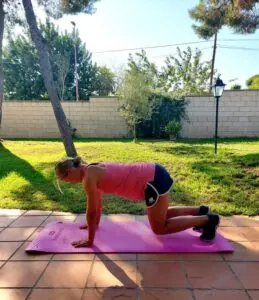
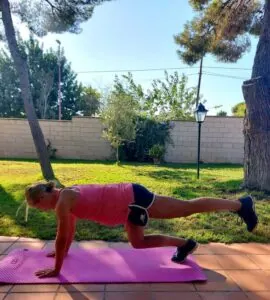
Exercising the abdominal wall properly throughout pregnancy is essential to prevent abdominal diastasis and prepare for birth. This exercise needs correct technique, as done wrongly it can be harmful.
On all fours, breathe in and, as you breathe out, draw your abdomen in and lift your knees about 2 cm (1 inch) off the floor. Then, without losing the abdominal activation, stretch one leg back (without the opposite knee dropping to the floor), then stretch the other leg and lower to the floor. These are two quick movements done in one long exhalation, with control and correct activation of the abdominal wall. Importantly, your belly and belly button must never push outward.
Do 8 to 10 repetitions on each leg, for 3 sets.
4. Single-leg deadlift (kettlebell)
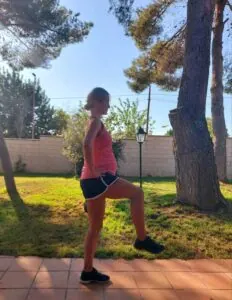
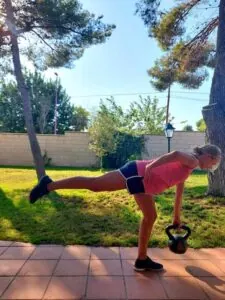
This exercise combines strength work (legs, lower back and abdomen) with balance.
In the starting position, lift one leg (bending the knee to 90°) and hold the kettlebell in the opposite hand. Breathe in and, as you breathe out, take the leg back and at the same time lean your trunk forward, letting the weight drop down (without touching the floor). Breathing in, return to the starting position.
Do 10 repetitions on each leg, in 3 sets.
5. Side plank (no weight)
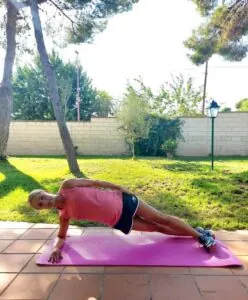
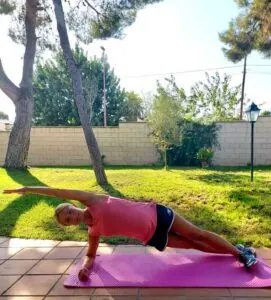
This is a fantastic abdominal exercise that pregnant women can do right up to the final stretch of pregnancy. Those of us with more strength can do it with both legs straight, and women with less strength can rest the knee of the lower leg on the floor and straighten only the top leg.
Breathing in, take your top arm up over your head until it’s parallel to the floor and, as you breathe out, draw your abdominal wall in and bring your arm toward your hip. With each exhalation, contract your transverse abdominis as if you wanted to “hug the baby.”
Do 15 repetitions on each side, 2 to 3 sets.
6. Kneeling abdominal exercise (no weight)
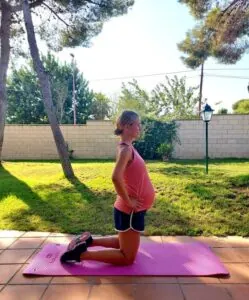
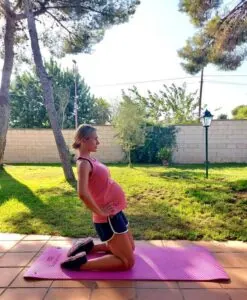
Another example of an abdominal exercise suitable for pregnant women. Kneeling, lean your trunk back as you breathe out. The breath (exhalation) helps activate the deep abdominal muscles as the trunk leans back. You should feel your abdomen flatten slightly and your belly button “draw in.”
Lean your whole body back as one block, keeping your knees, hips and shoulders aligned.
Do 10 leans, 3 sets.
Can strength exercises be done in the first and last trimesters?
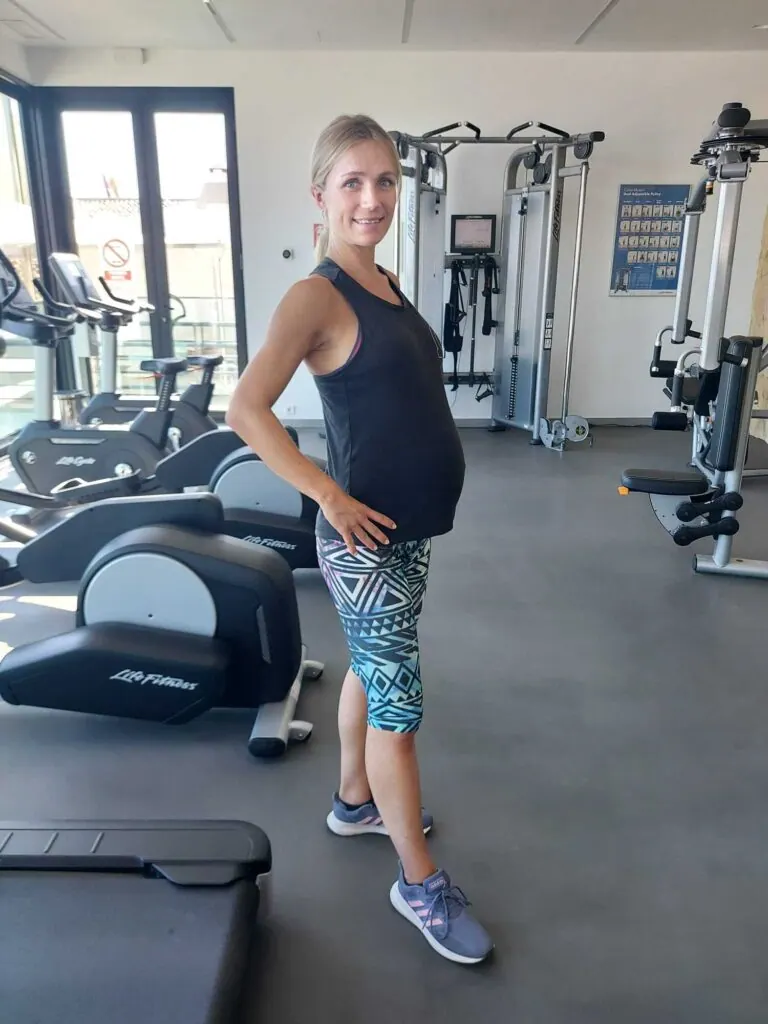
Yes, these exercises should be done throughout pregnancy. General contraindications to sport must always be ruled out, such as:
- Placenta previa.
- Vaginal bleeding.
- Early shortening of the cervix.
- High blood pressure.
- Fetal growth restriction.
- Intrauterine hematoma.
- Active urinary infection.
The first trimester is a time when women often stop doing sport for fear of miscarriage. Today there is no scientific study supporting the theory that sport can cause a miscarriage in the first 12 weeks. So, as a general rule, all women without medical contraindications can exercise in the first trimester. If you wish, you can adapt the intensity.
The third trimester is also completely safe for sport, including strength exercises. Several studies have shown that physical activity in the last weeks of pregnancy reduces fatigue, prepares the abdominal wall and pelvis for birth, and doesn’t increase the risk of going into labor early.
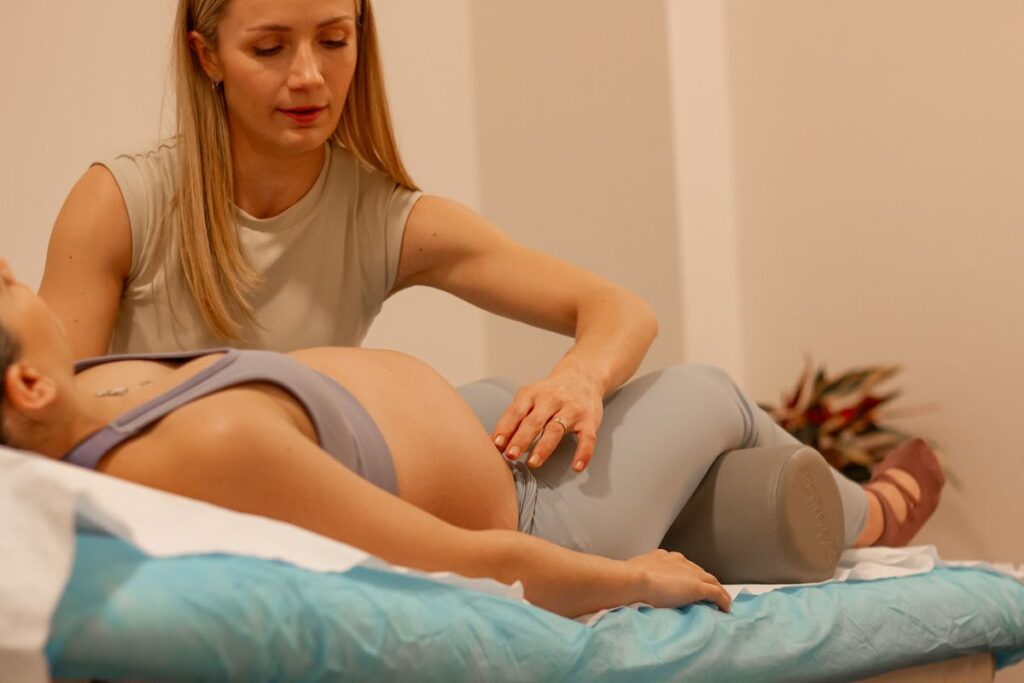
Before starting to exercise regularly, we recommend seeing a pelvic floor specialist physiotherapist to assess your abdomen and perineal muscles and learn how to activate these muscle groups in the exercises shown. Every pregnancy and every body is different, and we need to adapt training to each woman’s needs. It’s also advisable to do strength training with fitness and physical education professionals, at least to learn the correct postures and technique for the main exercises.
Below is a demonstration video with toning exercises designed specifically to build strength during pregnancy. These easy-to-follow, safe exercises will help you stay active and comfortable during this very special time.


Prepare for your birth at our clinic in Valencia
We support you throughout your pregnancy with physiotherapy for pregnant women, adapted to each trimester and your situation. Can’t come to Valencia? We also see patients in an online consultation.