




Physiotherapy for genital prolapse in Valencia
Feeling heaviness or a bulge in the vagina is frightening, and having a prolapse doesn’t mean you have to stop moving. We explain what is happening and work together so you feel confident.



Article content
What genital prolapse is
If you’ve been told you have a prolapse, or you notice something that doesn’t feel right, it’s normal to be worried. We’ll take it step by step: we’ll explain clearly what is happening, what it means in your case and what you can keep doing.
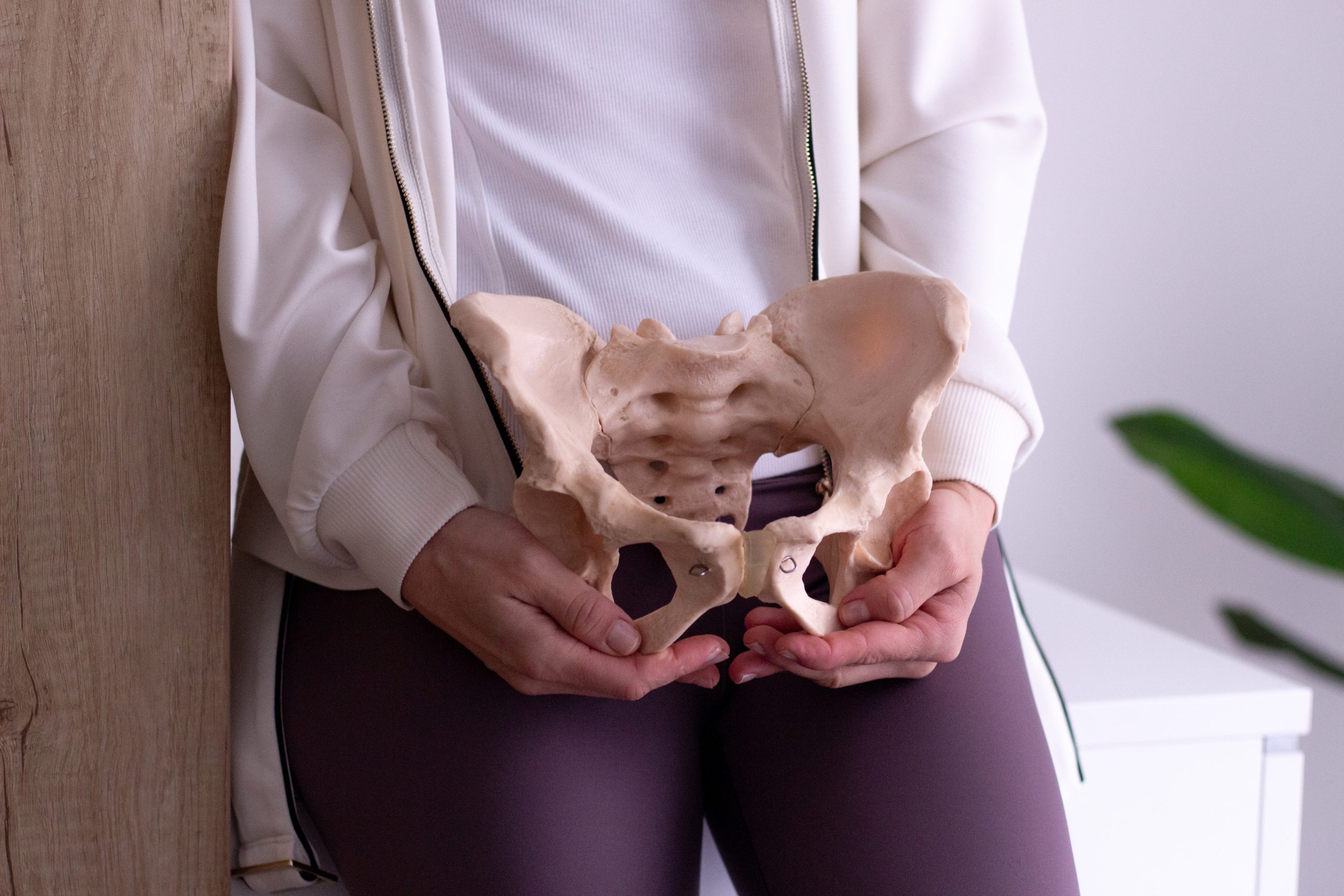
Genital prolapse is the descent of a pelvic organ from its natural position. The bladder, uterus and rectum sit in the lesser pelvis and rest on the pelvic floor. When the muscles, fascia and ligaments weaken, they lose their supporting function and one of those organs slips downwards.
If your gynecologist has told you that you have a prolapse, you are by no means an unusual case. It’s one of the most common reasons for consulting a urogynecological physiotherapist. Depending on the organ that descends, we talk about uterine prolapse (hysterocele), bladder prolapse (cystocele), rectal prolapse (rectocele), bowel prolapse (enterocele) or vaginal vault prolapse.
Grades and symptoms
Prolapses are classified into four grades according to how far the organ descends:
- Grade I: slight descent within the vaginal canal.
- Grade II: the organ reaches the vaginal opening.
- Grade III: it passes through the vaginal opening.
- Grade IV: it comes out completely.
Grades I and II often cause no symptoms and are discovered during a pelvic floor assessment, postpartum or at a menopause check-up. When they do, the most common are a feeling of heaviness in the vagina or anus, a bulge in the vaginal canal, a feeling of not fully emptying the bladder, repeated urine infections, leakage of urine or wind, a feeling that the vagina is more open, lower back pain and discomfort during sex.
If you notice a bulge in or around the vagina, make an appointment with your gynecologist or doctor to have it checked.

“Having a prolapse doesn't mean you have to stop moving”

How we treat prolapse
We strengthen the pelvic floor with Kegel exercises and special probes with vaginal biofeedback, which let you see whether the contraction is correct.
It helps activate the pelvic floor muscles when they’re hard to contract voluntarily. It is always combined with active exercise.
Specific postures and breathing that reduce pressure inside the abdomen and tone the abdominal wall without loading the perineum.
You learn the neutral position of the pelvis and spine and how to position yourself at moments of greater load, such as opening your bowels, lifting or exerting yourself. We also work on the stabilizing muscles of the lower spine and pelvis.
For third- and fourth-degree prolapse, the decision about surgery lies with gynecology. Physiotherapy prepares the muscles before the operation and supports you afterwards, including when discomfort continues after mesh surgery.
Article content
How to exercise if you have a prolapse
Until the pelvic floor and abdomen have good tone, high-impact training puts a lot of load on the perineum. That’s why, at least at first, it’s best to set aside activities such as running, CrossFit, aerobics, step, Body Pump or Kangoo Jumps, as well as traditional crunches.
Having a prolapse doesn’t mean you have to stop moving. Training focuses on building pelvic floor strength, improving posture, practicing hypopressives and strengthening the abdomen without increasing pressure. Some of the exercises we do in clinic that you can then continue at home are:
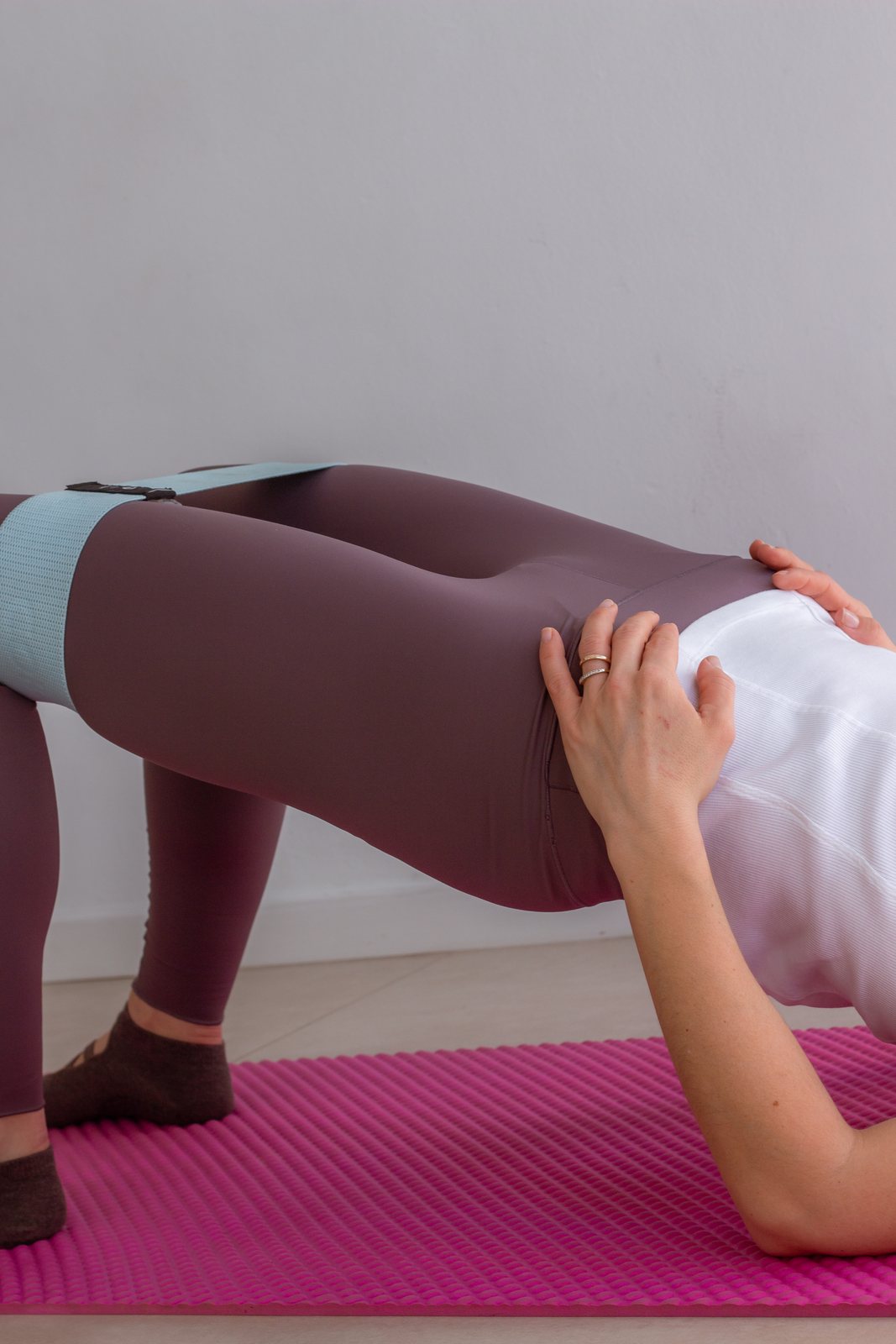
- Shoulder bridge with one leg raised, for the glutes, back and transverse abdominis.
- Dynamic front plank, lowering one knee and then the other without moving the rest of your body.
- Thoracic mobility exercises with twists and rotations of the upper spine, so the diaphragm doesn’t push the organs down into the pelvis.
Low-impact cardio is still a good option: cycling, swimming, Nordic walking or brisk walking, dancing or the elliptical.
Prolapse after giving birth
Vaginal birth is one of the factors most closely linked to prolapse, especially when labor has been long or instrumental or the baby was large. Postpartum, we treat first- and second-degree prolapse by combining hypopressive exercises with manual therapy, pelvic training with vaginal probes, electrical stimulation and biofeedback. During those months it’s best to wait until your pelvic floor has been assessed before going back to running or high-impact exercise.


What do we work on in physiotherapy for prolapse?
For grades I and II, urogynecological physiotherapy is the usual first step. The type of work is decided at the first assessment, when we examine the pelvic floor muscles vaginally, the grade and mobility of the prolapse, and the abdominal wall.
A prolapse doesn’t reverse with exercise. The goal is for the pelvic floor and abdomen to support the organs better and for symptoms such as heaviness or urine leakage to bother you less. You start with one-to-one sessions and, as you progress, continue at home or in a group.
Habits matter too: eating fiber, drinking water and moving to avoid constipation, looking after your weight, not smoking and, whenever possible, avoiding repeated heavy lifting.
Pelvic floor strength and tone to improve its supporting function.
An exercise and sport plan adapted to the grade of your prolapse.
Posture and hypopressives to reduce abdominal pressure in daily life.
Preparation and support if your gynecologist suggests surgery.



Your journey at the clinic starts like this
STEP 1.
Initial assessment
All patients start with an initial one-to-one session.
- We analyze your case in depth.
- We carry out the necessary examination.
- We explain what is happening and why.
- We design a personalized treatment plan.
- All with no further commitment.
STEP 2.
STEP 3.
Follow-up and progress
Your process doesn’t end after one session. It evolves with you.
- We regularly reassess your progress.
- We adjust the plan when necessary.
- You can combine one-to-one and group sessions depending on your progress.


Frequently asked questions
If you’re asking yourself these questions, you’re not the only one. Here we answer them clearly.
No. A prolapse doesn’t reverse with exercise. What we work on is helping the pelvic floor provide better support and making symptoms such as heaviness or urine leakage weigh less on your daily life.
It depends on the grade and your symptoms, and that decision is made by gynecology. For grades I and II, the usual approach is to start with physiotherapy and lifestyle changes. For grades III and IV, surgery is often considered, and physiotherapy supports you before and after.
Yes, choosing wisely. At first it’s best to avoid impact, such as running, jumping or CrossFit, and crunches. Cycling, swimming, brisk walking, dancing or the elliptical are good alternatives while you work on your pelvic floor.
It’s a silicone or plastic device inserted into the vagina to support the pelvic organs. It is prescribed and fitted by gynecology. Physiotherapy can be done at the same time.
If you notice a bulge in or around the vagina, or any symptom of prolapse, make an appointment with your gynecologist or doctor. Also if you have repeated urine infections or can’t fully empty your bladder.
It depends on each patient: your starting point, whether there is a deeper injury or condition, and how committed you are to the exercises at home. After the first session we decide on the right treatment. If you need individual follow-up, most people notice an improvement with a first pack of 5 sessions. From there, if you follow the guidelines at home, you may only need to come back for occasional check-ups. If there is a deeper injury, you may need to go beyond that first pack.