




Physiotherapy for abdominal diastasis in Valencia
If your tummy domes or you notice a bulge along your belly button line, there’s no need to punish yourself with sit-ups. We assess your abdomen and pelvic floor together and adapt the exercise to you.
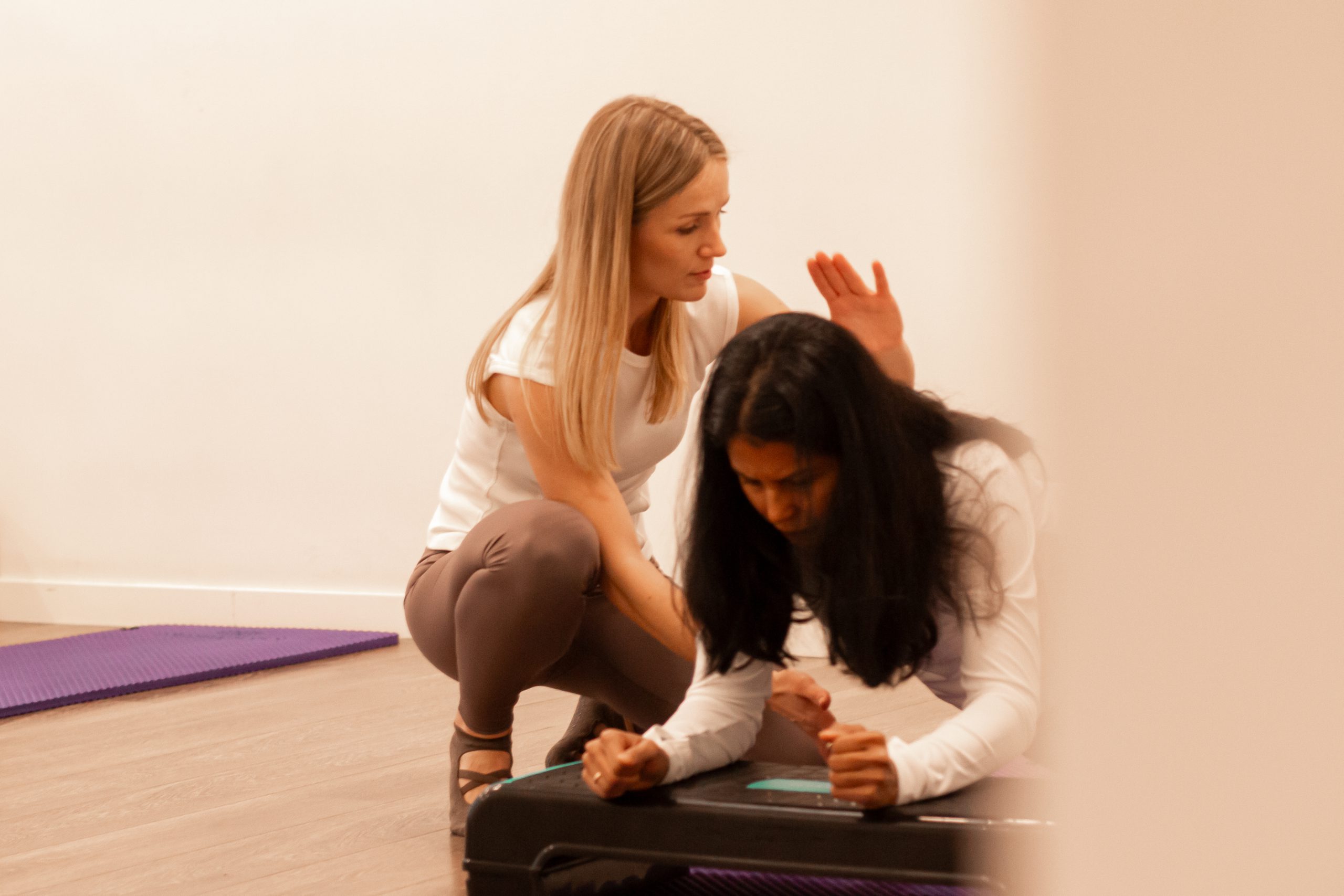



Article content
What abdominal diastasis is
Some women come to us after years of sit-ups with the same tummy. Diastasis isn’t solved with more effort, but with the right work for your case and consistency.
Does your abdomen dome more when you exert yourself? When you do a traditional crunch, do you see a bulge pushing out around your belly button? It could be abdominal diastasis, and it’s best assessed by a physiotherapist specializing in the pelvic floor.
Abdominal diastasis is the separation of the right and left rectus abdominis muscles, below the belly button, above it or both. The rectus muscles are joined by a fibrous, elastic membrane, the linea alba, made mainly of collagen. During pregnancy this membrane stretches a great deal to make room for the baby, and the separation can remain after the birth.
It’s very common. A Norwegian study that followed 300 women from their first pregnancy found separation of the rectus muscles in 33.1% at week 21 of pregnancy, 60% at six weeks postpartum and 32.6% at one year (Sperstad et al., British Journal of Sports Medicine, 2016). In many women the separation reduces in the months after the birth, and in others it remains.

How we assess it
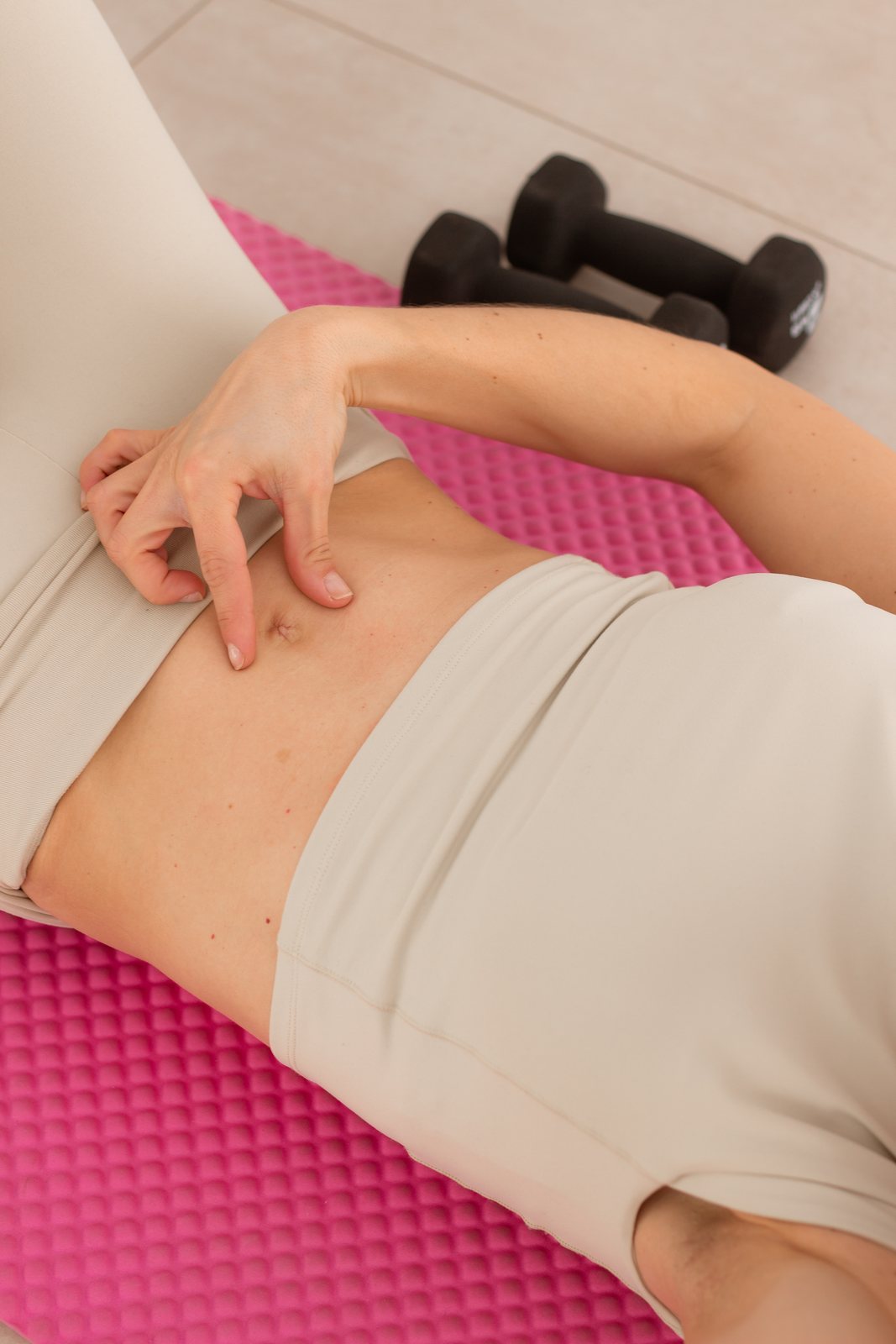
Checking the rectus abdominis muscles is part of the postpartum physiotherapy assessment, together with the pelvic floor examination. It’s done with you lying on your back. The physiotherapist places her fingers on the midline of your abdomen and asks you to lift your head slightly to contract the rectus muscles. This lets her measure the distance between the two bands of muscle and check how the tissue joining them responds.
In the same session we examine the pelvic floor, the deep abdominal muscles, the spine and the pelvis. Many women with diastasis also have some pelvic floor problem, which is why we look at both areas from the start.
Don’t rely on a self-check based on an internet video. And if the examination shows anything that suggests a hernia, such as a painful bulge protruding along the midline, we refer you to your doctor for investigation.

“We work on the abdomen and the pelvic floor at the same time”

How we treat abdominal diastasis
It combines specific postures with a particular breathing technique to work on the tone of the abdominal wall and pelvic floor without increasing pressure inside the abdomen. We teach you the postures in a one-to-one session and you can then continue in our hypopressive classes. It is not practiced during pregnancy.
The transverse abdominis is the deepest layer of the abdomen and the one that supports the trunk. We focus the exercises on it because good tone helps the abdominal wall work better, always with a lengthened spine and without bending the trunk forward.
They activate the muscles that stabilize the trunk: transverse abdominis, pelvic floor and back. We use exercises such as a shoulder bridge with a fitball or all-fours work with a resistance band, and progressively add resistance according to your control.
When the assessment advises it, we combine hypopressive abdominal exercise with electrical stimulation to help activate the muscles.
If the assessment shows pelvic floor weakness, urine leakage or a grade 1 or 2 prolapse, we include it in the same plan with Kegel exercises, a vaginal probe and biofeedback.
Article content
Which exercises to set aside for now
Some activities increase pressure inside the abdomen and load the linea alba just when it most needs to work well. While you’re working on your diastasis, it’s best to put them on hold or adapt them with your physiotherapist:
- Traditional crunches, front planks, Pilates abdominal exercises that flex the trunk, oblique exercises and abdominal exercises with both legs raised.
- High-impact sports such as running, tennis, step, aerobics, CrossFit or horse riding. If you run regularly, we’ll work out together how to adjust your training frequency.
- Lifting weights with a rounded back. To pick something up off the floor, lean forward by bending at the hips with a straight spine.
- Holding positions with a slumped pelvis. Good alignment of the spine and pelvis makes the deep abdominal muscles work.
It also helps to watch your diet to avoid constipation, because straining on the toilet also increases abdominal pressure.
This doesn’t mean you should stop moving. When to return to each activity is decided with you, according to how your abdomen responds.
A plan for the abdomen and pelvic floor
In clinic we work on the abdomen and pelvic floor at the same time. Many women with a pelvic floor problem also have diastasis, and the exercises change depending on what we find in each woman. If you leak urine or wind, have a prolapse or have had back pain since the birth, it’s best to have an assessment before starting exercises at home.
If you’re thinking about another pregnancy, tell us at the assessment so we can take it into account in the plan.
If you can’t come to the clinic in Valencia, we also offer online appointments by video call, with guidelines for abdominal diastasis and an exercise sheet at the end of the session.


What do we work on in physiotherapy for diastasis?
Our method combines hypopressive abdominal exercise with therapeutic exercise and, when the assessment advises it, instrumental treatments. We work on the deep muscles of the abdomen and pelvis, the areas that change most with pregnancy and birth.
The goal is for you to feel in control of your abdominal wall again in everyday movements, such as picking up your baby, getting out of bed or carrying the shopping, and to know which exercises suit you at each stage and which are best left for later.
There’s no one-size-fits-all routine. The type of exercise, intensity and pace are decided at the assessment and adjusted according to how your abdomen responds. Posture and breathing are the foundation of all the work, because they determine whether the abdominal wall activates without pushing outwards.
The tone of the deep abdominal wall, with the transverse abdominis taking center stage.
The pelvic floor, assessed and worked on within the same plan.
Everyday movements, such as carrying weight or getting up, without increasing abdominal pressure.
Posture and breathing, which are the basis of hypopressive exercises.



Your journey at the clinic starts like this
STEP 1.
Initial assessment
All patients start with an initial one-to-one session.
- We analyze your case in depth.
- We carry out the necessary examination.
- We explain what is happening and why.
- We design a personalized treatment plan.
- All with no further commitment.
STEP 2.
STEP 3.
Follow-up and progress
Your process doesn’t end after one session. It evolves with you.
- We regularly reassess your progress.
- We adjust the plan when necessary.
- You can combine one-to-one and group sessions depending on your progress.


Frequently asked questions
If you’re asking yourself these questions, you’re not the only one. Here we answer them clearly.
The most common signs are an abdomen that domes when you exert yourself or a bulge along the midline when you do a crunch. To know for sure you need a physiotherapy assessment in which the linea alba is palpated and the separation measured. If you notice a bulge that hurts or doesn’t go back in, see your doctor.
At our clinic the postpartum assessment can be done from two weeks after a vaginal birth and from one month after a cesarean, unless your midwife or gynecologist advises otherwise. In the first few weeks separation of the rectus muscles is very common, so the assessment helps us see your starting point and plan the work.
Traditional sit-ups, front planks and oblique exercises increase abdominal pressure, so while you’re working on your diastasis it’s best to set them aside. That doesn’t mean doing nothing for your abdomen. There are exercises with a lengthened spine, such as hypopressives or transverse abdominis work, that you can do with the right guidance.
In many women the separation reduces in the months after the birth, and in others it remains, even after a year. We can’t tell you in advance how it will develop in your case. What we do is assess it and give you a tailored plan. If you’re considering surgery, that’s a decision to make with your doctor.
They are one of the exercises we use most for diastasis, because they work the abdominal wall and pelvic floor without increasing pressure inside the abdomen. They are not the only tool, and it’s best to learn the postures properly with a physiotherapist before practicing them on your own. They are not practiced during pregnancy.
It depends on each patient: your starting point, whether there is a deeper injury or condition, and how committed you are to the exercises at home. After the first session we decide on the right treatment. If you need individual follow-up, most people notice an improvement with a first pack of 5 sessions. From there, if you follow the guidelines at home, you may only need to come back for occasional check-ups. If there is a deeper injury, you may need to go beyond that first pack.