
How to train safely during pregnancy, with exercises for every level



Article content
When a woman gets pregnant, she has lots of questions about exercise. If you were already exercising regularly before, you’ll wonder whether you can keep up the same intensity or should change some exercises… And if you’re not very sporty, you’ll want to get started as soon as possible. As it’s something I see all the time in my clinic, I’m going to explain how to do safe and appropriate training for pregnant women, with some exercises.
Some women consider giving up sport during pregnancy out of fear or lack of information about training. Nothing could be further from the truth: under normal conditions for the mother, an active pregnancy with exercise is much less harmful, and carries fewer associated risks, than a sedentary pregnancy with little movement. So physical activity is essential for a pregnancy without complications and a faster postpartum recovery.
Can all pregnant women train?
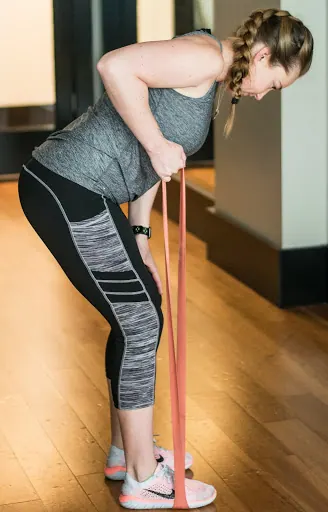
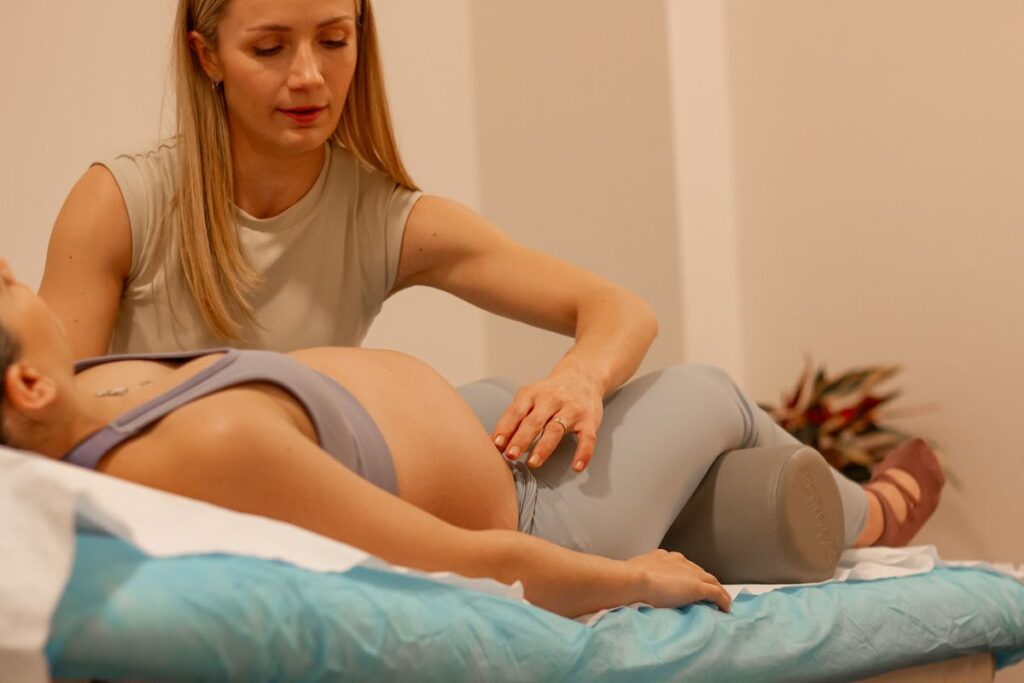
No, there are exceptions. Every pregnant woman, after her first ultrasound confirms that everything is fine, should have a physiotherapy assessment to set out her pregnancy plan and determine the most suitable type of exercise.
The physiotherapist specializing in obstetrics will take information about the pregnancy, the position of the placenta, the amount of amniotic fluid and any previous gynecological problems, to be completely sure whether any kind of exercise can be done. Women who should not exercise during pregnancy are those with:
- A shortened cervix.
- Vaginal bleeding.
- Anemia with severe symptoms.
- Placenta previa.
- Uncontrolled type 1 diabetes.
- Cardiovascular disease.
- Multiple pregnancy (triplets or more).
Can you train during the first trimester?
Yes, as long as the woman exercised regularly before pregnancy and is used to doing sport. During the first trimester there is a high risk of miscarriage, so if any of the contraindications above apply, or if the woman has had more than three miscarriages in the past, she shouldn’t do sport in the first trimester. If the pregnancy isn’t high-risk and she has exercised regularly, there’s no reason not to continue. And if you’d like to know which exercises are ideal in the third trimester, see our post on how to prepare for birth in the last trimester of pregnancy.
How often, and what kind of exercise, can a pregnant woman do?
It’s recommended to do at least 150 minutes of physical activity a week. That means at least two 45-minute guided workouts a week, focused on toning the muscle groups most vulnerable in pregnancy. In addition, a pregnant woman should combine this with daily brisk walks of at least 30 minutes, or any other low-impact cardio (stationary bike, elliptical, swimming, Nordic walking). Physical training for pregnant women should include the following exercises:
- Pelvic floor toning exercises (Kegel contractions in different positions and in movement).
- Exercises to strengthen the transverse abdominis (safe abdominal exercises combined with the right breathing).
- Glute toning exercises (a muscle group that tends to weaken in pregnancy and needs to be kept strong for good posture).
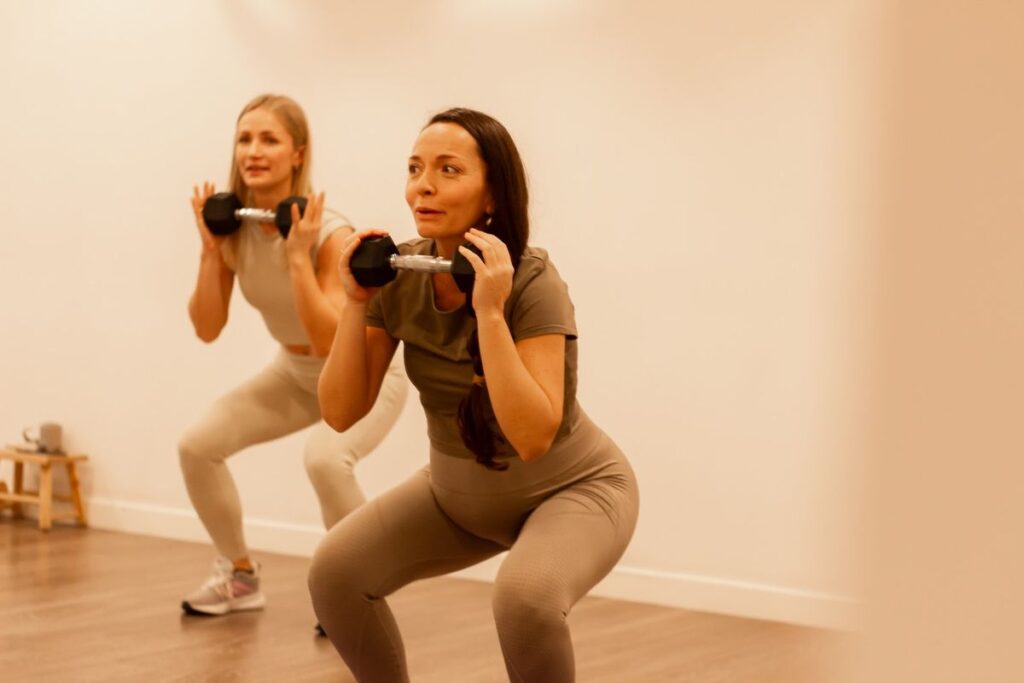
- Whole-body strength training (exercises with weights or resistance are recommended, such as dumbbells, kettlebells, resistance bands or Pilates rings).
- Low-impact cardio (swimming, elliptical, stationary bike, Nordic walking, hiking).
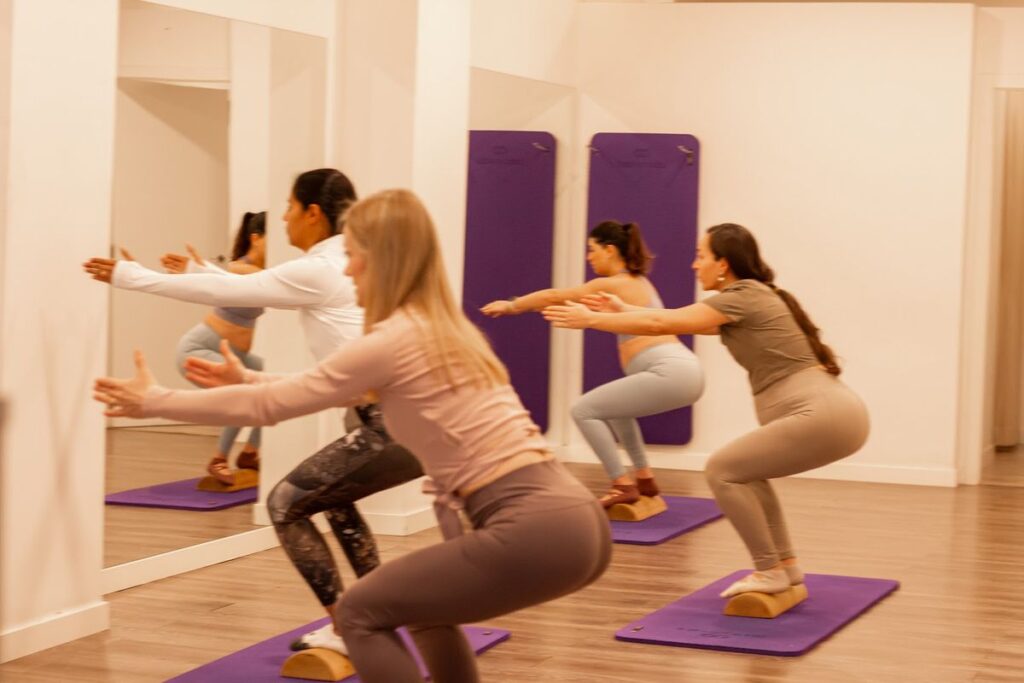
- Postural exercises (for example, with the proprioception board).
- Stretches (especially for the sciatic nerve area, quadratus lumborum, the front of the trunk and the neck).
Before I share the exercises for training safely while pregnant, remember that all the physical work you do during pregnancy affects your later recovery and how you experience everyday things such as sex or your period… In my case, I’m an ambassador for Beppy Cup products.

Toning exercise routine for pregnant women:
1. Hip lifts with resistance.
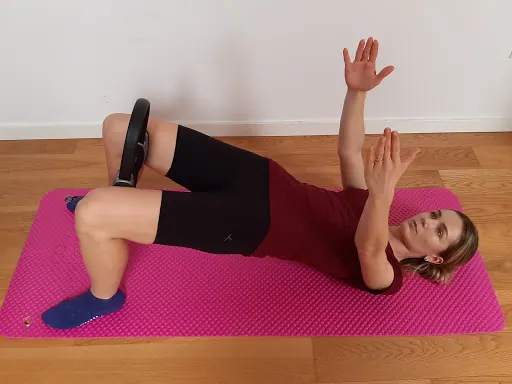
Lie on your back with your legs bent and your arms stretched toward the ceiling. Place a Pilates ring (or a small ball) between your knees.
Take a deep breath and, as you breathe out, squeeze the ring and lift your hips. Breathe in with your trunk raised and, as you breathe out, lower your spine to the mat. Do 20 lifts.
2. Glute toning (the clam).
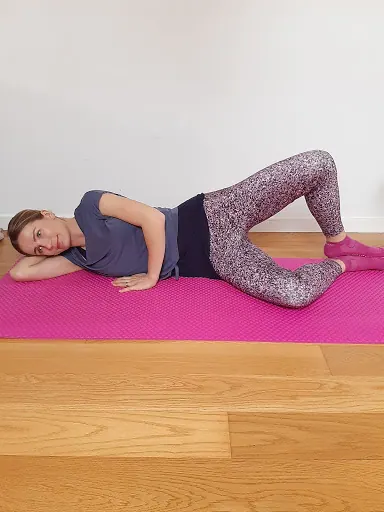
Lying on your side, bend your legs to 90º and rest your head on your lower arm. As you breathe out, lift your top knee, keeping your feet together. Stabilize your pelvis by drawing your abdomen in. Do 15 lifts on each leg.
3. Core exercise: side plank.
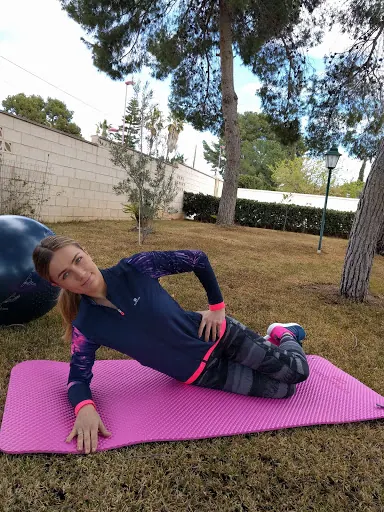
Lie on your side, bend your legs and take your knees back until they’re in line with your hips. Rest your forearm on the floor.
Breathe in and, as you breathe out, lift your hips. Do 15 repetitions on each side. As you lift, activate your transverse abdominis, drawing your belly button toward your spine.
4. Exercise to strengthen the abdominal wall.
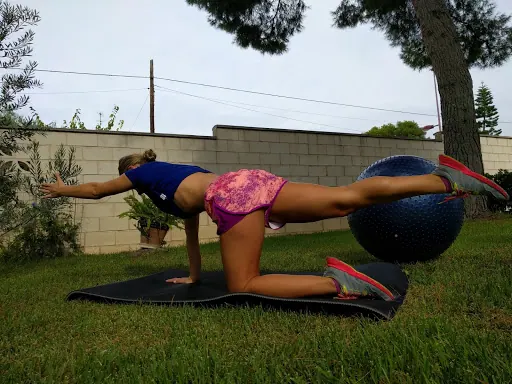
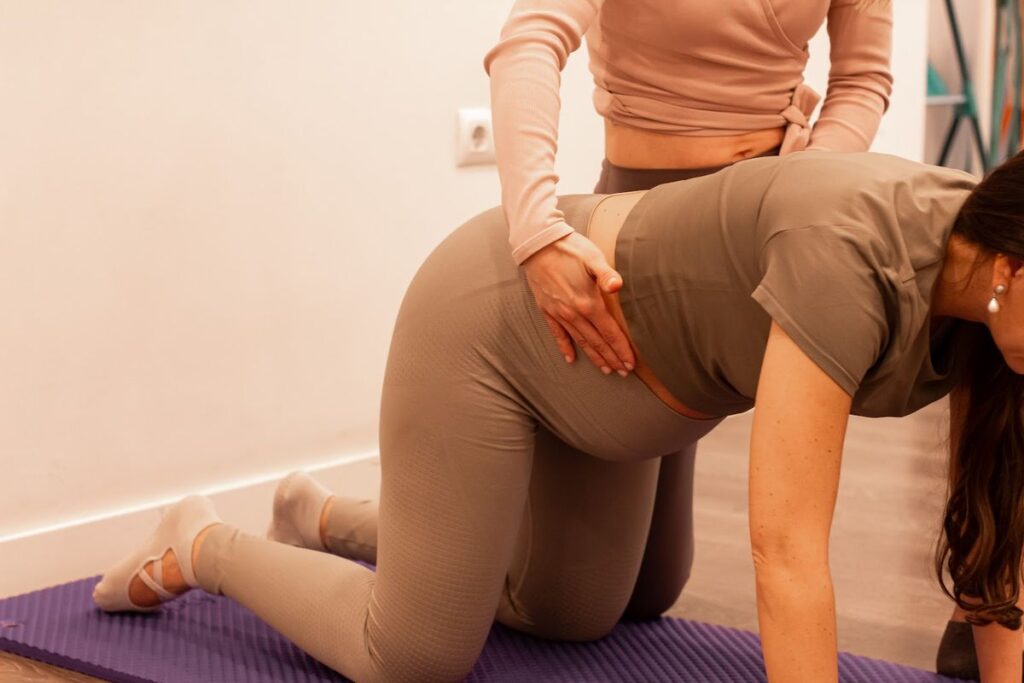
On all fours, keep your spine neutral and parallel to the floor. Breathe in deeply and, as you breathe out, activate your abdomen (drawing your belly button toward your spine) and stretch out one leg and the opposite arm. Keep your balance as you breathe out, holding the position for 5–10 seconds. Do 8 repetitions on each side.
5. Lunges with a Pilates ring.
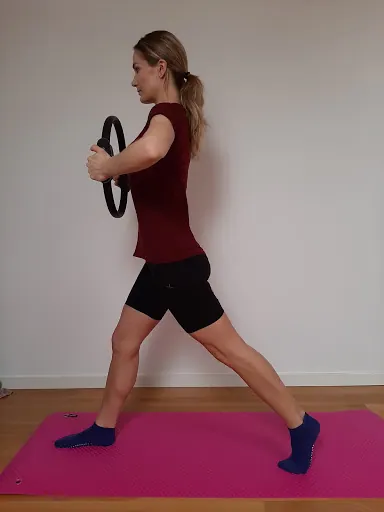
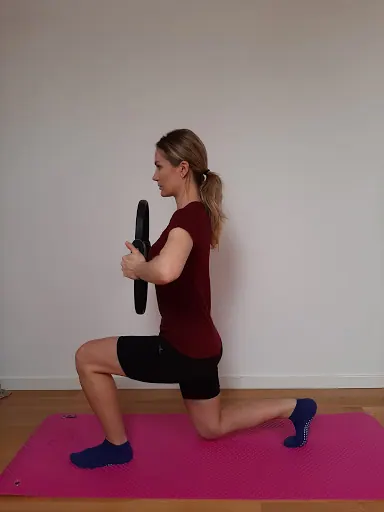
Standing, place one leg in front and the other behind (keeping the back foot flexed, with the heel raised). Hold the Pilates ring at chest height.
As you breathe out, squeeze the ring to activate your arm muscles and lower down, bending both knees to 90º. Lower until your knee is about 1 cm (½ inch) from the floor. Do 15 repetitions on each leg.
6. Squats with your back against the fitball.
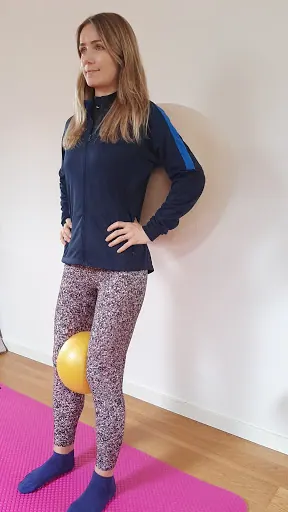
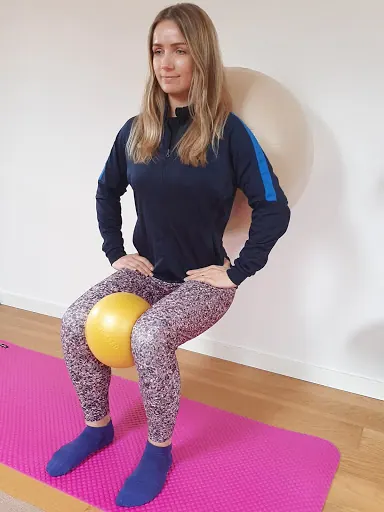
Stand with the large Pilates ball against the wall and lean back on it. Place a small ball (or a cushion) between your knees.
Breathe in deeply and, as you breathe out, lower your body, bending your knees to 90º. Breathe in with your legs bent and, as you breathe out, squeeze the small ball and come back up. Do 15 repetitions, 2 sets.
7. Leg lifts.
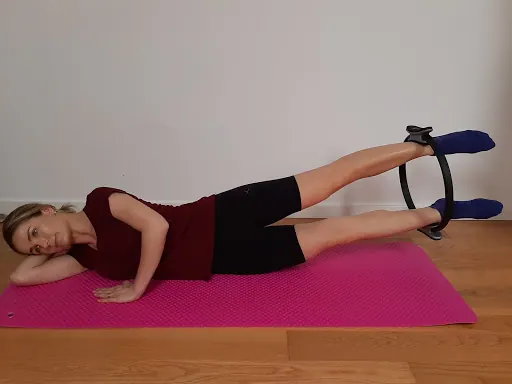
Lying on your side, place your ankles inside the ring (on the inner pads) or put a small ball between your feet.
Breathe in deeply and, as you breathe out, activate your transverse abdominis and lift both legs. Make sure your belly button doesn’t push out during the exercise. It’s important to breathe out as you lift your legs so the deep abdominal muscles activate properly. Do 10 lifts on each side.
8. Upper body toning.
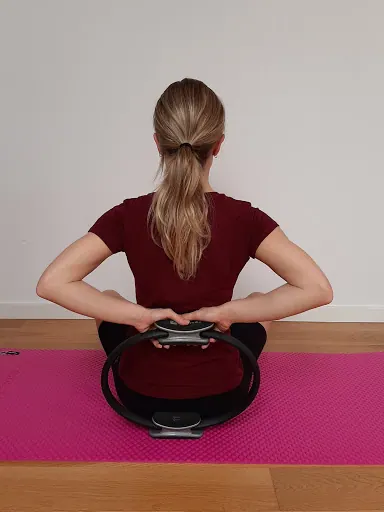
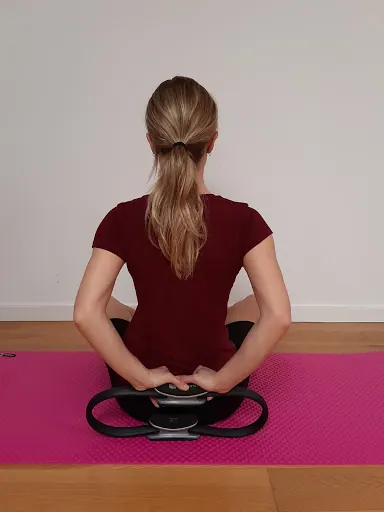
Sitting cross-legged, place the Pilates ring on the mat behind your trunk. Rest your hands on the top pad of the ring.
As you breathe out, squeeze the ring by pushing down with your arms. Keep the ring close to your back, your spine lengthened and your shoulders away from your ears.
Do 10 repetitions in 3 sets.
This routine includes strength exercises that are safe for pregnant women in every trimester. They can be done at home, outdoors or at the gym. We recommend doing the routine twice a week and combining it with walks or another type of low-impact aerobic training.
What are the benefits of sport during pregnancy?
Training during pregnancy has many benefits, for both mother and baby. It has been observed that women who exercise throughout pregnancy tend to have:
- A shorter first stage of labor (dilation).
- A lower risk of lower back pain and urinary incontinence during pregnancy.
- Better control of weight gain.
- A lower risk of gestational diabetes.
- A faster postpartum recovery.
- A lower risk of abdominal diastasis postpartum.
- Better blood flow in the legs.
- A baby that copes better with the effort of a vaginal birth.
- A lower risk of needing a cesarean.


Prepare for your birth at our clinic in Valencia
We support you throughout your pregnancy with physiotherapy for pregnant women, adapted to each trimester and your situation. Can’t come to Valencia? We also see patients in an online consultation.