Guide to using Kegel balls after giving birth



Article content
Until not long ago, Kegel balls (also called Ben Wa balls) were known only as an erotic toy. Nothing suggested they would become a postpartum therapy tool for patients who want to look after and recover their pelvic floor.
More and more women are buying this gadget for different reasons: because their gynecologist prescribed it, because they’ve read that it works wonders, or because friends recommended it, among others.
In a very short time, Kegel balls after giving birth have become a real boom. Their low cost (Kegel balls from pharmacies cost around €20) and convenience (we can use them at any time of day) have helped. In addition, their modern, attractive design makes women curious to try them.
What are Kegel balls?
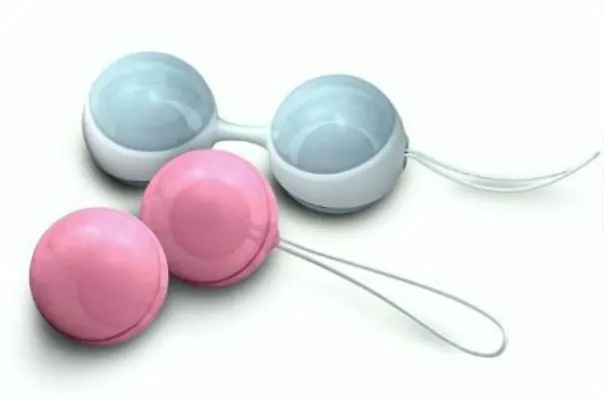
Kegel balls are two small spheres joined by a cord (although some models have just one) that are placed in the vagina; depending on the size of the vagina, one or two balls can be used.
Inside each ball there’s a smaller one that, with movement, gives off vibrations that stimulate the vaginal walls and muscles. This vibration, produced when the small ball hits the walls of the larger one, increases blood flow and lubrication, and improves the strength and tone of the muscles around the vagina.
For the treatment to be at least minimally effective, postpartum Kegel balls must have that small ball inside (‘empty’ Kegel balls aren’t as effective) and the woman needs to move so the small ball can move. In other words, sitting or lying down with the Kegel ball in won’t do anything, as the muscles won’t sense any movement or activation.
How to use Kegel balls after giving birth
To start pelvic floor recovery with Kegel balls after a vaginal birth, it’s essential to first see a physiotherapist specializing in gynecology, who will check the condition of your pelvic and abdominal muscles.
This examination is important to rule out dysfunctions such as pelvic floor hypertonia, levator ani muscle knots, trigger points or a painful scar, which would be contraindications to using Kegel balls after giving birth.
How to use the balls depends on the patient’s type of muscle dysfunction. So we need to know whether what needs exercising is muscle strength or tone. To make this clearer, we’ll use two examples of postpartum patients:
Case 1: loss of pelvic muscle strength
After a vaginal birth, our fictional mother María has noticed that when she tries to voluntarily contract her pelvic floor muscles (closing the vaginal walls, closing the urethra and squeezing the muscles as if to stop the flow of urine), she has no strength.
Before pregnancy, she went to Pilates and yoga classes and, when asked to do these contractions or when they did sets of Kegel exercises, she felt a lot of strength around her vagina.
To see whether she really has a serious problem after giving birth, once in the bathroom, while urinating, she tried to contract her muscles to stop the flow of urine and couldn’t do it. However, at her postpartum assessment she showed no genital prolapse or urinary incontinence.
This example shows a very common dysfunction after vaginal births with episiotomies, where the main problem is a lack of muscle strength.
Solutions for loss of pelvic muscle strength
If we want to work on muscle strength (case 1), we need our muscles to make voluntary contractions. These contractions are more effective when there’s a weight inside the vagina (much heavier than postpartum Kegel balls).
So personally, to recover this pelvic floor function I usually suggest working with vaginal cones, which are weighted, or with pessaries. In this case, these are more effective than using Kegel balls after giving birth.
You’ll need to consciously contract your muscles so the cones or pessary don’t slip out of the vagina. If the patient has chosen treatment with Kegel balls after giving birth, it’s important to tell her that she should do specific exercises while the balls are inside her vagina.
To work on strength and endurance with Kegel balls after giving birth, it’s essential to do pelvic floor exercises at the same time. To get the most out of them, ask a pelvic floor specialist about individualized treatment.
Case 2: loss of pelvic muscle tone
After a vaginal birth, our other fictional mother Sofía has noticed that when she coughs, sneezes or laughs, she leaks urine (in very small amounts). She’s also noticed that after hard exercise, such as jumping or running, her underwear smells of urine when she gets home. However, when she voluntarily contracts her pelvic floor muscles, she feels she has a lot of strength.
This patient lacks muscle tone, since to hold urine without thinking about it we need good muscle tone (involuntary contractions).
Solutions for loss of pelvic muscle tone
If our case is stress urinary incontinence, such as leaking urine when coughing, sneezing or laughing, and the muscles lack tone (case 2), Kegel balls would be the most recommended option.
If voluntary contractions aren’t needed, then after inserting the postpartum Kegel balls into her vagina, the patient simply needs to go about her daily activities. So when the aim is to work on muscle tone, the patient should use the Kegel balls for at least 30 minutes a day while doing things around the house.
Recommended exercises with Kegel balls
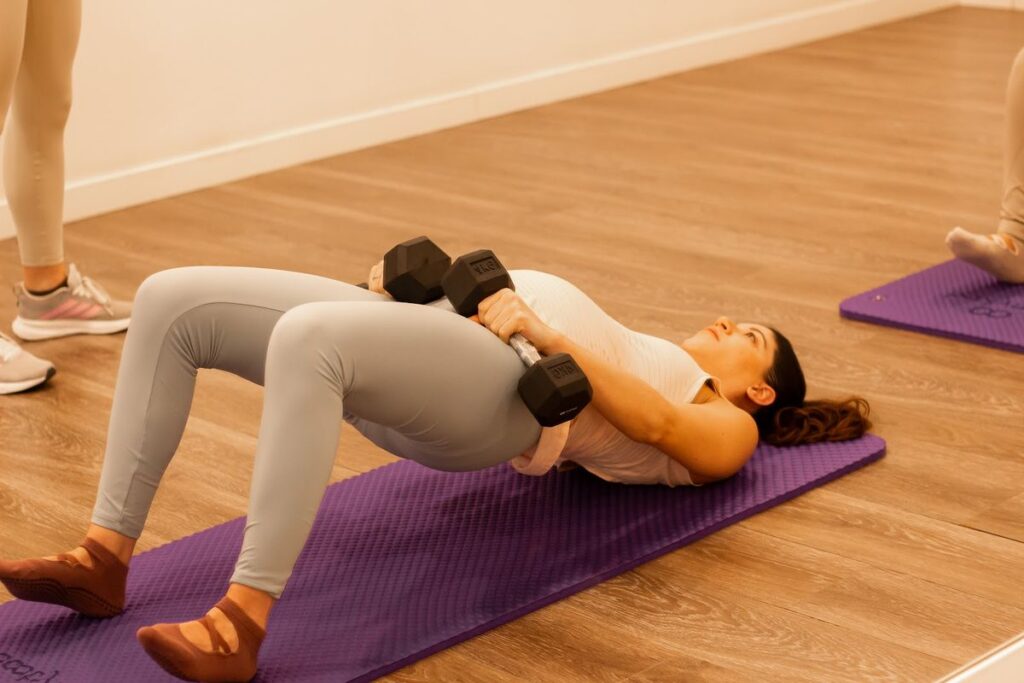
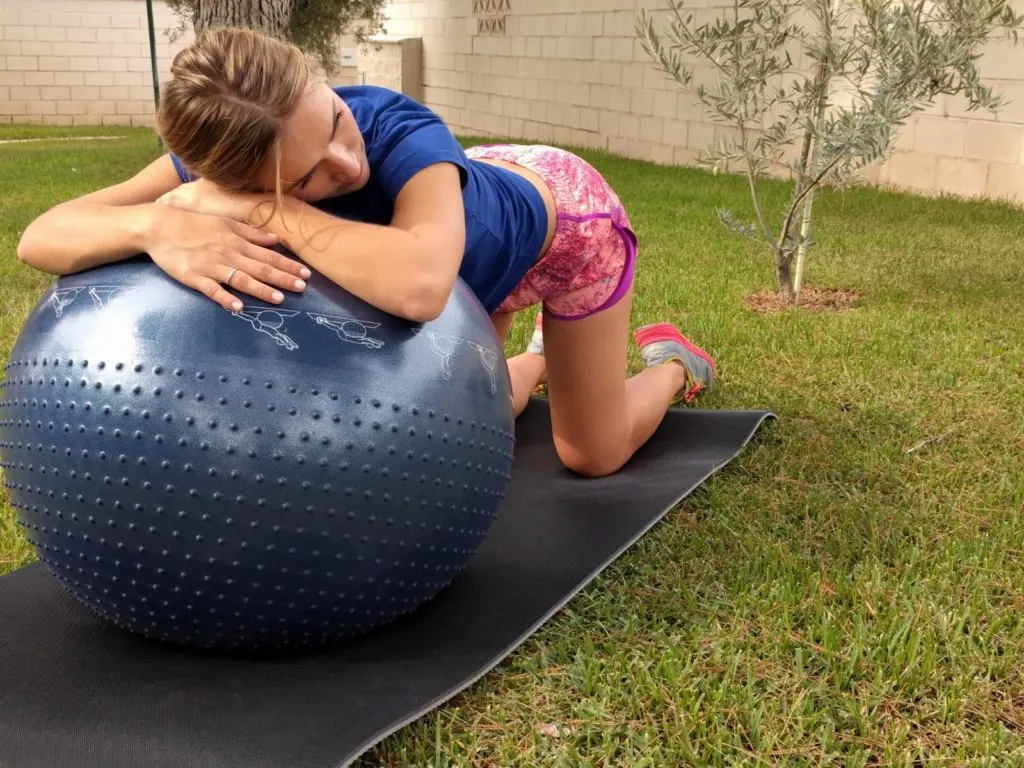
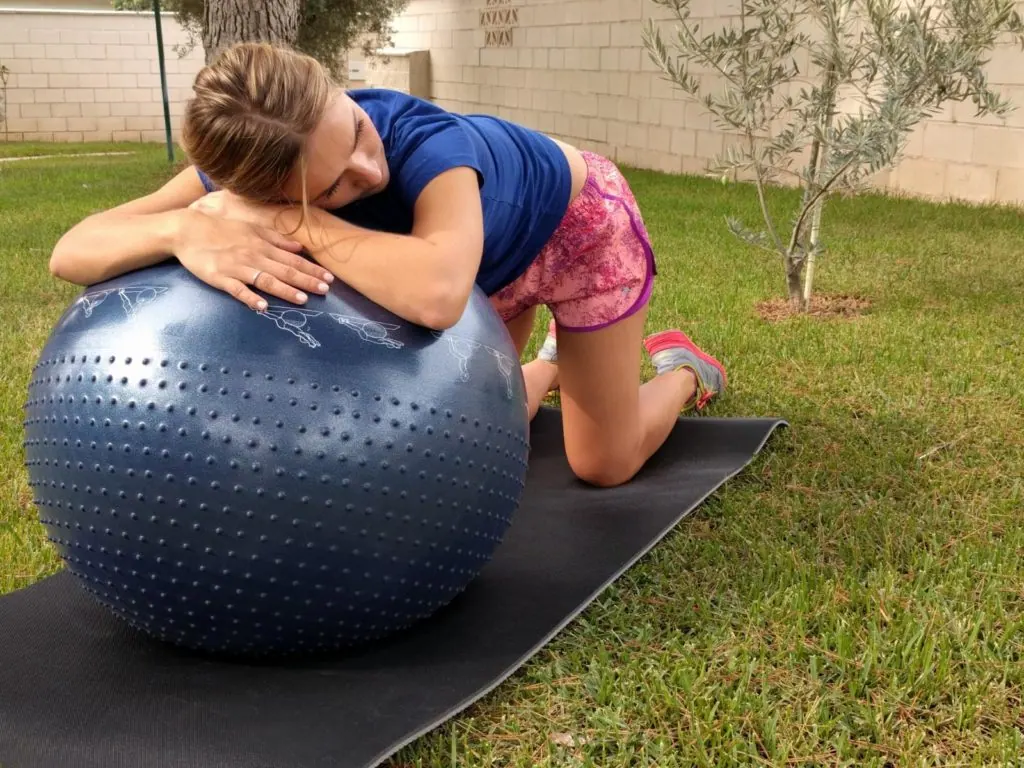
- The first exercise with Kegel balls is done on all fours, resting your arms and head on the large ball. Move your pelvis forward and back (anterior and posterior tilt). As you breathe in, tilt your pelvis forward (sticking your bottom out, arching your lower back); as you breathe out, tilt your pelvis back and contract your pelvic floor. Look at the hips in the images.
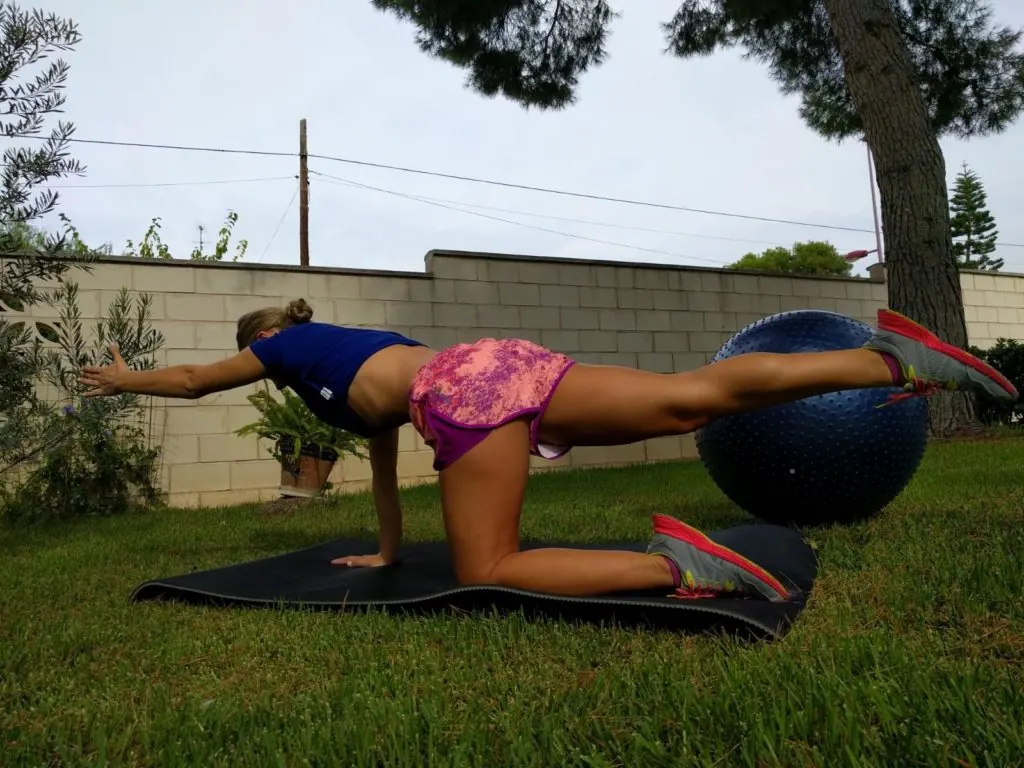
- On all fours, breathe in deeply and, as you breathe out, activate your pelvic floor and transverse abdominis. Stretch one leg back and the opposite arm forward. Switch sides.
- For the third exercise with Kegel balls, get on all fours with your toes tucked under. Breathe in deeply and, as you breathe out, activate your transverse abdominis and pelvic floor and lift your trunk (raising your knees off the floor). Repeat 10 times.
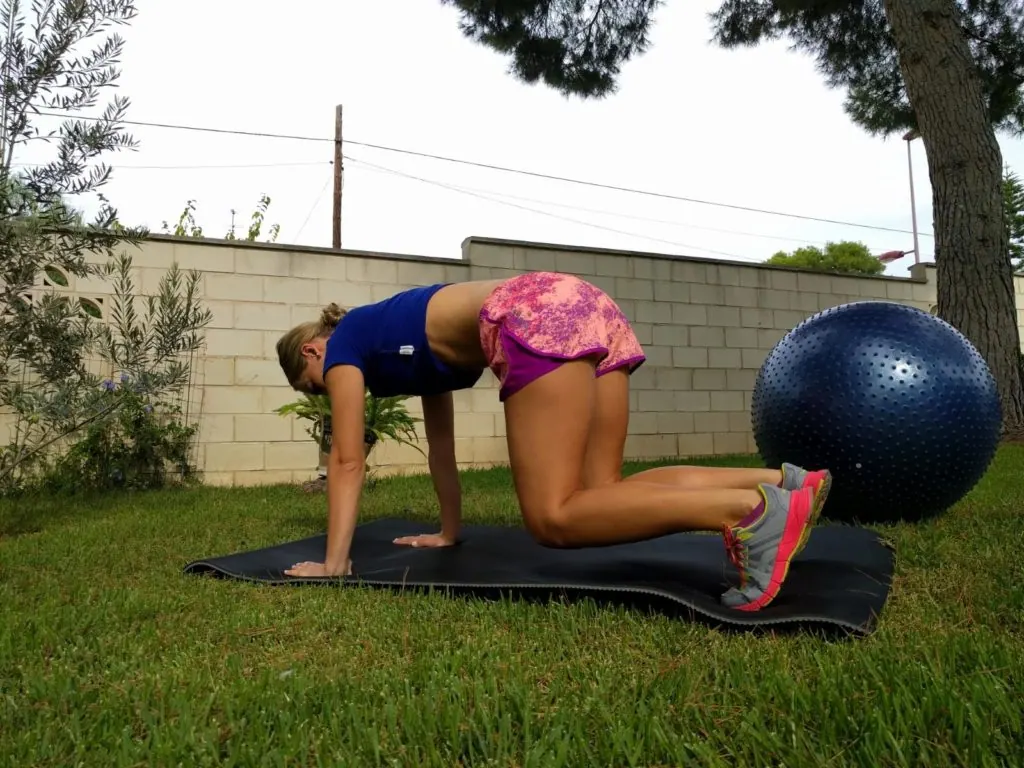
Of course, you can also do other exercises after giving birth even without balls.
How do I choose the right postpartum Kegel balls for me?
I’ve had many patients who wasted their money on completely unsuitable Kegel balls. It’s important to know that in the first months after giving birth, the vagina may be more stretched because the fascia has been overstretched.
In this case, we should use larger but not very heavy Kegel balls. Over time, the vagina should return to its original size and its walls should become firmer, so we can use smaller postpartum Kegel balls.
The most recommended size for Kegel balls after giving birth is around 35 mm (about 1⅜ inches). And it’s important to know that the balls need to stay in the vagina so their vibrations reach the vaginal walls.
Weight is another important feature, as it’s often the main reason women give up on therapy in frustration. It’s recommended to start with light balls (28–30 grams, about 1 ounce) so they don’t slip out of the vagina and the woman doesn’t get discouraged.
On the other hand, the maximum weight is 100 grams (about 3½ ounces), which is the goal of treatment with Kegel balls after pregnancy.
Which women are exercises with Kegel balls recommended for?
In general, any adult woman, healthy or with any of the pelvic floor dysfunctions we’ve just discussed, can use Kegel balls. And there are cases where we shouldn’t hesitate to start as soon as possible:
- Women who are overweight.
- Women planning to get pregnant.
- After vaginal births with episiotomies, twin pregnancies, complicated births with the use of instruments or after perineal tears.
- In menopause, to prevent urinary incontinence.
- Women who run, to prevent prolapse.
- Women with chronic constipation.
- As a treatment for sexual dysfunctions (reduced sensation or vaginal laxity).
- Women who carry heavy loads (caregivers for older people, preschool teachers or cleaners).
How do you insert and position Kegel balls?
Kegel balls after pregnancy should sit inside the vagina, roughly halfway along its length, where a tampon would go. A lubricant can make insertion easier.
The cord should hang slightly out of the vagina so the ball is easy to remove. Once inserted, stand up and start walking, moving around or exercising.
The time needed to activate the muscles involuntarily is between 15 and 30 minutes (to work on tone), and around 30 to 60 minutes to train with the balls in (to work on muscle strength).
If you notice the balls slipping out of your vagina while doing the exercises we’ve shown, you can start with exercises lying on your back or face down.
After using them, remember to wash them with warm water and soap, or use a special sanitizer for vaginal devices.


Recover after giving birth in Valencia
We see how you’re doing and support you at your own pace with postpartum physiotherapy, whether you had a vaginal birth or a cesarean. Can’t come to Valencia? We also see patients in an online consultation.