
As a pelvic floor physiotherapist, how do I assess the pelvic floor at the first appointment?



Article content
In 2018, a study by the consultancy IPSOS revealed that two out of ten women in Spain had never been to a gynecologist. So it’s safe to assume that the percentage of women who have never had their pelvic floor assessed is even higher.
As a pelvic floor physiotherapist, and in my drive to raise awareness of how important it is to look after and exercise it, I’ve set out to explain how the pelvic floor is assessed and what I do the first time a patient comes to see me.
The questions begin: when and how is the pelvic floor assessed?

If you’re an adult woman (over 18), you should know that it’s recommended to have your pelvic floor assessed once a year. Just like routine gynecological check-ups, blood tests or annual check-ups with your primary care doctor, it’s worth checking every year whether your pelvic floor needs rehabilitation, whether or not you have an injury or are pregnant.
The pelvic muscles can be subjected to great impacts and pressure, depending on changes in posture, sport, diet, hormones, stress levels, and so on.
So we can say that our routines have a direct impact on the perineal region. Remember that the main function of the pelvic floor is support (it closes off the bottom of our pelvis), so every movement or exercise will affect its condition.
When is it absolutely necessary to see a pelvic floor physiotherapist?

If you’re still not convinced about seeing a specialist at least once a year, you should at least be aware of certain stages in a woman’s life when you’ll be glad to have a pelvic floor physiotherapist nearby.
Whether because of certain chronic conditions or dysfunctions that put the pelvic muscles at greater risk, or because of natural stages such as pregnancy or menopause, if you identify with any of the following groups, I advise you to book an appointment with a pelvic floor physiotherapist:
- Pregnancy
- Immediate postpartum (first 8 weeks after birth)
- Late postpartum (first year after birth)
- Menopause
- Women with endometriosis
- Women with asthma or chronic respiratory conditions
- Women with obesity
- Athletes (high-impact sports: running, jumping, CrossFit, tennis, weightlifting, etc.)
- Women with digestive disorders (chronic diarrhea, constipation, Crohn’s disease, etc.)
- Women who have had gynecological surgery (hysterectomy, myomectomy, abdominal and pelvic surgery)
Getting down to it: how do I assess the pelvic floor?
The most common assessments at my clinic are the postpartum assessment (around 70% of assessments), the prenatal assessment and the assessment of a pelvic floor with dysfunction (women who have had vaginal births). This way I can determine whether pelvic floor rehabilitation is needed.
The first assessment lasts 90 minutes and is divided into three parts:
1. Clinical interview
The first thing I do as a pelvic floor physiotherapist when starting an assessment is to find out why the patient has come and what her state of health is. Often this happens during the same phone call in which I book the appointment, as most women have questions and have never seen a specialist before.
This information helps me prepare the questionnaire and interview we do in the first part of the assessment, which is more theoretical and focused on gathering information to make a diagnosis.

For me, this is the most important part of the whole session. Most patients who come for an assessment are a bit nervous. That’s normal, as many of them are doing it for the first time and don’t know much about gynecological physiotherapy.
In other words, the aim of the clinical interview is to find out how much the patient knows about the pelvic floor, so that we know where we’re starting from.
General questions
First, in this interview, we start with more general questions about the patient’s age, the type of work she does, her sports activities, diet, sleep quality, and so on.
Questions about obstetric history
Then I ask questions about her obstetric history, for example: how many pregnancies and births she has had, how many were vaginal, whether instruments were used, whether she had an episiotomy or perineal tear, and so on.
In this part of the interview I usually review the birth reports patients bring with them, to find out how long the pushing stage lasted, whether manual maneuvers were used or whether there were any complications.
Questions about postpartum
The next questions are about postpartum: whether there were complications, how the baby is being fed, and her physical activity.
Preliminary diagnosis
Next we talk about the symptoms that concern the patient. Every woman describes them differently, but with her explanations and my guiding questions we can make a preliminary diagnosis. As a pelvic floor physiotherapist, the questions I usually ask about symptoms are:
- What symptoms do you have? Any type of urinary incontinence, leaking urine when you cough, sneeze or laugh, leaking urine on the way to the bathroom, leaking urine during sport, pain during sex, passing gas during exercise, needing to push to open your bowels, etc.
- How long have you had them?
- How often?
- Does anything make the symptoms worse?
- How do these symptoms affect your daily life?
Depending on the type of patient attending the first pelvic floor assessment, I also ask about any surgery she has had in the past and, if she has had gynecological surgery, I review the medical reports.
2. Physical examination
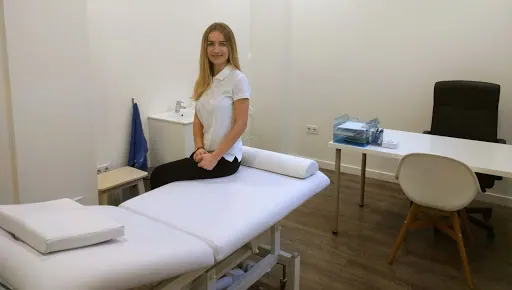
After the clinical interview and reviewing the medical reports, the physical examination begins.
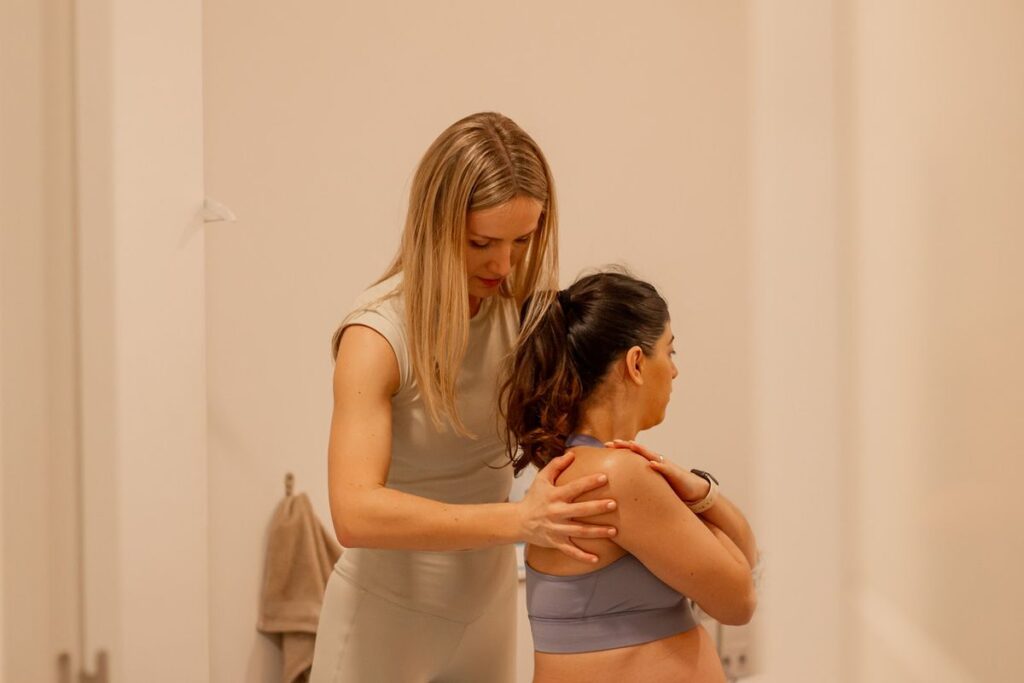
Assessing the patient’s posture
First, I assess the patient’s posture, looking at how her pelvis sits in relation to her rib cage, how she places her feet, and so on.
Problems in the abdominal wall
Next, the patient lies on the treatment table and I assess her abdominal wall, as the abdominal muscles work together with the pelvic floor. Problems that can be seen in the abdominal wall include rectus diastasis, adhesions in a cesarean scar, an umbilical hernia, loss of tone in the transverse abdominis and increased intra-abdominal pressure.
All these problems directly affect pelvic floor tone.
Rib cage and diaphragm
After looking at the abdominal muscles, we focus on the rib cage and diaphragm, and I ask the patient to do some breathing exercises. Breathing, or rather restrictions in normal breathing, can cause pelvic floor hypertonia or prevent the patient from doing Kegel exercises for women correctly.
Pelvic floor examination
The next and most important part is the pelvic floor examination. Before it, the patient can go to the bathroom to empty her bladder and bowels so she’s as comfortable as possible.
This is the most delicate part of the appointment, as the pelvic floor examination is done vaginally and/or anally. Before starting, I explain everything I’m going to do, step by step. In the pelvic floor assessment I usually follow these steps:
- I assess the external perineum: tissue health, color, tone, anovulvar distance, contraction, sensation, reflexes, etc.
- I assess the muscles internally by palpating the vaginal walls and using pelvic floor products: vaginal biofeedback and manometric vaginal probes. I always look for the most visual way for the patient to see her pelvic floor strength. That’s why I use probes and devices that show muscle strength and whether the contraction is correct.
- I assess the degree of vaginal stretching, especially if the patient has had vaginal births.
- Then I focus on whether there is any prolapse, observing and palpating the vaginal canal while sitting, squatting and sometimes standing.
- Perineal scars: assessed by palpation or with a cotton swab.
- Finally, as a pelvic floor physiotherapist I also check for muscle hypertonia, pelvic floor muscle knots, hemorrhoids or anal fissures.
3. Exercises
The last part of the initial assessment is learning therapeutic exercise so that, if needed, work on pelvic floor rehabilitation can begin. I explain to the patient how to do Kegel exercises correctly, using vaginal probes or vaginal biofeedback.
The patient learns to exercise her pelvic floor, and the most important thing is to find it. Then she memorizes it and, finally, learns how to coordinate the muscle contraction with her breathing. It’s striking how many women are surprised when they learn to do it properly and tell me they had been doing it wrong until then.
I also teach them the hypopressive exercise technique and the most basic postures used in pelvic floor physiotherapy. This type of training is recommended for women who need to strengthen their abdominal muscles or correct abdominal diastasis, and for those with uterine prolapse or urinary incontinence.
With pregnant patients, I use this last part of the appointment to teach them Kegel training and correct activation of the deep abdominal muscles, and I explain what their physical activity should be in each trimester. If the patient is past week 34, I teach her the technique for perineal massage.
In the days following the initial assessment, the patient receives a report by email together with the exercises recommended for her case.
And if further work with a pelvic floor physiotherapist is considered necessary, the patient can choose private sessions or join one of the groups or workshops, depending on her case, to keep learning how to exercise her pelvic floor.
When the assessment should not be done vaginally

There are few situations in which an internal examination of the pelvic muscles should be avoided. However, we should know that an internal pelvic floor assessment is contraindicated if we have any of the following:
- A pregnancy at risk of premature labor: placenta previa, a shortened cervix, uterine bleeding or previous miscarriages.
- A urinary infection.
- An active bacterial infection.
- Menstruation (first or second day).
- The first 3 weeks after a birth with an episiotomy or perineal tear.
- Active cervical cancer.
- Vaginal pain that prevents examination.
If you still have questions about how the pelvic floor is assessed after reading this article, book an appointment with me! I’ll be happy to see you at my clinic, and together we’ll improve the condition of your pelvic floor.


Get your pelvic floor checked in Valencia
Something doesn’t have to go wrong: with a pelvic floor check-up we see how it is and what you should do. Can’t come to Valencia? We also see patients in an online consultation.