Tips and exercises to dilate faster during labor



Article content
The way women give birth has evolved over the centuries. Whether because of medical advances built on years of research and studies, or because of “trends”, there are many different positions and settings in which a woman can bring her child into the world.
In this article I’ll explain which exercises to help dilation during labor you can practice to have a good vaginal birth without injuries. Of course, setting aside cases where this isn’t possible for medical reasons.
In addition, everything you work on in your pelvis and pelvic floor during labor will have a direct impact on your well-being afterward, including everyday things such as sex, sport and exercise, the return of your period and using intimate products such as Beppy Cup…
What was birth like before and what is it like now?
Fortunately, more and more women are interested in how to prepare their pelvic floor for a vaginal birth without injuries and are looking for information about positions and exercises to help dilation before birth.
During this type of birth, the woman’s body and the baby work together to help the baby pass through the birth canal and be born. Movement and changing positions to help dilation during labor, together with natural breathing, are the most primitive concepts, associated with vaginal birth for centuries.
Modern medicine, today’s lifestyle, advances in facilities and furniture and, let’s be honest, the search for more comfort have completely changed the birth process.
Now women more often wonder how to dilate faster during labor, and we’ve replaced something natural and intuitive with births that are sometimes overly protocol-driven.
The most common situation in hospitals is for the mother to be lying on her back in bed, with an epidural, the use of instruments, an episiotomy, manual maneuvers and directed pushing. Not all of these always happen, but they’re increasingly common routines.
How can we reduce the risk of such a protocol-driven birth? What can we do to delay the epidural and shorten dilation time?
What is the dilation process?
Dilation is a physiological process, triggered by hormones (oxytocin) and uterine contractions, that makes the cervical canal shorten and dilate to 10 centimeters (4 inches).
The first phase of dilation (up to 4 centimeters) is usually slower, and the second phase (5 to 10 centimeters) is usually more active and faster. But depending on each woman’s physical and mental state, the length of both phases can vary.
What matters most in dilation is how the baby presents in the mother’s pelvis. In other words, if the baby is very high, not engaged or badly positioned… dilation can take longer or stall completely. The positions the woman adopts and the movements she makes at that time are key to the baby’s head engaging well and labor progressing.
Exercises to help dilation during labor
All women in labor are advised to wait as long as possible before having an epidural, since it can prevent them from getting out of bed, reduce muscle control in the legs or even cause a loss of motor control in the lower limbs.
Knowing that body movement is necessary for a good birth, the advice is to practice exercises, positions and movements that help dilation during labor. This will reduce the pain of contractions and delay the epidural.
How to dilate faster during labor before the epidural
Some exercises to help dilation during labor before you have the epidural are:
- Stand, walk or sway from one foot to the other.
- Standing with your back leaning forward, rest against the wall and make side-to-side hip movements.
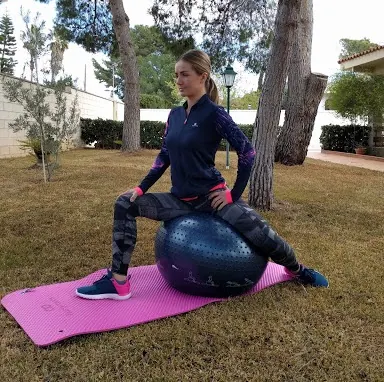
- Sitting on the fitball, make circular movements with your pelvis.
- Sitting on the fitball, make infinity-symbol movements with your hips.
- Sitting on the fitball, make small bounces, relaxing your glutes and pelvic floor.
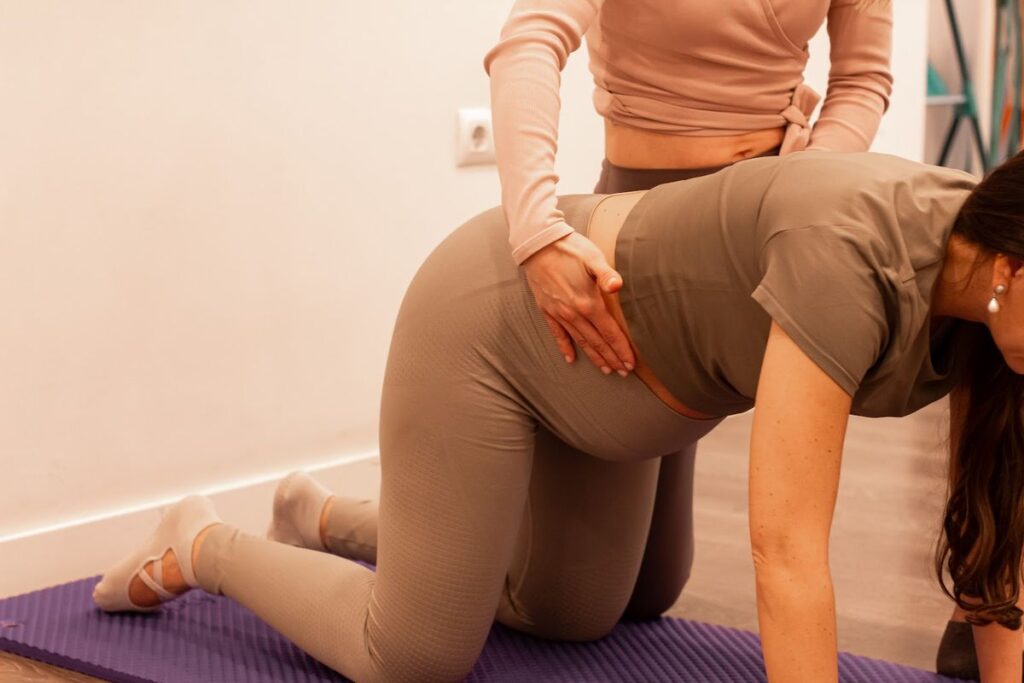
- On all fours (on a mat) or on the bed, lean on the large ball (or the back of the bed) and make circular movements with your hips.
- If you’re wondering how to dilate faster during labor, you can also try sitting on the fitball with one leg in front and the other behind and moving your pelvis forward and back.
During a contraction, the pain increases quickly, so at that moment it’s recommended to stop, lean forward and rest on the bed, the wall or your companion, and breathe deeply.
How can I dilate faster during labor after the epidural?
Anesthesia reduces the pain of contractions and, at the minimum dose, shouldn’t affect the mobility and motor control of the leg muscles.
However, in some cases, after the anesthesia women feel a loss of sensation and strength in all the muscles of the lower body. As a result, they can’t change positions to help dilation, aren’t able to move their legs and need help from their companion or the midwife to move.
So after the epidural, for dilation and the engagement of the baby’s head to keep progressing, it’s necessary to do exercises to help dilation such as these:
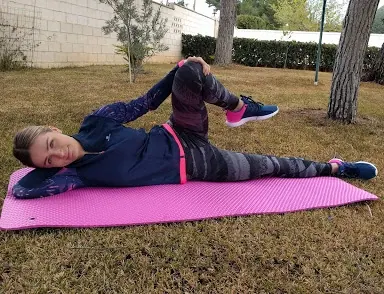
- Change position while lying in bed: turn from one side to the other every 20 minutes.
- Sitting in bed (with your companion’s help), lean forward and back.
- Lying on your side in bed, make hip movements with your top leg (hold it and move it in circles, in each direction).
- If you can’t move actively, your companion can hold one leg and make circular movements.
5 key tips for a good birth

Whatever the type of vaginal birth (with or without an epidural), all women in labor are advised to keep moving and change positions every 10 minutes.
As well as the exercises to help dilation during labor we’ve seen, for dilation and the correct engagement of the baby to be possible, we recommend these steps:
- Move your pelvis: if the pelvic joints are relaxed and mobile, they allow the baby to keep descending.
- Avoid lying on your back: in this position, the sacrum (the most important bone in birth) is compressed, and the pelvis can’t adapt or make way for the baby.
- Breathe deeply: don’t hold your breath during a contraction. Holding your breath makes the contraction more painful and tenses your whole body.
- Relax your pelvic floor: the perineum should be free of tension for the pushing stage. So do everything you can not to tense it: use the large ball, warm compresses on the lower back and perineum, and perineal massage.
- Relax, this is your moment: cortisol, known as the “stress hormone”, is produced when the woman is anxious. This hormone works against oxytocin and can therefore have a negative effect on dilation. Having someone with you, freedom of movement, pleasant music, your favorite scent, a massage… are some of the things that help you relax and let the birth flow.
Knowing how to prepare for birth is essential and something you shouldn’t overlook. Regular physical activity, pelvic floor toning exercises, perineal massage and dilation exercises are all very important in birth preparation.
If you’d like more information, take a look at this post on abdominal exercises you can do during pregnancy or this one on fitball exercises for pregnant women.
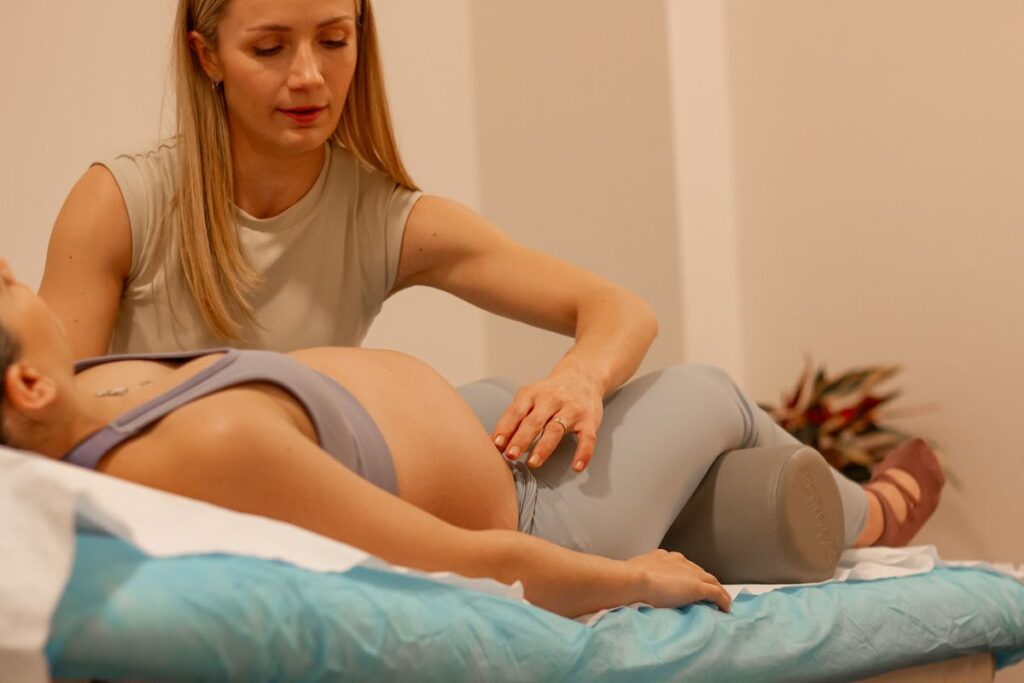
Have your pelvic floor assessed before giving birth and get ready for a birth that goes well and becomes an unforgettable moment.
If you’d like more information after reading this article on exercises to help dilation during labor, I’ll be happy to help! Call me and book an appointment!



Prepare for your birth at our clinic in Valencia
We support you throughout your pregnancy with physiotherapy for pregnant women, adapted to each trimester and your situation. Can’t come to Valencia? We also see patients in an online consultation.