How to prevent and treat lower back pain in pregnancy



Article content
More than half of women have had back pain at least once in their lives. Around 70% of pregnant women have discomfort in the lower back and pelvic region, known as lumbopelvic pain or, more commonly, lower back pain.
It’s a very common complication in pregnancy, as it’s linked to the musculoskeletal changes needed for the belly and pelvis to grow. Lower back pain in pregnancy often affects pregnant women’s daily quality of life and makes it harder to work, look after their children, exercise or do housework.
What are the features of lumbopelvic pain?
- Pain in the lumbar region: the lower part of the spine, below the ribs and above the buttocks. It may be felt only in the buttock area, between the iliac crest and the gluteal fold. Sometimes lower back pain in pregnancy can spread toward the pubis or down the back of the leg or foot (sciatica in pregnancy). If the problem only affects the lower spine, patients usually feel deep pain on both sides of the spine. If the muscle load is wider, spreading to the buttocks, pelvis and legs, the pain is felt as superficial discomfort on one or both sides.
- Limited movement: when the pain is in the pelvis, patients usually feel more discomfort in upright positions (sitting or standing), in prolonged postures and when walking. With lower back pain, pregnant women feel more discomfort when they change position, for example going from bending the spine to straightening it (bending down and leaning forward, then straightening the legs and extending the spine).
- A feeling of the legs being locked: pregnant women notice less mobility in their hip joints.
- Limited range of motion in the lower back: movements such as bending down to pick up shopping bags, lifting something off the floor or getting out of bed are very limited by pain or joint locking.
- Sciatica: pain that starts in the lower back and travels down one side (buttock, back of the leg, even to the foot). On physiotherapy examination there is irritation of the sciatic nerve and increased muscle tone along the whole path of the nerve.
When does lower back pain appear in pregnancy?
Lower back pain in pregnancy is intermittent and can be triggered by holding the same position for a long time or by activities such as standing, walking or sitting for long periods (it usually appears 20–30 minutes after starting the activity).
Lower back pain is most common between weeks 22 and 36 of pregnancy. This is when postural changes are very visible and affect the spine and the whole muscular system. Usually the symptoms disappear on their own within the first three months after the birth, although it’s also important to keep exercising.
How to prevent and/or treat lower back pain in pregnancy
Despite the spine’s physiological adaptation to pregnancy, discomfort occurs when the bump is very large and puts a heavy load on the lower back muscles. Another very important factor is the relaxation of the deep abdominal muscles, which support and protect the spine. Weak glutes, a sedentary lifestyle and weight gain are the most common causes of lower back pain during pregnancy.
The best thing pregnant women can do to prevent back pain is avoid excess weight gain (no more than 15 kg/33 lb over the whole pregnancy), exercise regularly, avoid high heels, avoid staying in the same position for more than 2 hours at a time, avoid carrying heavy loads and adopt correct postures:
- Sit with your back supported and your pelvis in neutral (feel your weight on your buttocks and place a cushion in the curve of your lower back). Sitting slumped with a rounded back is incorrect.
- Lie on your side, not on your back.
- Get up from a chair or bed carefully (avoiding sudden movements).
In addition to this advice and the exercises explained below, many people look for tools to help ease muscle tension and support recovery. Products such as Magnetic-Tape work by reducing the perception of pain and encouraging muscle activation without medication, which can complement the physical care routine explained here.
Exercises for lower back pain during pregnancy
To prevent or ease pain in the lower back or pelvis, it’s very important to do gentle exercises that help keep the deep abdominal muscles strong, stretch the lower back muscles and maintain good pelvic mobility.
When doing any kind of activity, wearing a pelvic support belt will reduce your pain and make exercise easier. A good option is the Physiomat Confort belt if you wear a size above 40 (US 10), and the Physiomat Tonic if your size is smaller.
Here are several exercises you can do at home (as long as your gynecologist hasn’t advised against them for other reasons):
-
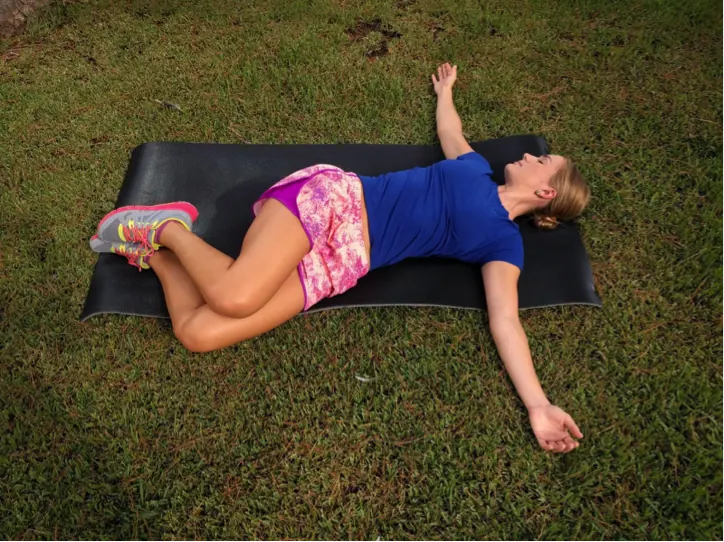
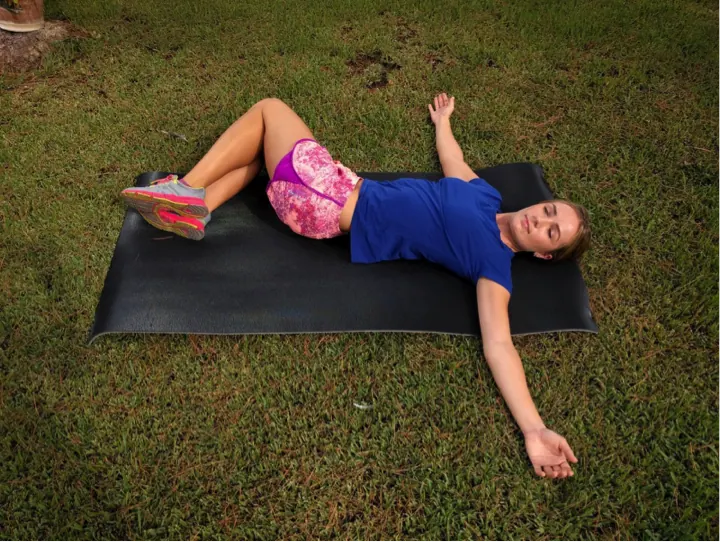
Pelvic rotation
Lie on your back with your legs bent and your arms out to the sides. Rotate your pelvis from side to side, keeping your feet on the floor. Start with a small movement and, if there’s no pain, gradually increase the range (taking your knees from one side to the other). This exercise rotates the pelvis and spine, mobilizes the lumbar vertebrae and relaxes the lower back muscles.
-
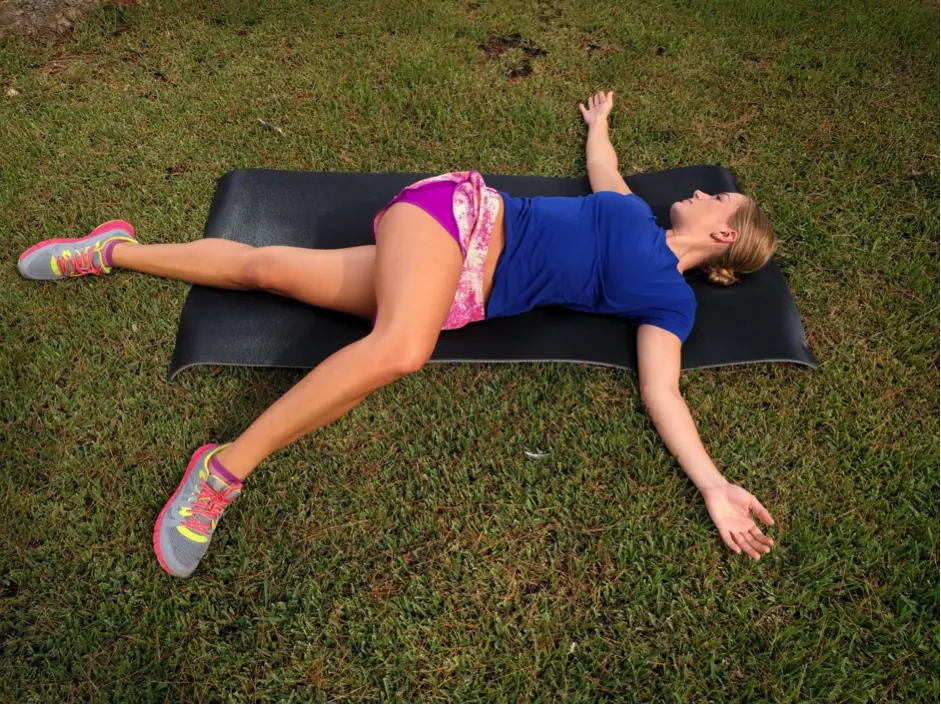
Quadratus lumborum and glute stretch
Lie on your back with your legs straight and your arms out to the sides. Lift your left leg (bent), tilt it toward the right and rest your foot on the floor. Turn your head the opposite way from your leg. Stay in this position for one minute, then switch legs. This exercise stretches the lower back, sacrum and glutes. It’s very helpful if you have sciatica in pregnancy, which can also be treated.
-
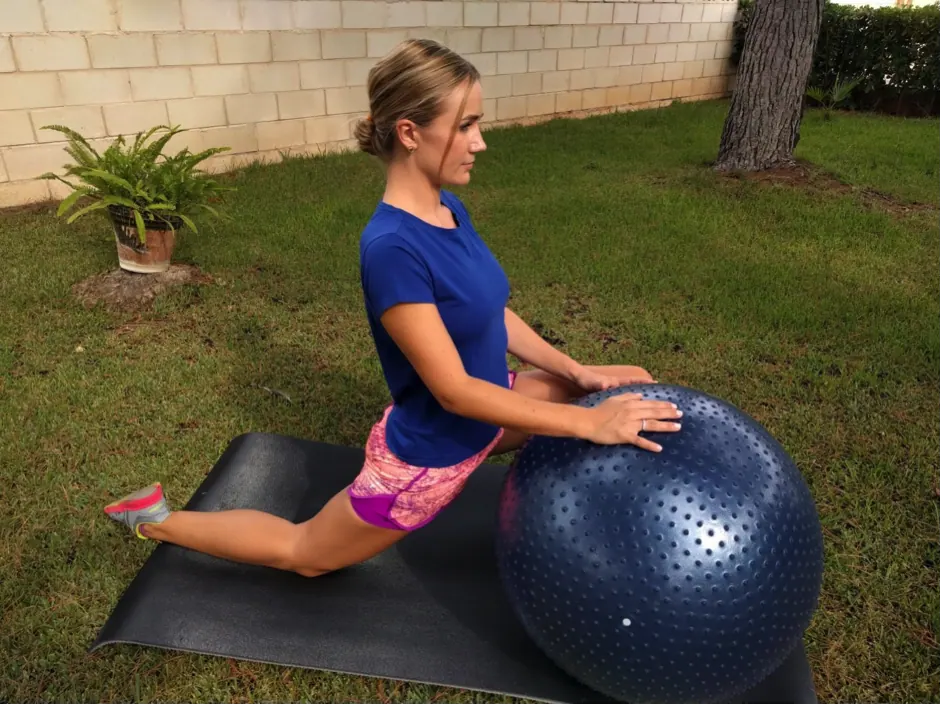
Psoas and iliacus stretch
This muscle group is very important in treating lower back pain, as it tends to shorten (lose flexibility) during pregnancy. When the psoas is short, the posture has a very arched lower back and a prominent bottom. Throughout pregnancy it’s essential to keep this muscle group flexible to prevent lower back pain and muscle load at the back of the pelvis.
To stretch it, kneel on one knee with the other leg bent and that foot on the floor. The angles of the back leg should be about 90º. You can lean on a large ball to keep your balance. Keeping your back straight, shift your whole body forward until you feel tension in your groin.
-
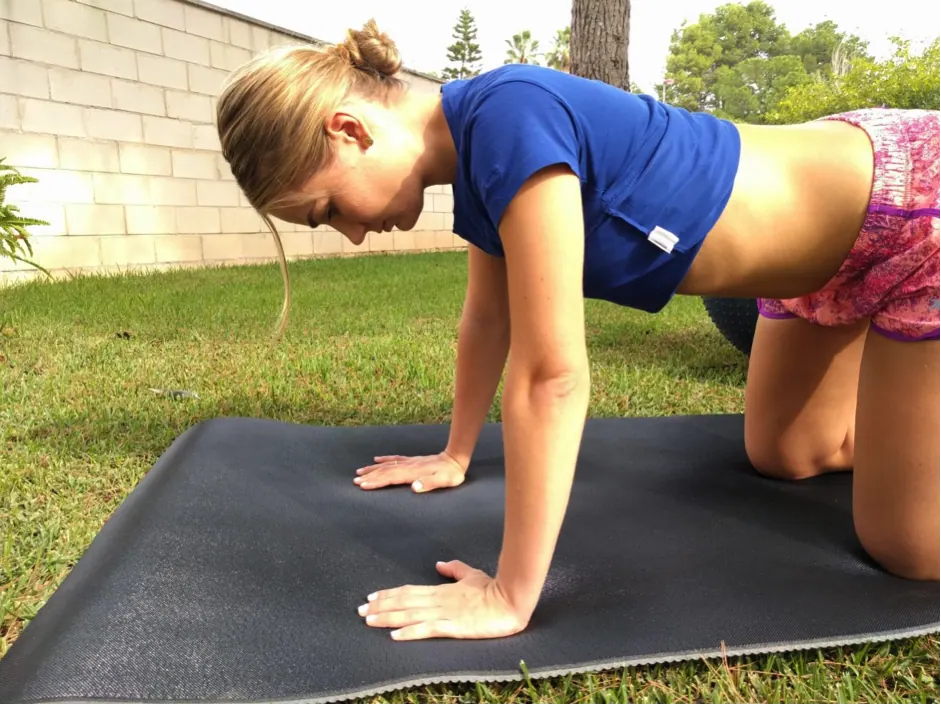
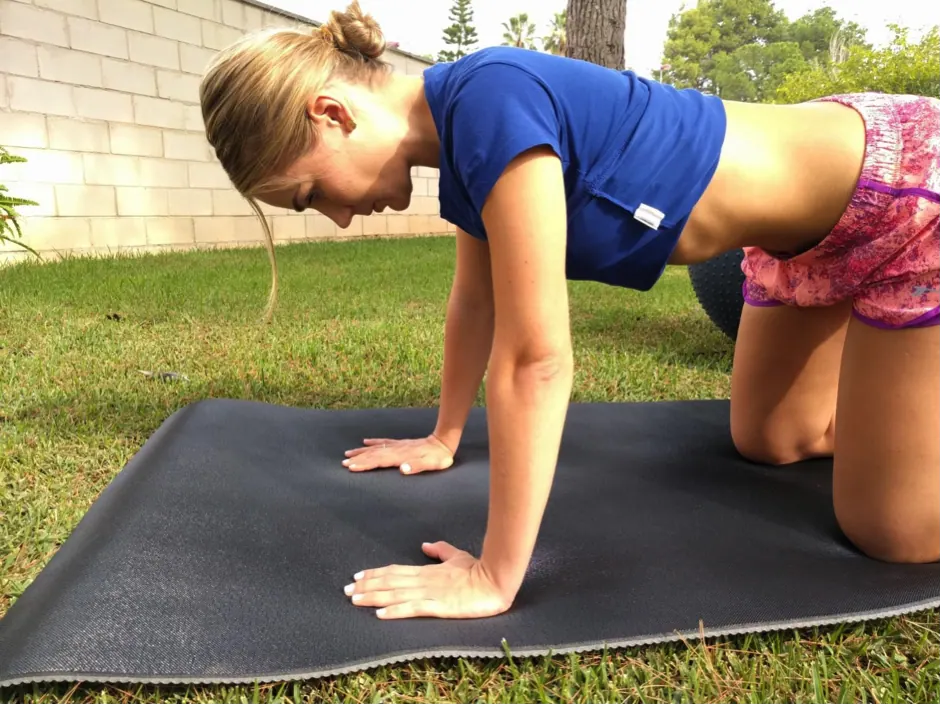
Transverse abdominis toning exercise
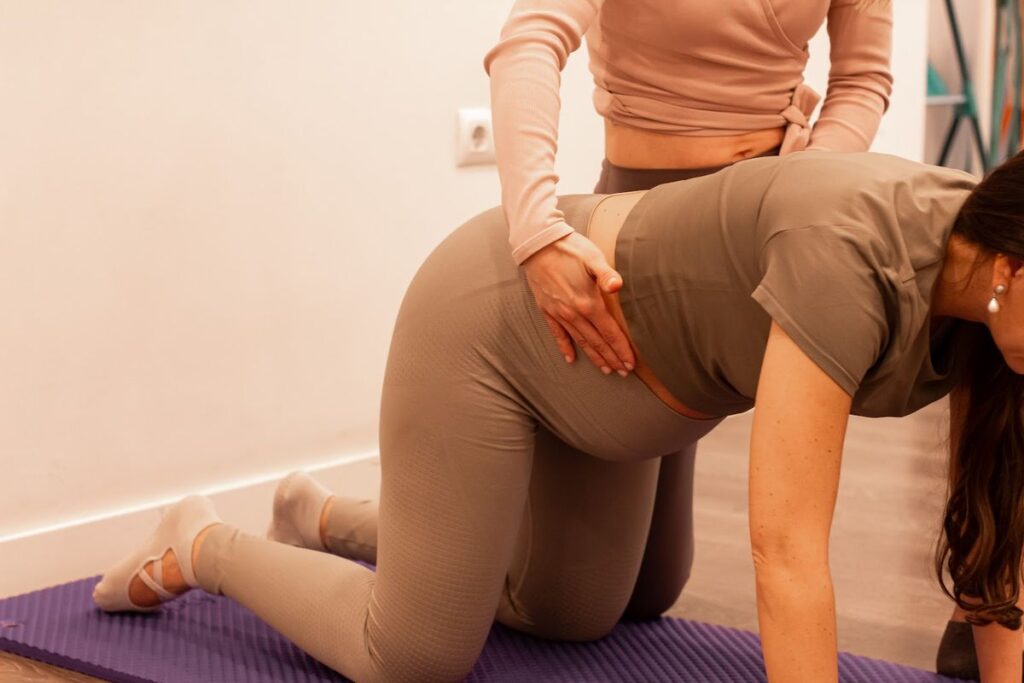
On all fours, place your knees under your hips and your hands under your shoulders. Keep your spine long. As you breathe in, relax your abdominal muscles (let your belly and belly button drop toward the floor, but without arching your lower back) and, as you breathe out, draw your belly button in, tightening your abdominal muscles.
This exercise activates the deep abdominal muscles and the muscles that stabilize the trunk. It’s important to do it without changing the position of your pelvis or spine.
-
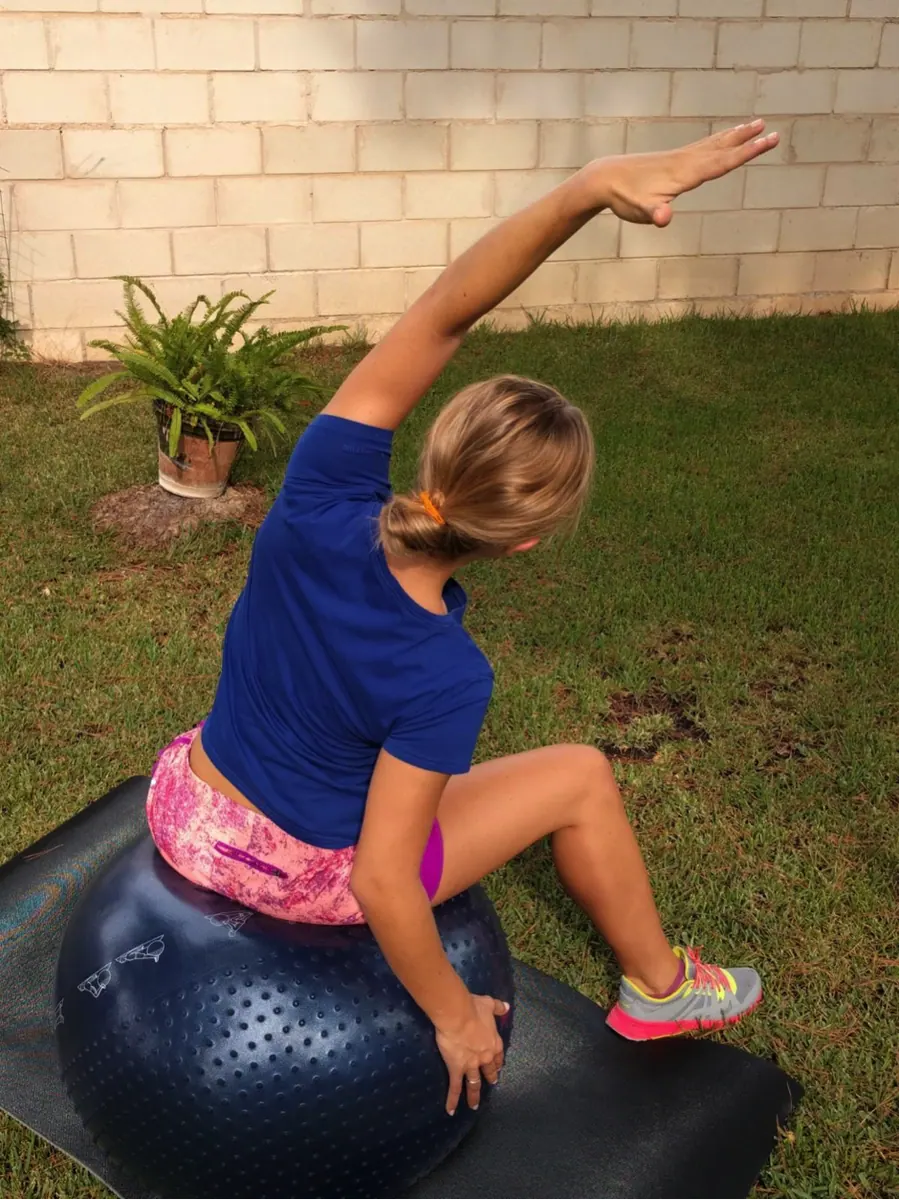
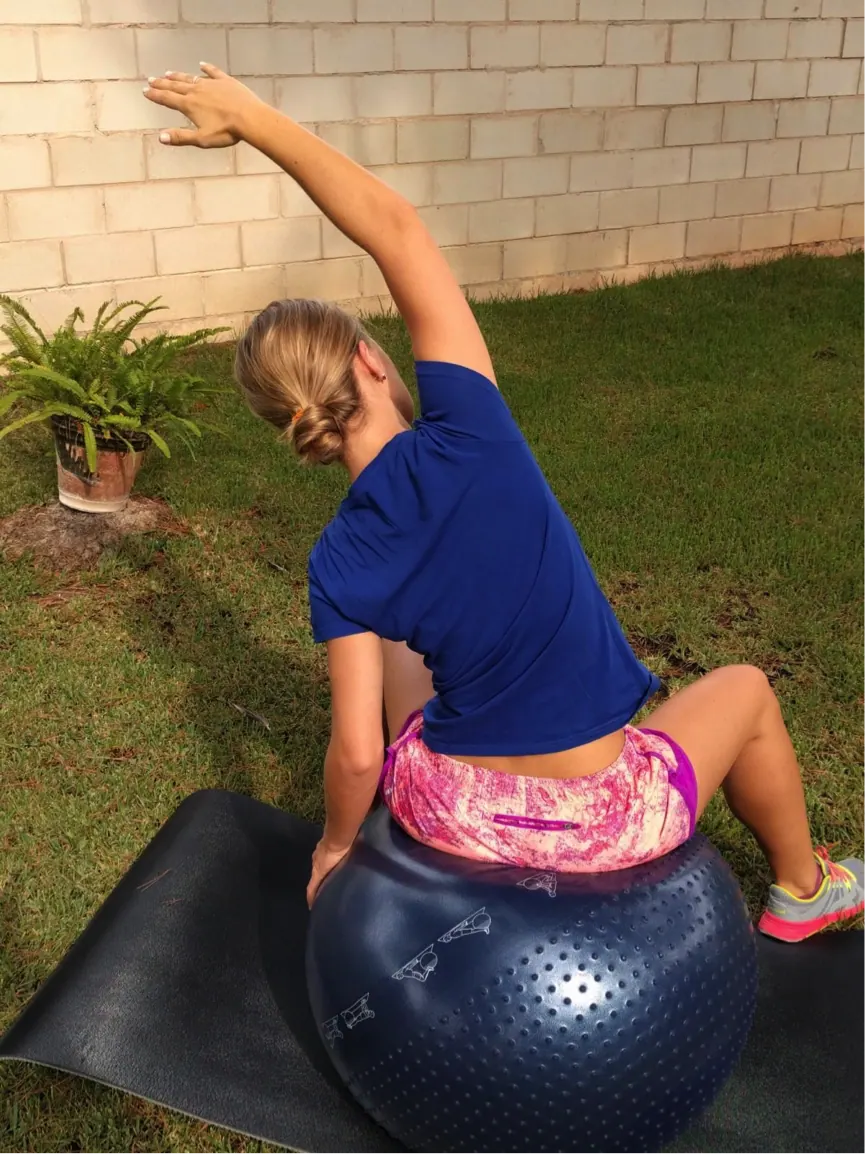
Quadratus lumborum stretch
Sitting on the large ball with your legs apart, raise your right arm and take it over your head to the other side, leaning your whole trunk (side bend). Stay leaning for a few seconds and return to the starting position. Switch sides.
This exercise is important for making the quadratus lumborum more flexible, as it bears a lot of load and tension during pregnancy. Bending the spine to the side improves the flexibility of the muscles alongside the spine and makes the rib cage muscles more elastic.
Doing these exercises at least 3 times a week improves the mobility of the lower spine and pelvis and reduces muscle load in the affected areas. However, if the pain is very frequent and doesn’t ease after 2 weeks of doing the exercises, it’s important to see a specialist physiotherapist who can assess the source of the pain and provide specialist treatment.
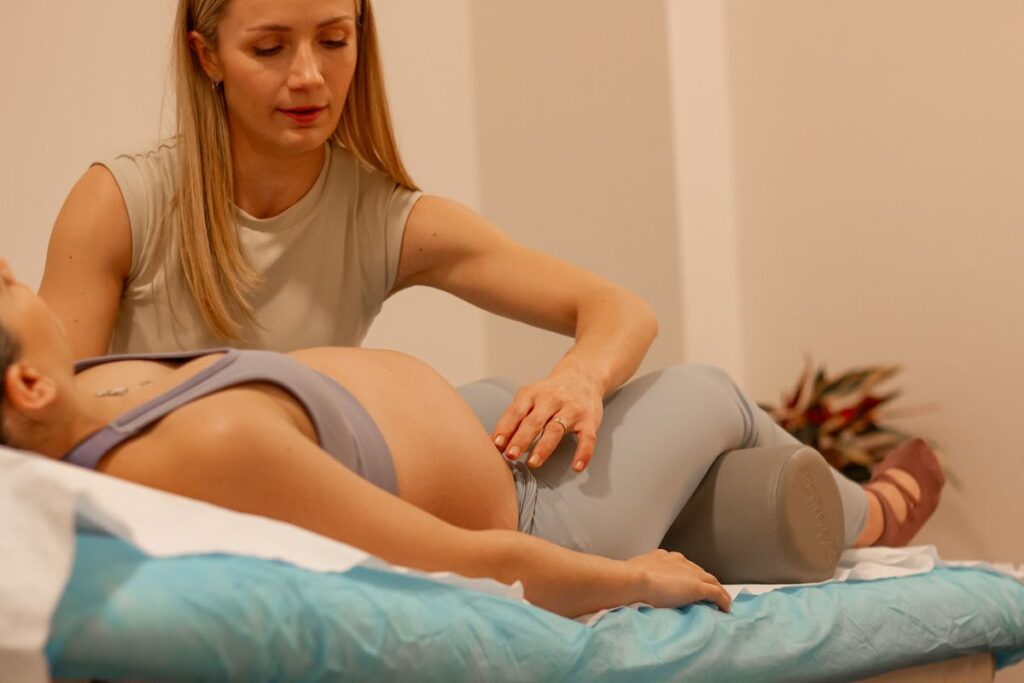
Obstetric rehabilitation offers several treatments for lower back pain, pelvic pain or sciatica in pregnancy:
- Therapeutic massage of the lower back, glutes and legs.
- Postural re-education (correcting posture through exercises, stretches and proprioceptive exercises).
- Mobilization of the spine and pelvis.
- Kinesiology taping.
- Passive stretching (done by the physiotherapist).
- External support (pelvic belts).


Look after your back at our clinic in Valencia
We assess your back, pelvis and pelvic floor to tailor physiotherapy for lower back pain to your case. Can’t come to Valencia? We also see patients in an online consultation.