
How to avoid or minimize the risk of a perineal tear or episiotomy during birth



Article content
The idea of “birth preparation” is a bit misleading. Yes, physical preparation with specific exercises for pregnant women is recommended from the first trimester, but building healthy pelvic health habits (and diet, mental health, etc.) comes first. You don’t need to wait until you’re pregnant to train your pelvic floor muscles, your perineum, hip mobility, breathing and everything else.
Unfortunately, many women still start preparing for birth late and weren’t aware of the importance of looking after their pelvic floor, yet hope to have a vaginal birth that is “as natural as possible.”
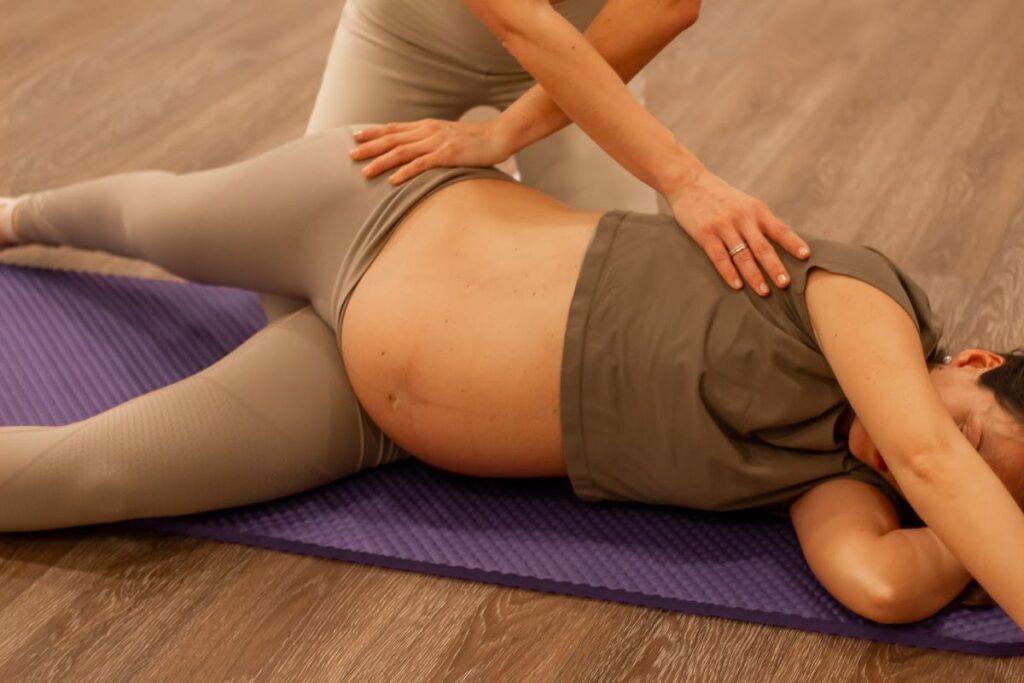
In these cases, physical preparation focuses on the pelvic floor muscles and the perineum, the parts of the body that will be subjected to the greatest pressure and stretching during birth, and even to possible damage to their structure if an episiotomy or tear occurs.
How can you avoid an episiotomy during birth?
To avoid an episiotomy during birth, or at least reduce the chances of a tear or episiotomy due to undertrained pelvic muscles, we need the pelvic floor, the vaginal canal and the skin of the perineum to be in optimal condition: in other words, exercised and elastic.
We exercise our pelvic floor to achieve the right muscle tone, neither too high nor too low. The strength of the muscles around the vaginal canal will help us stay continent during pregnancy and avoid or reduce the typical lower back pain. And during labor, it will help the baby’s head engage and descend correctly. At the same time, good tissue elasticity will allow the perineum and vaginal canal to expand and stretch without tearing.
How do you tone your pelvic floor in pregnancy without overdoing it?
There is no general protocol we can apply to all pregnant women. Each of us needs to have our pelvic floor assessed to know what we need more: strength or elasticity.
Nowadays, many women live with chronic stress or somatize their emotions in the pelvic area. We often see that these patients’ perineal area has excessive muscle tone, is painful and not very elastic. Doing Kegel contractions in these cases would be a disaster. So prenatal pelvic floor exercises must be tailor-made for each woman.
If my pelvic floor is strong, when should I start stretching it?
Ideally, both types of training should be done in parallel from the start of pregnancy. That is, when we do Kegel contractions or a pregnancy Pilates class, after toning the pelvic floor muscles we stretch and relax them. For example:
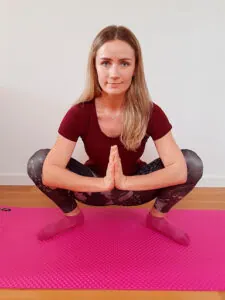
- Squatting, push your knees out to the sides with your elbows, opening your hips as much as you can. In this position the pelvic floor expands, descends and relaxes. Stay in this position for about 20 to 30 seconds while breathing deeply.
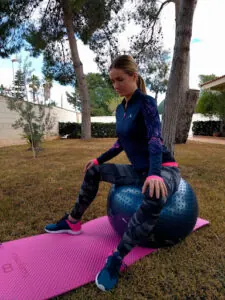
- Pelvic movements on the fitball. Sitting on the large Pilates ball, place your legs out to the sides, lengthen your spine and make circular movements with your pelvis, then side-to-side movements and finally figure-of-eight movements. You’ll feel a gentle massage and relaxation in the perineal area.
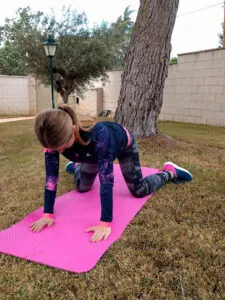
- Pelvic floor relaxation with the hips rotated inward.
Get down on all fours and move your feet out to the sides, rotating your hips inward. In this position, the lower pelvis opens and the upper pelvis closes. The pelvic floor stays relaxed. Take 10 deep breaths, feeling the muscles gradually relax more and more.
Is the Epi-No useful for birth preparation?
The Epi-No is a device designed to prepare the vaginal canal and make it more elastic for birth. It has a pressure gauge that shows, in numbers, how far we can inflate it. It also includes a measurement of the device’s diameter and circumference.
It’s a tool we use often in clinic, as in the hands of a specialist physiotherapist it’s a useful device. But we find that patients who buy and use the Epi-No at home often have muscles that are more sensitive than usual and overloaded through misuse of the device.
An elastic pelvic floor is not the same as a stretched pelvic floor. The goal is for the muscles to be elastic and at the same time have good tone, to allow good mobility of the coccyx and sacrum, and for there to be no discomfort on touch and no muscle knots. Stretching with the Epi-No on our own, we can easily stretch the tissues “too much” and end up with the opposite effect.
Many patients fall into the “comfort” of training with a device that “doesn’t tire you out”. As with everything, we need to use common sense and be guided by professionals. In clinic, for example, we use the Epi-No more as a tool to assess whether the patient can locate her pelvic floor, how she activates it and how strongly, rather than as a device for frequent training.
From week 37 of pregnancy, we assess perineal flexibility by inflating the device until the first sensations of “stretching” (not pain). And if we see that perineal elasticity isn’t good, we give guidelines and advice that very rarely include working with the Epi-No. For example, we recommend that some women practice breathing exercises, relax their jaw and neck, walk more, move their pelvis on the fitball, meditate, and so on.
In short, avoiding an episiotomy or perineal tear during birth is about combining several things and not focusing solely on physical exercise or exclusively on aids such as the Epi-No. A little of everything and not too much of any one thing.


Prepare for your birth at our clinic in Valencia
We support you throughout your pregnancy with physiotherapy for pregnant women, adapted to each trimester and your situation. Can’t come to Valencia? We also see patients in an online consultation.