
The round ligament of the uterus: what it is and how it affects abdominal pain in pregnancy



Article content
Abdominal pain in pregnancy is a common complaint, caused by the round ligament of the uterus, along with other muscle problems, such as lower back pain, and joint problems caused by the body changes a woman goes through at this stage of motherhood.

They’re usually mild, but they can sometimes have a considerable impact on everyday quality of life. To prevent this, it’s essential to follow a series of guidelines to look after the round ligament of the uterus, which is directly linked to abdominal pain.
When does abdominal pain appear in pregnancy?
In the first trimester, abdominal pain in pregnancy is less sharp. So if it appears constantly and severely, it’s advisable to see a doctor as soon as possible.
From the second trimester, discomfort starts to appear in the pelvis, spine and limbs. Almost 50% of pregnant women, from the second trimester, have belly pain in pregnancy that radiates toward the groin.
It’s often confused with uterine contractions, as it can cause abdominal pain typical of contractions.
What is the round ligament of the uterus, where is it and what does it do?
What the round ligament is
The round ligament of the uterus is a fibroelastic cord, one of the longest ligaments supporting the uterus. It’s about 15 centimeters (6 inches) long and runs from the upper corners of the uterus through the inguinal canal to the outer labia. So there’s a round ligament on each side.
It’s made of fibrous muscle tissue and its nerve supply comes from the uterovaginal plexus, made up of the uterine nerves from the inferior hypogastric plexus.
Where the round ligament is
To understand what the pelvic floor is, it’s important to know that the lower part of the uterus rests on the fibrous structures of the pelvis, as we explained in previous articles on pelvic floor exercises.
What the round ligament does
At the top, the uterus needs a system of suspension and anchoring in the abdominopelvic cavity. The round ligament of the uterus, together with the broad ligament, is responsible for keeping the uterus suspended. In a suspension bridge, they would be the cables.
In pregnancy, because the uterus grows and the abdominal and pelvic muscles are overstretched, the round ligament has to support more weight and may become overstretched.
That’s why the effect of the hormones the body produces during pregnancy is so important: they allow the round ligament to be flexible and stretch as the uterus expands. In a woman who isn’t pregnant, the round ligament isn’t able to stretch.
Why does round ligament pain appear?
Round ligament pain in pregnancy usually appears between weeks 16 and 20. It’s caused by traction, lengthening, overstretching or contractions with sudden movements or very quick changes of position.
A sudden movement can make the round ligament contract and cause cramps. This spasm irritates nearby nerve fibers and causes sharp abdominal pain in pregnancy, which usually lasts a few seconds or minutes. It’s important to know that it poses no risk to the baby’s life.
In a pregnancy with a very large baby or twins, the round ligament can stretch to about 20 cm (8 inches) in length. It becomes thinner and weaker, so in these situations it can cause constant pain, regardless of movement or position.
What can you do to reduce how often round ligament spasms happen?
To prevent or reduce the symptoms of abdominal pain in pregnancy caused by the round ligament, we recommend:
- Move slowly and avoid sudden changes of position, especially from the second trimester.
- When sneezing, laughing or coughing, lean your body slightly forward. This position reduces tension in the round ligament and so reduces pain when abdominal pressure increases.
- If the pain is on one side, lie on the opposite side. It’s recommended to place a thin pillow under your belly and a large pillow between your legs to help relieve the pain.
- Apply heat to the painful area: warm water, heat packs or warming creams. Heat reduces muscle spasms and relaxes the ligament.
- Wear a pregnancy support belt when you have to stand or sit for more than an hour at a time.
- Reduce physical activity if the pain is sharp.
How can you prevent belly pain during pregnancy?
Preventing round ligament pain in pregnancy is possible and highly recommended. The key is to keep up a healthy diet, exercise your whole body until the last weeks of pregnancy and try not to gain more than 15 kilos (33 pounds) during pregnancy.
As for training, this could be a guide to exercises and healthy habits to avoid abdominal pain in pregnancy:
-
-
Keep good posture at work
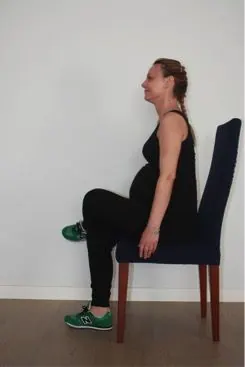
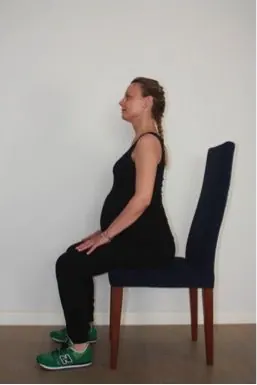
When sitting, avoid crossing your legs. Sit with your pelvis and spine in neutral. The idea is to sit on your sit bones (the bones in your bottom), not behind them. Keep your spine lengthened and don’t stay with your back rounded. Using Kegel balls while sitting will help strengthen your pelvic area.
The first photo shows the incorrect position and the second the correct one, with the pelvis in neutral.
-
-
-
Wear flat shoes
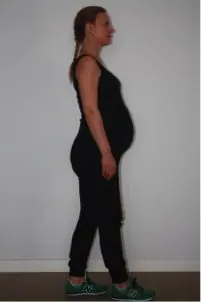
Avoid high heels from the second trimester so you don’t exaggerate the curve of your lower back. And when you walk, lengthen your spine upward (as if you were “growing”) and keep your shoulders away from your head.
The first image shows the incorrect position and the second the correct one, with the spine lengthened upward.
-

-
-
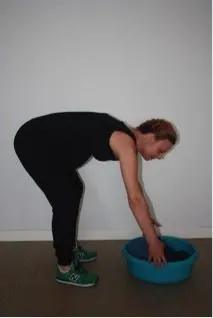
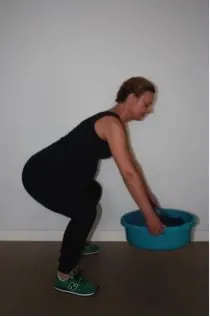
Don’t bend forward to pick things up off the floor
To pick something up off the floor, it’s advisable to lean your trunk forward while keeping your spine straight and bend your legs, so you don’t round your spine.
The first photo shows the incorrect posture and the second the correct one.
-
-
Do exercises that tone the deep abdominal muscles (transverse abdominis) and the pelvic muscles
Keeping good tone in the muscles that stabilize the lower back and pelvis prevents overloading that area and helps improve support and stability for the uterus. Here are some exercises you can do at home:
-
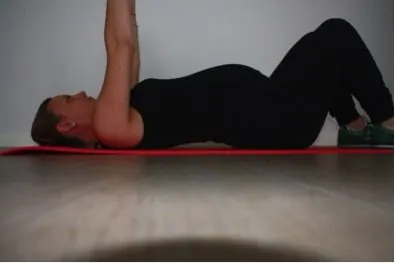
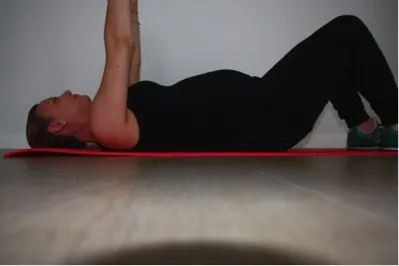
- Pelvic tilt: lying on your back with your legs bent and your arms stretched toward the ceiling. As you breathe in, tilt your pelvis forward (anterior tilt, first image), arching your lower back. As you breathe out, tilt your pelvis back (posterior tilt, second image), pressing your lower back into the mat. Repeat 20 times.
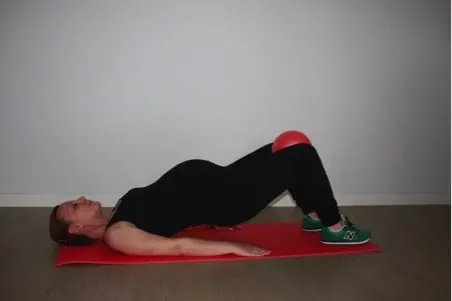
- Shoulder bridge: lying on your back with your legs bent, place a small ball (Pilates soft ball) between your knees. Breathe in deeply and, as you breathe out, squeeze the ball and lift your hips and spine (one vertebra at a time). Breathe in with your trunk raised and, as you breathe out, lower down (one vertebra at a time). Feel your abdominal and pelvic muscles activate as you lift and lower your trunk. Repeat 8 times.
-
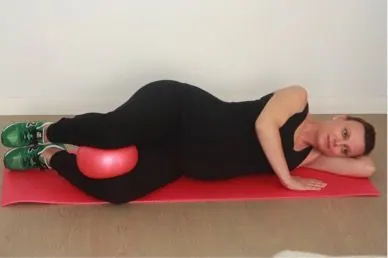
- Transverse abdominis activation lying on your side: place the ball between your knees. Breathe in deeply and, as you breathe out, squeeze the ball, close your ribs and draw your belly button in (as if you wanted to press it against your lower spine). Repeat 10 times.
-
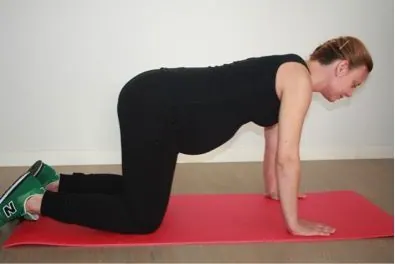
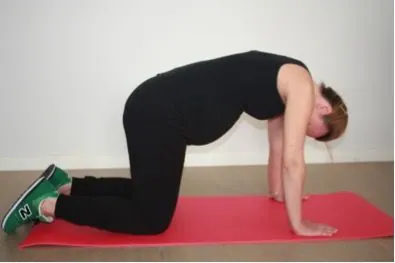
- Angry cat: on all fours, place your knees under your hips and your hands under your shoulders. Breathe in with your spine in neutral and, as you breathe out, round your back (bring your chin to your breastbone and tuck your tailbone under). Repeat 10 times. The first photo shows the pelvis in neutral and the second the spine rounded in the angry cat position.
-
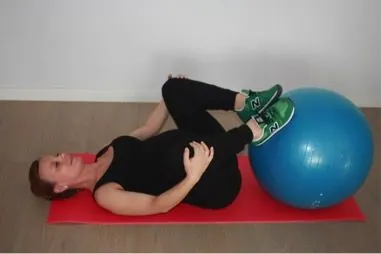
- Frog position: lie on your back, rest your feet on a large ball (fitball) and bring your knees (apart) toward your chest. Hold your knees with your hands and gently draw them outward. This position lets us relax the whole area we’ve exercised, as it brings the attachment points of the round ligament closer together and relaxes it.
-
When doing the exercises, a pelvic support belt will help keep the area stable and strengthen the muscles without injury. You can choose between two types:
- Confort pelvic support belt. For women above EU size 40 (US size 10).
- Tonic pelvic support belt. For women below EU size 40 (US size 10).
We hope this post has helped if you have this abdominal pain caused by the round ligament and, if not, that you’ll do these exercises to prevent it.


We help with pelvic pain in pregnancy in Valencia
Safe techniques for each trimester with physiotherapy for sciatica and pelvic pain. Can’t come to Valencia? We also see you in an online consultation.