
How to prevent lower back pain and urinary incontinence through exercise



Article content
Many women may find it strange that there’s a direct link between chronic lower back pain and urinary incontinence, but many studies have shown that women with chronic lower back pain are at greater risk of urinary incontinence, especially with an undertrained pelvic floor. That’s why exercises for urinary incontinence should be part of your daily routine.
What is the link between lower back pain and urinary incontinence?
The pelvic floor muscles play a key role in continence and support: they support the pelvic organs and stabilize the lumbopelvic area. Together with the transverse abdominis, the deep back muscles and the diaphragm, they form a unit that keeps the lower spine and pelvis stable.
Think, for example, of when you make a sudden movement, lift something heavy, jump or cough. In those moments, these muscles contract together to give the spine greater stability. Without that stability, any effort you made could damage the intervertebral discs.
This wonderful muscle unit, often called the abdominal wall or corset, is essential in daily life, during sport or simply while walking. When one of these muscles weakens and can’t do its job, the others in the unit have to do extra work and become overloaded.
Women with chronic lower back pain usually have the following symptoms:
- Deep pain on one or both sides of the lower back.
- Pain in the buttocks and sacrum.
- Discomfort that can spread to the back of the thigh.
- Limited movement, especially when changing position, twisting the trunk or moving from one movement to another.
- Digestive problems, such as constipation or a bloated lower belly.
- A protruding abdomen.
- A feeling of weakness in the legs.
Lower back pain is usually caused by overloaded lower back muscles, weak deep abdominal muscles, a weak pelvic floor, a bulging disc or a herniated disc. When the pelvic floor and abdominal muscles aren’t toned enough, the lower back muscles do double the work to stabilize the spine and pelvis. As a result, they become overloaded and pain appears.
If we ignore the symptoms, the pain and the muscle weakness, we may develop urinary incontinence. Urine leakage is linked to weak sphincters and usually appears during effort, such as coughing, sneezing, lifting or running.
What are the risk factors?
Lower back pain and urinary incontinence usually affect women who have had:
- A vaginal birth with a tear and/or episiotomy.
- A cesarean.
- A hysterectomy or any other abdominal or pelvic surgery.
There are also other, modifiable factors that can increase the risk of lower back pain and, in turn, urinary incontinence:
- Obesity.
- Chronic constipation.
- Jobs that involve carrying heavy loads.
- A sedentary lifestyle.
- A postpartum period or pregnancy with complications (needing complete bed rest).
Which exercises prevent lower back pain and urinary incontinence?
The exercises for urinary incontinence I most recommend to tone the deep abdominal muscles and the pelvic floor can be divided into three groups:
- Kegel exercises
- Hypopressive abdominal exercises
- Pilates exercises
As well as exercise, Magnetic-Tape can provide additional relief by supporting the neuromuscular response and local blood flow.
Exercises for urinary incontinence: Kegels
Kegel exercises for women are used to tone the muscles around the urethra, vagina and anus. They can be done during pregnancy, postpartum and after any pelvic or abdominal surgery. A weak pelvic floor can affect any woman at any age, and we need to know which exercises to do to prevent and treat dysfunction. So here’s a Kegel exercise with a soft ball that you can do at home or at the gym.
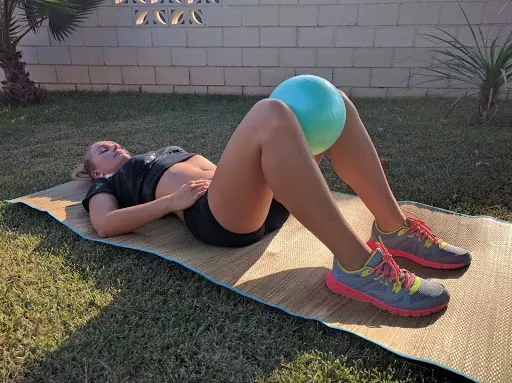
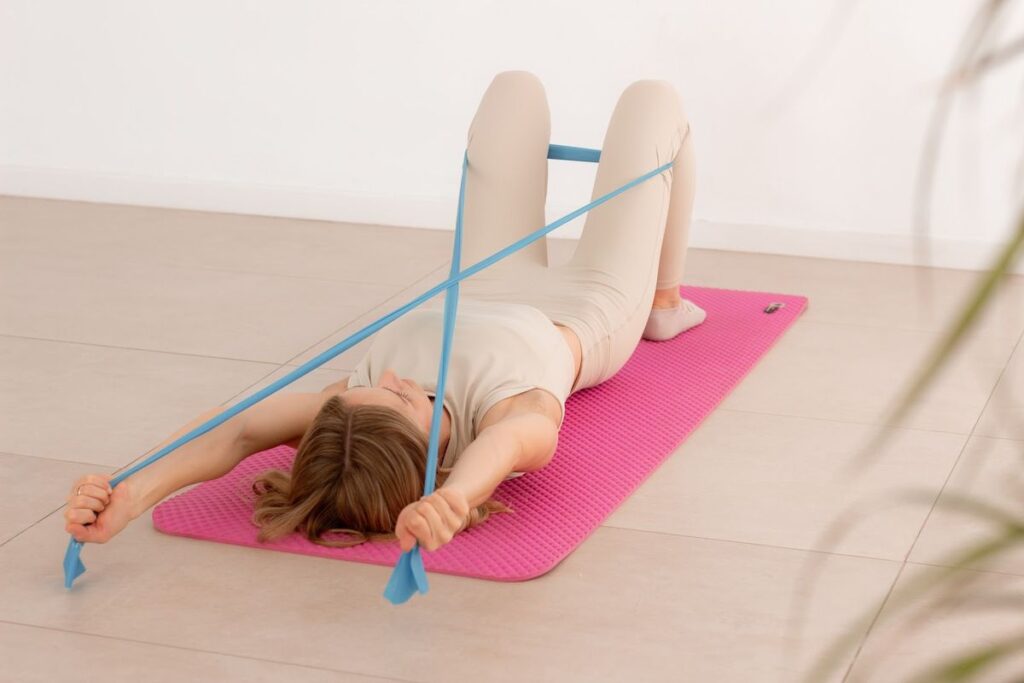
Photo 1: Kegel exercise with a soft ball.
Lie on your back with your legs bent and place the ball between your knees. Find the neutral position of your pelvis. You should feel that your sacrum is resting on the floor and your lower back keeps its natural curve.
Take a deep breath and, as you breathe out, contract your pelvic floor, trying to close your sphincters and lift them. It’s the feeling of stopping the flow of urine or holding in gas. As you contract, squeeze the ball to boost the muscle activation.
Hold the contraction for 5 seconds and relax for 5 seconds. Repeat 15 to 20 times.
Exercises for urinary incontinence: hypopressive abdominals
Hypopressive abdominal exercises involve adopting specific postures, called hypopressive postures, together with a specific breathing technique. Hypopressive training uses diaphragmatic aspiration, which means drawing the internal organs upward, or reducing intra-abdominal pressure. By doing these exercises in specific postures, we reduce the abdominal pressure that is so harmful to the pelvic floor, and also tone the postural muscles.

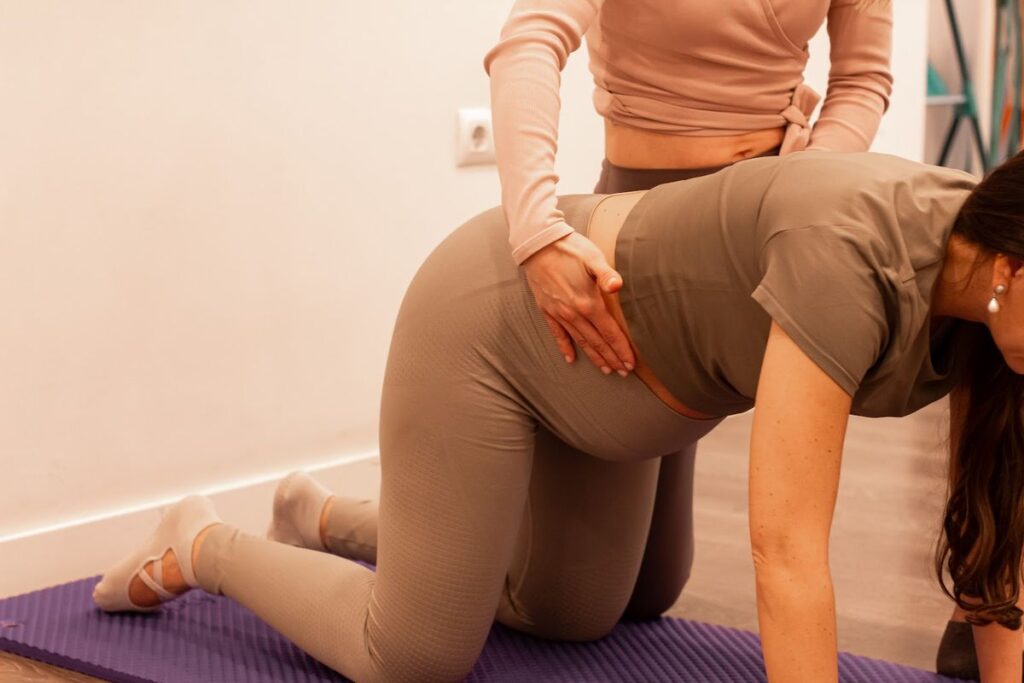
Photo 2: hypopressive exercise
An example of a hypopressive exercise is to get on all fours, with your head resting, and take a couple of deep breaths. Deep breathing means filling your rib cage completely as you breathe in and emptying it completely as you breathe out.
After 2–3 normal breaths, breathe all the air out (emptying your lungs completely) and then, while holding your breath, open your rib cage. You’ll feel your ribs expand and your belly being “sucked” in and up. Hold your breath for 10 seconds and then repeat the sequence.
Hypopressive pelvic floor exercises can be done by women who are postpartum, after abdominal or pelvic surgery, or who have urinary incontinence or lower back pain. Pregnant women should not do them.
Exercises for urinary incontinence: Pilates
Pilates exercises are ideal for strengthening the core while improving the flexibility of overloaded muscles. It’s important to know that many exercises done in Pilates classes can be harmful. For example, abdominal exercises that lift the trunk or roll the spine forward (roll up) sharply increase abdominal pressure. They weaken the pelvic floor and make the already overloaded lower back muscles worse. That’s why the exercises recommended for lower back pain and/or urinary incontinence are those that keep the spine lengthened.
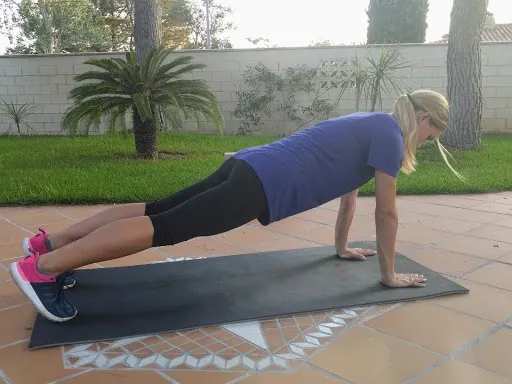
Photo 3: plank
One exercise I personally really like is the plank. It tones the abdominal muscles, the lower back and all the stabilizing muscles. The spine is lengthened and there’s no risk of a rise in abdominal pressure that could damage the pelvic floor.
On all fours, place your wrists under your shoulders and your knees under your hips. Stretch your legs back and press the balls of your feet into the floor. In the plank position, your body should form a diagonal line, with your hips slightly below the line of your shoulders. It’s important to squeeze your abs and glutes while holding the position. Don’t let your lower back arch. Hold the position for 20 seconds and then rest for 8 seconds. Repeat 5 times.
This exercise can be done by all women except those who are pregnant or have abdominal diastasis. In the plank position, if we don’t control the abdominal contraction well and there is separation of the rectus muscles, we’re very likely to widen it. If that’s your case, it’s best to practice this exercise under professional supervision.
Should I have my pelvic floor assessed if I have lower back pain?
Yes. Every woman who has had lower back pain for more than 2 months should see a physiotherapist specializing in gynecology to assess her pelvic floor muscles. In this assessment, the professional will examine the pelvis, the pelvic floor (vaginally), the quality of the contraction, any prolapse, the strength and tone of the abdominal muscles, the diaphragm and the lower back. If you need it, you can book an appointment and come and see me!


Look after your back at our clinic in Valencia
We assess your back, pelvis and pelvic floor to tailor physiotherapy for lower back pain to your case. Can’t come to Valencia? We also see patients in an online consultation.