
Exercises for a flat stomach without harming your pelvic floor



Article content
Let’s be clear from the start: you won’t get a flat stomach from exercise alone, and having defined abs isn’t the same as having a healthy body. As with everything, it’s about the right combination of diet and exercise, and each person’s build and genetics also play a part. But with all the information online about how to get a flat stomach, if you’re going to try, I’d rather you at least don’t injure your pelvic floor.
I’ll start with the theory, because your abs aren’t just for showing off in a photo; they have a key physiological role. The role of the abdominal muscles is linked to practically every movement the body makes. The abdominal wall lets you bend and rotate your trunk, movements that are very important in daily life. The abs help the rib cage muscles breathe correctly, keep us upright and stabilize the spine.
But their most important job of all is to compress the internal organs and keep them stable and ‘in place’. Thanks to strong abs, our intestines, stomach, uterus and bladder are protected from impacts, sudden movements and increases in pressure, such as coughing, sneezing or pushing. Without them, every effort would shift the organs and create a prolapse effect on the pelvic floor.
As you can see, beyond appearance, a healthy abdomen affects quality of life, influencing everyday things such as posture, continence, sex and how we experience our periods (psst! I’m a Beppy Cup ambassador!).
At what stages of a woman’s life does the abdomen need the most care?
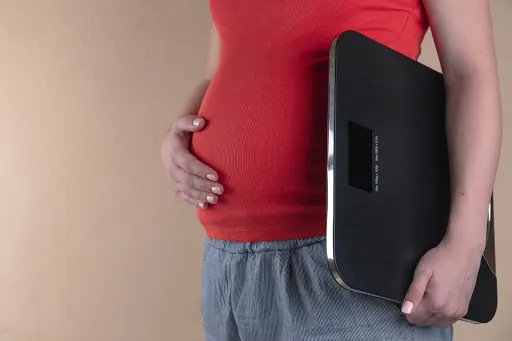
Without a doubt, pregnancy is when we go through the most physiological changes, especially visible in the abdominal wall. That’s why it’s important to strengthen the abdominal muscles beforehand, rather than rushing to do it once we’re pregnant.
During pregnancy, the abs stretch to let the uterus and baby grow. The connective tissue joining the rectus muscles gives way, causing abdominal diastasis, which is common in almost 80% of pregnant women. If it happens to you, don’t worry: these are completely normal changes and adaptations in a woman’s body, necessary for the baby’s development.
During pregnancy, it’s crucial to know which types of exercise are harmful and to train under professional supervision. Pregnant women should focus their training on strengthening the transverse abdominis and keeping the superficial abs flexible so the diastasis isn’t too great. If you’d like to know more about this or need more detailed information, you can read our article on abdominal exercises you can do during pregnancy.
Abdominal exercises and the pelvic floor
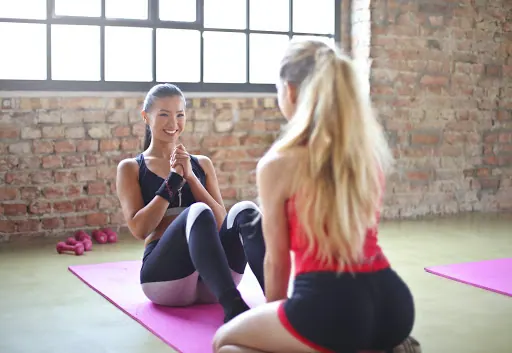
The pelvic floor muscles sit just below the abdominal wall, and their main job is to support the weight of the internal organs and counter the pressure generated in the abdomen. When doing abdominal exercises, it’s important not to put tension on the perineum or push it down. Some abdominal exercises are harmful to pelvic health and can cause problems such as urinary incontinence or genital prolapse.
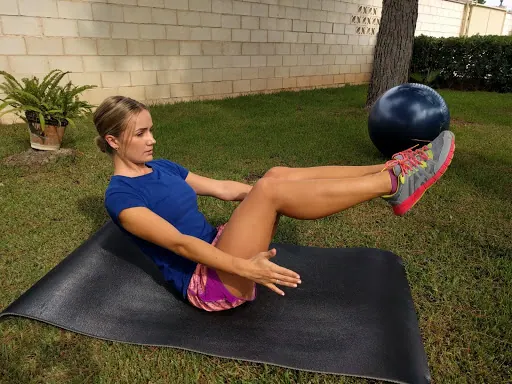
The abdominal exercises that aren’t recommended are:
- ‘Crunch’-style sit-ups.
- ‘Crunches’ with both legs raised.
- Abdominal exercises that lift and rotate the trunk.
- ‘Heel touch’ crunches.
- The ‘Hundred’ abdominal exercise.
- Seated twists.
- Crunches pushing with your hands.
- ‘Elbow to knee’ crunches.
Safe abdominal exercise routine
The abdominal exercises that don’t harm the pelvic floor are hypopressives and all toning exercises that don’t require bending and lifting the trunk. We especially recommend these exercises for women in the postpartum period, those who gave birth vaginally or by cesarean and have a weak pelvic floor, and for all women who want to strengthen their core and improve their posture. Here’s an abdominal exercise routine to tone your waist:
1. ‘V’ hypopressive exercise
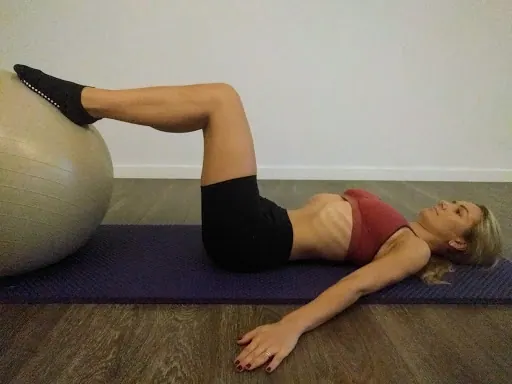
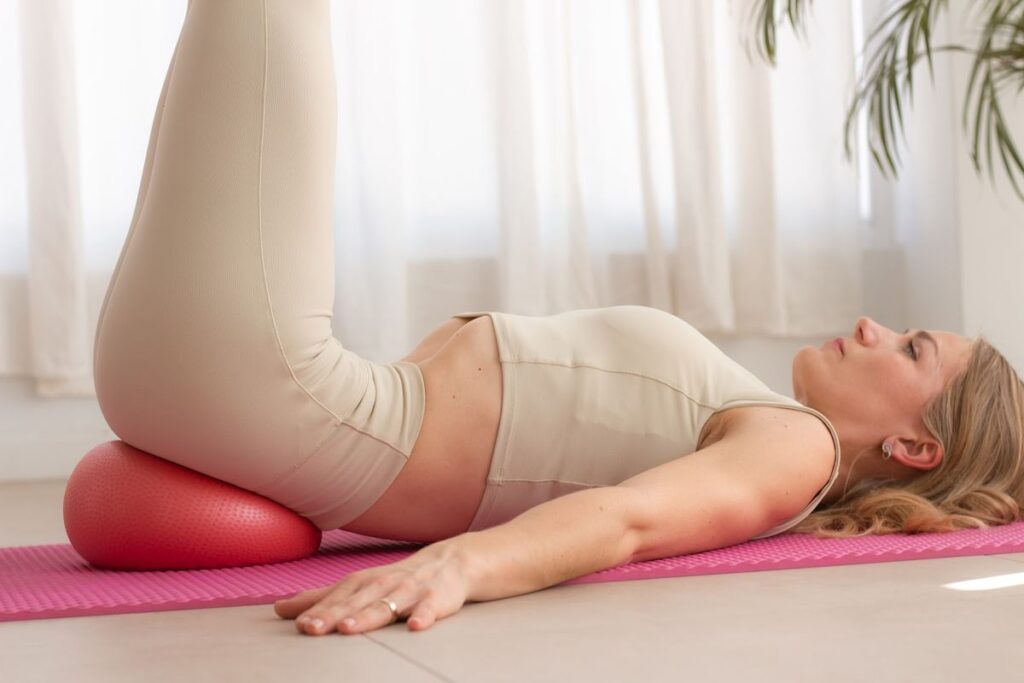
Starting position: lying down, with your legs bent at 90 degrees and the soles of your feet resting on the fitball (or the wall), open your arms in a V. Keep your legs together, shoulders down and spine lengthened.
Take 3 deep breaths (moving your rib cage). On the last breath, empty your lungs completely. Then, holding your breath (without breathing in), open your ribs. Hold your breath for at least 10 seconds. Repeat 3 times.
You should feel your abdominal wall draw in and your pelvic floor lift.
2. Hypopressive exercise with one leg raised.
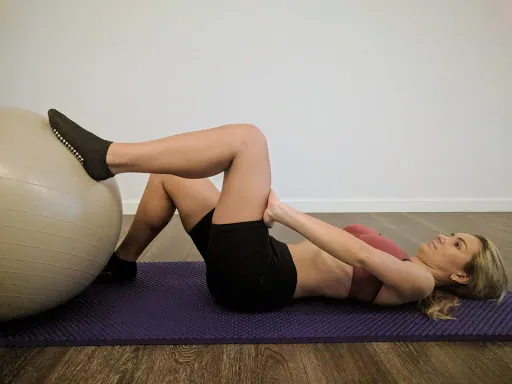
Starting position: lying on your back, bend your left leg to 90 degrees and rest the sole of your foot on the fitball (or the wall). Place your left hand on your thigh, with your elbow pointing out and your fingertips pointing in.
Take 3 deep (chest) breaths. Holding your breath, open your ribs and press against your leg (pushing with your arm). Lengthen your spine and notice how your organs and abdomen draw in. Hold your breath for at least 10 seconds. Then switch legs. Do 2 repetitions with each leg.
3. Seated hypopressive exercise.
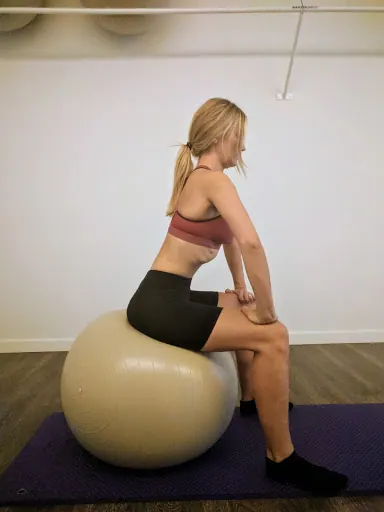
Starting position: sitting on the fitball (or a chair), place your feet as wide apart as the mat, lean forward and rest your palms on your legs.
Take 3 deep breaths and then, holding your breath, open your ribs and lengthen your spine. Hold your breath for at least 10 seconds. Repeat 3 times.
4. Hypopressive exercise on all fours.
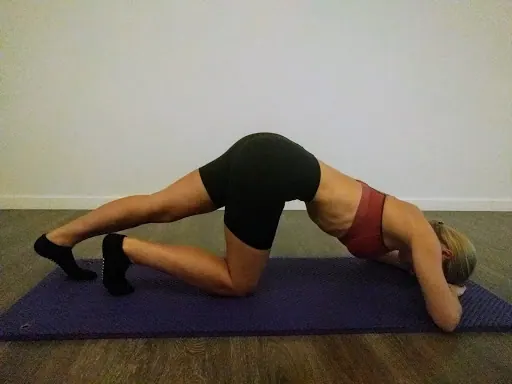
Starting position: on all fours, rest your head on your hands, open your elbows to the width of the mat, stretch your left leg back and rest the ball of your foot on the floor.
Take 3 deep breaths and, holding your breath, open your ribs and lengthen your back leg and your spine. Hold your breath for at least 10 seconds. Then switch legs. Do 2 repetitions on each side.
5. Side plank.
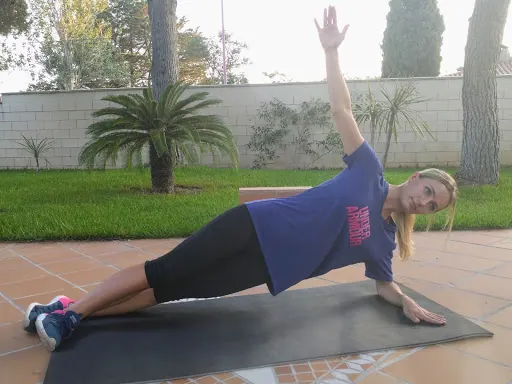
Starting position: lying on your side with your legs straight, rest your forearm on the mat.
Lift your body, raising your trunk and legs off the floor. Raise your other arm and hold the position for 30 seconds. Draw your abs in. Repeat on the other side.
6. Standing hypopressive exercise.
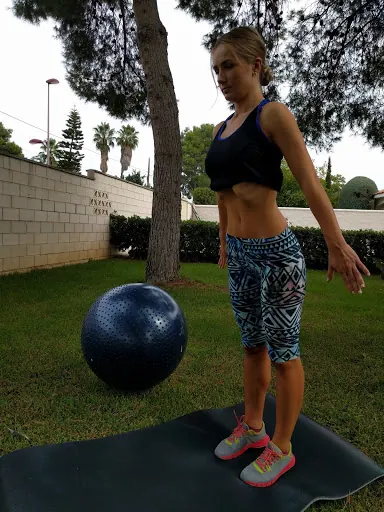
Starting position: standing, open your arms in a ‘V’ and lengthen your spine.
Take 3 deep (chest) breaths, then, holding your breath, open your ribs and lean your whole body forward. Your body should form a diagonal line. Hold your breath for 10 to 20 seconds. Repeat 3 times.
7. Abdominal exercise on all fours.
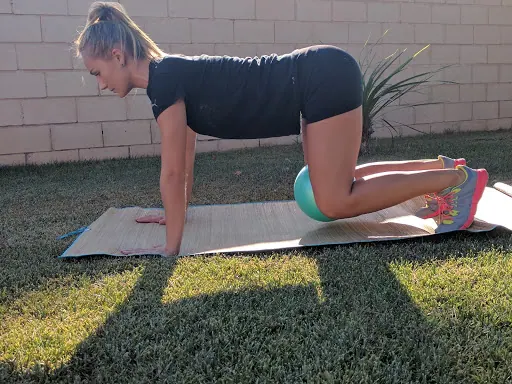
Starting position: on all fours, place your palms under your shoulders. You can put a small soft ball between your knees.
Lift your trunk by raising your knees off the floor. Keep your spine straight and your hips in line with your shoulders. Hold your trunk up for 50 seconds. Then lower down and rest. Repeat 3 times.
8. Seated abdominal exercise.
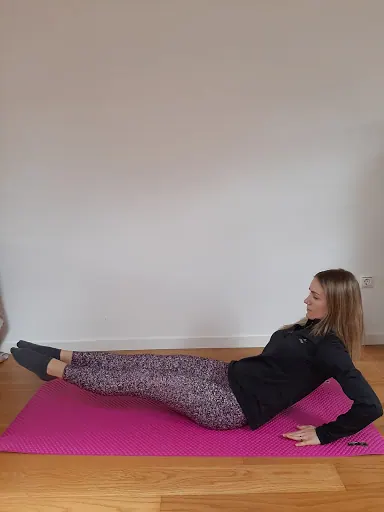
Starting position: sitting with your legs bent, rest your palms behind you and keep your back straight.
Breathe in and, as you breathe out, stretch your legs forward while letting your trunk lean back slightly. Do 25 repetitions.
9. Front plank.
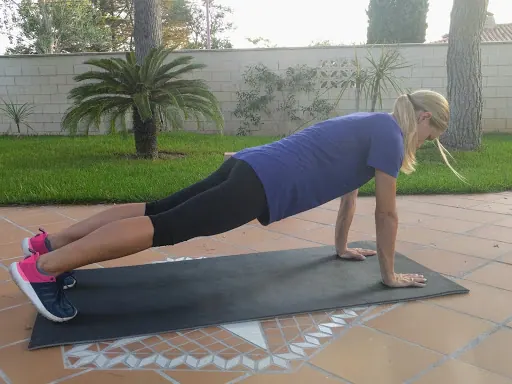
Starting position: on all fours, place your palms under your shoulders. Stretch one leg back, then the other, and hold the plank position. Keep your body in a diagonal line, draw your abs in and don’t let your lower back arch. Hold the plank for 30 seconds. Repeat 3 times, resting 10 seconds between sets.
Who can do these exercises?
This abdominal exercise routine is ideal for all women who aren’t pregnant. Remember that during pregnancy, abdominal training should be specific and always guided by a specialist. We especially recommend these abdominal exercises for women in any of the following situations:
- Women in the postpartum period.
- After a vaginal birth (after 4 weeks and a prior assessment).
- After a cesarean (after 8 weeks and a prior assessment).
- Women with endometriosis.
- All women who have had a hysterectomy.
- Women with a weak pelvic floor.
- Women with constipation.
- Women with chronic back pain.
- Women who are overweight (with fat around the abdomen).
The exercises can be done at home, always paying attention to your posture and, if possible, in front of a mirror. If you’ve recently given birth and aren’t sure whether you can do all the exercises, you can also contact me for an online consultation.



Get your diastasis assessed in Valencia
We check your abdomen and pelvic floor and adapt your exercise with physiotherapy for abdominal diastasis. Can’t come to Valencia? We also see patients in an online consultation.