How to breathe when doing Pilates for the pelvic floor



Article content
The Pilates method was created almost a century ago by Joseph H. Pilates, a great trainer who, after many illnesses as a child, wanted to improve his physical condition through exercise. He created the method we practice today, which includes a routine of more than 500 exercises drawing on Eastern and Western traditions.
Although at heart it’s more than an exercise routine, the practical side of Pilates is based on anaerobic exercises focused on building strength. That’s its main goal, along with increasing the control, flexibility and balance of our body. The six essential principles of the method are concentration, control, flow, precision, centering and breathing.
The most important muscle groups in Pilates are the abdominals, glutes, back muscles and pelvic floor. According to its creator, they form the core, the powerhouse: the muscles that provide the strength needed to move, stay stable and keep the spine in good shape.
Pilates and the pelvic floor
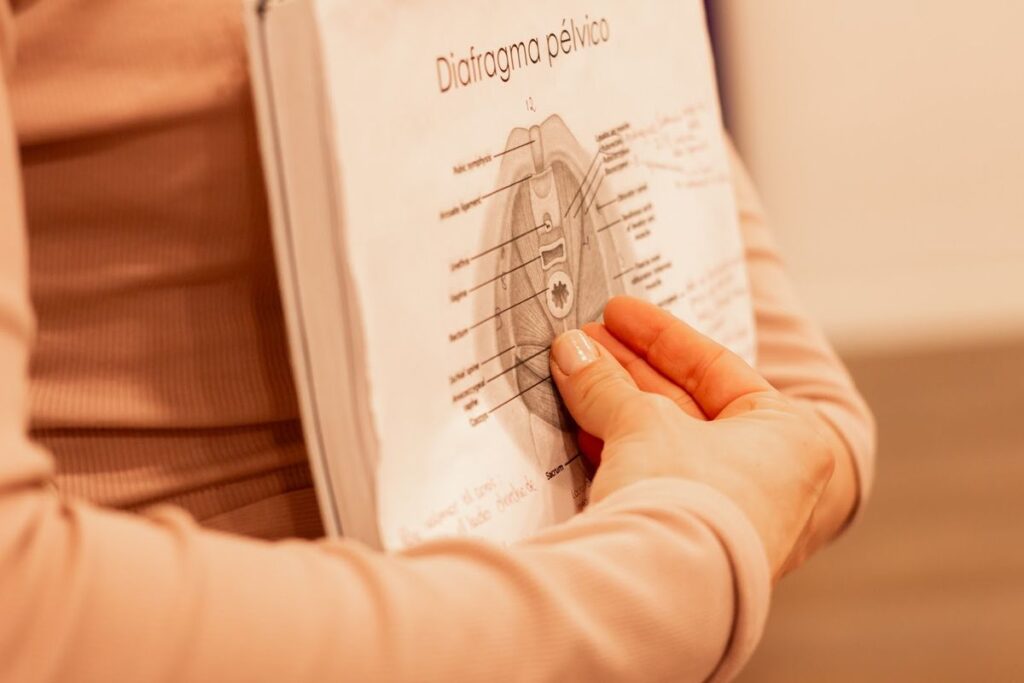
The pelvic floor muscles stretch between the coccyx, the pubic bone, the sit bones and the sacrum. Contractions of these muscles involve the thoracic diaphragm, the transverse abdominis and the deep back muscles. If one of these muscles is weak, or if they don’t work in coordination, we can have pelvic floor problems, such as genital prolapse or leaking urine.
In Pilates, most exercises require a voluntary contraction (one you do consciously) of the transverse abdominis, the deepest of all the abdominal muscles. That’s why practicing them is so beneficial for keeping the pelvic floor in good shape and learning how to activate both muscle groups at the same time.
So you can tell whether you’re contracting your pelvic floor and transverse abdominis correctly, here’s an exercise that can help you find out.
How do I know if I’m activating my pelvic floor and transverse abdominis correctly?
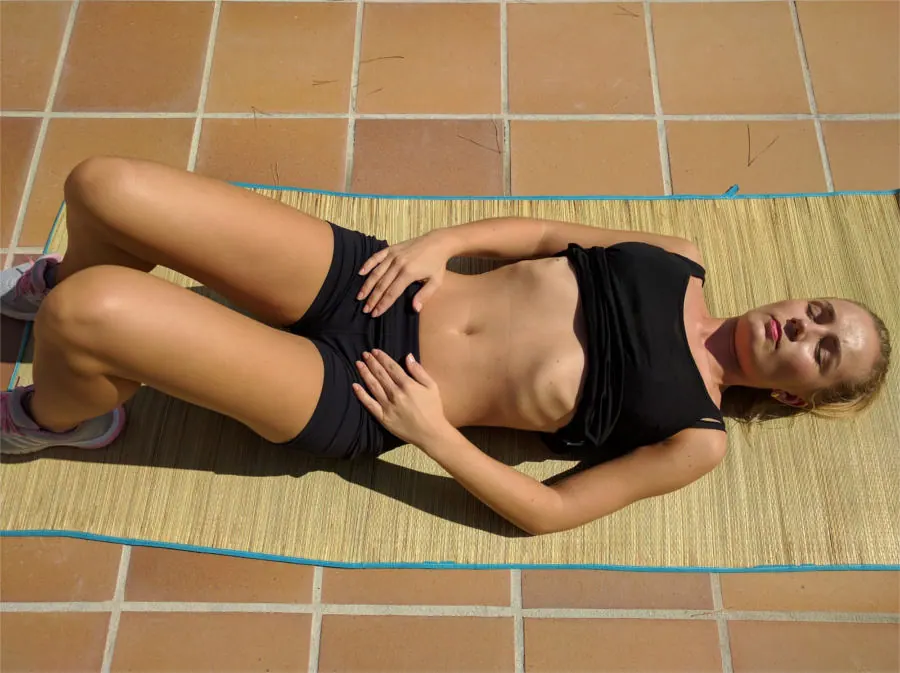
Photo 1. Activating the pelvic floor and transverse abdominis
Lie on your back with your legs bent or straight. Place your hands on either side of your lower belly (at the level of the pubic symphysis). Gently press your fingers into the creases of your hips, as if trying to grip them. This will make it easier to feel the contraction.
Strongly contract your pelvic floor muscles (closing your sphincters, vagina and anus all at once) and at the same time activate your transverse abdominis (flattening your belly, drawing your belly button upward).
If we do it correctly, we should feel tension under our hands, a sort of lifting or tightening feeling. If you don’t feel it, you’re probably not activating your pelvic floor properly.
Breathing in Pilates and pelvic floor work
When doing Pilates exercises, as well as always activating the deep muscles of the trunk, the core, a specific way of breathing is required.
The breathing used in Pilates classes and to strengthen the pelvic floor isn’t like the breathing we do throughout the day. Pilates breathing is based on using the muscles of the rib cage and making active movements of the front and back ribs, breastbone and collarbones.
How do you do Pilates breathing step by step to strengthen the pelvic floor?
When we breathe in, we expand the rib cage, which means lifting and separating the ribs. These two movements activate the breathing muscles and expand the lungs further. When we breathe out, the ribs close and the breastbone lowers, activating the core.
It’s important to breathe in through the nose and out through the mouth. Never the other way around. It’s also important to know that we shouldn’t hold our breath during the exercises, as this raises blood pressure, which is completely contraindicated when working with the Pilates method.
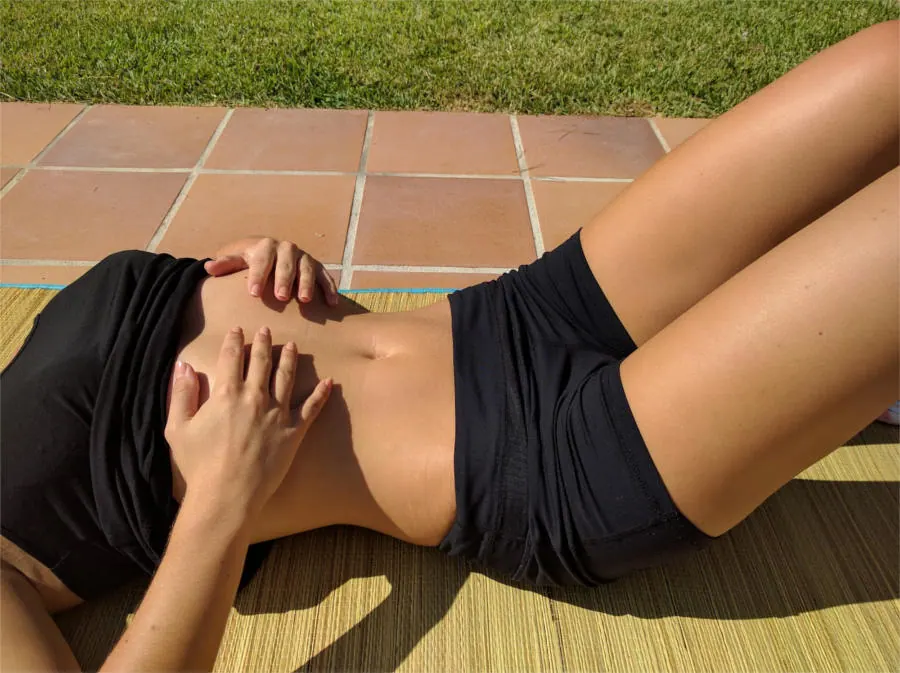
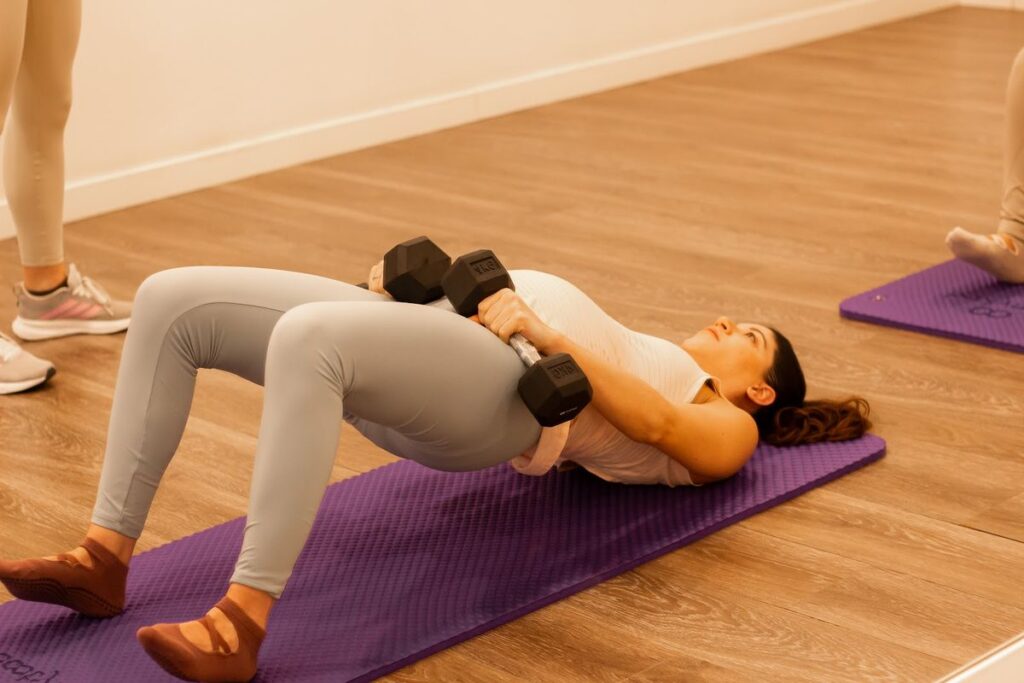
Photo 2. Breathing in: ribs open
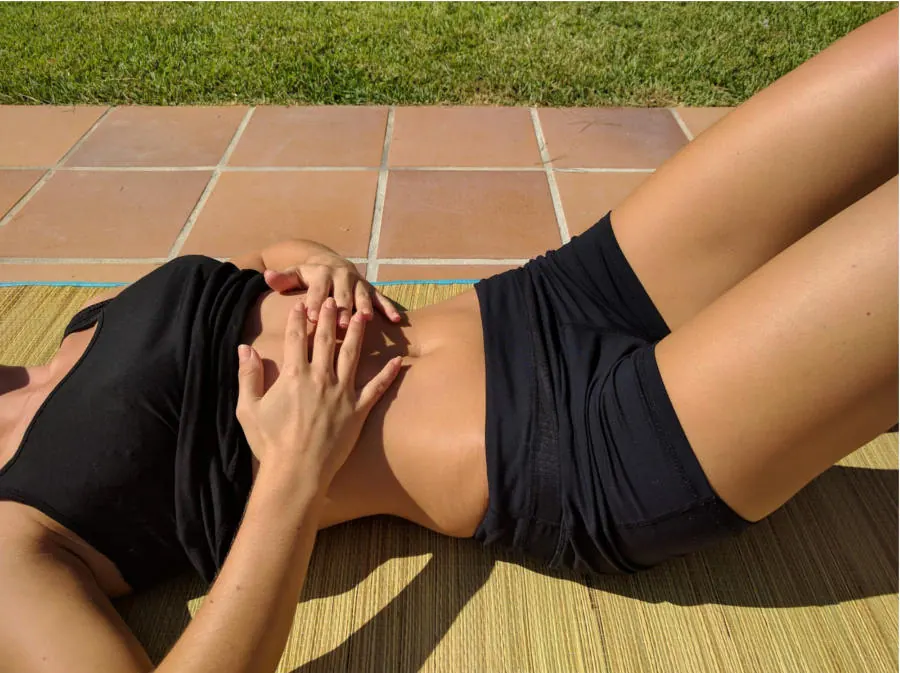
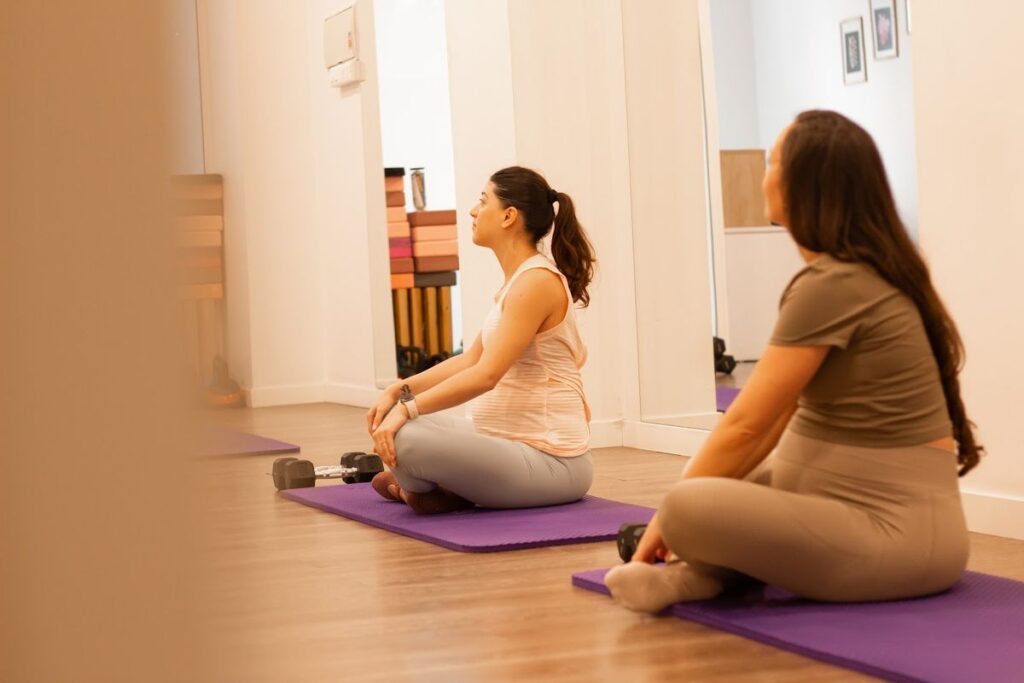
Photo 3. Breathing out: ribs close
Many patients are surprised that rehabilitating the vaginal muscles starts with learning to breathe correctly. Bear in mind that if we have a problem in the perineal area, such as genital prolapse, pelvic pain or urinary incontinence, we shouldn’t always start by rehabilitating this area directly. Sometimes we need to widen our focus and look at the problem more globally.
A weakened pelvic floor often depends on poor postural habits, poor breathing, and fatigue and tension in the diaphragm. A tense thoracic diaphragm is the pelvic floor’s number one enemy. That’s why, in perineal rehabilitation and training, it’s essential to normalize the tone of the diaphragm, using rib cage breathing and increasing the flexibility of the rib cage. The Pilates method helps with this.
Technical guidelines for Pilates breathing in pelvic floor exercises
- Pilates breathing requires good spinal alignment and a neutral pelvis. Avoid overarching your lower back or pressing it into the floor. Keep the natural curve of your lower back.
- As you breathe in, expand (open) your rib cage. You should feel your waist narrowing and flattening and your chest getting bigger.
- As you breathe out, close your rib cage (bring your ribs in and down) and feel your abdominal muscles contract and draw in, as if you were wearing an imaginary corset.
- As you breathe in, your pelvic floor relaxes and lowers.
- As you breathe out, contract your pelvic floor muscles, pulling in and up, imagining your pelvic floor moving toward your breastbone.
- Do the breaths and pelvic floor contractions as slowly as possible. The slower, the better.
- Try to make the in-breath (pelvic floor relaxation) and the out-breath (pelvic floor contraction) last the same length of time. For example, 8 seconds of relaxation and 8 seconds of contraction.
Pilates exercises and how to breathe during them for the pelvic floor
The pelvic muscles are easier to feel when we activate the following areas:
- Trying to bring the vagina and anus together.
- Trying to bring the sit bones (the bones in your bottom) toward each other.
- Trying to close and lift the anus.
- Trying to lift it without tensing your glutes.
In Pilates, pelvic floor exercises are done in many positions. I encourage you to try exercising your pelvic area in different positions, because if you always work in the same position, for example lying on your back, you won’t progress and your muscles ‘get used to it’.
To avoid this, we can do the contractions and rib cage breathing in positions such as on all fours, lying on our side or lying face down.
-
Pelvic floor exercise on all fours
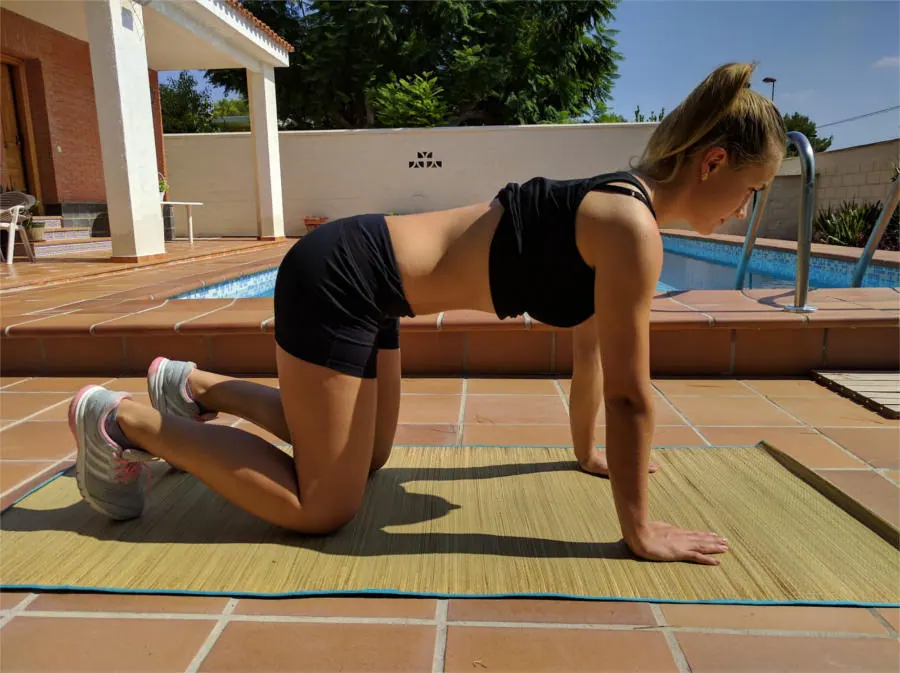
Photo 4. On all fours
It’s important to align your spine well, with your knees under your hip joints and your hands under your shoulders. Avoid letting your lower back sag (arching it). Look neither up nor down, but diagonally ahead.
Contract your pelvic floor muscles following the technical guidelines explained above.
-
Pelvic floor exercise lying on your side
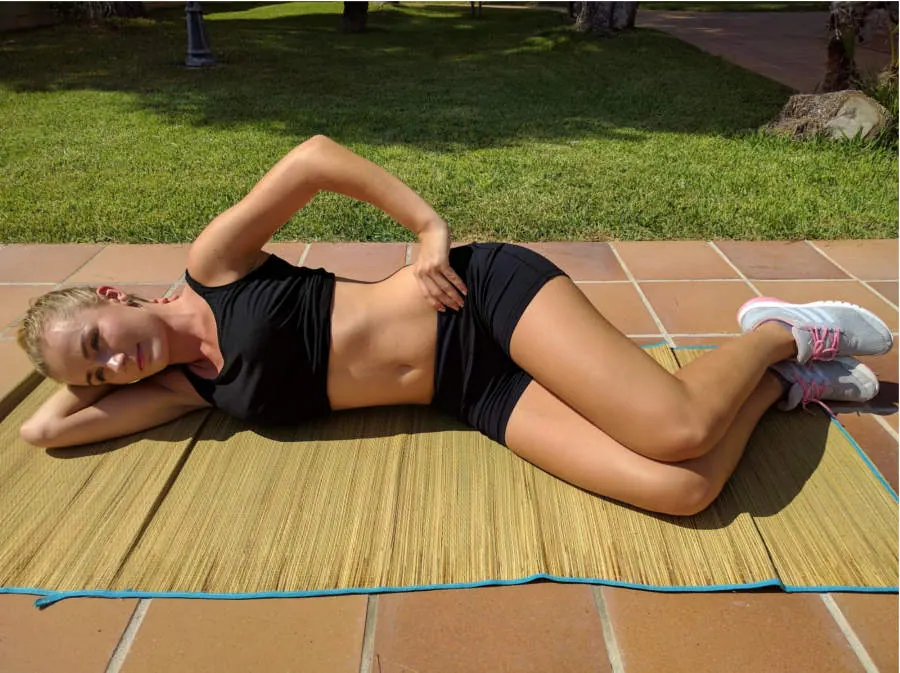
Photo 5. Lying on your side
Lie on your side with your knees bent. Place your lower arm under your head and your top hand on the lower side of your belly. With your hand in this area, you’ll feel your pelvic floor and transverse abdominis activate.
Contract your pelvic floor muscles following the technical guidelines explained above.
-
Pelvic floor exercises lying face down
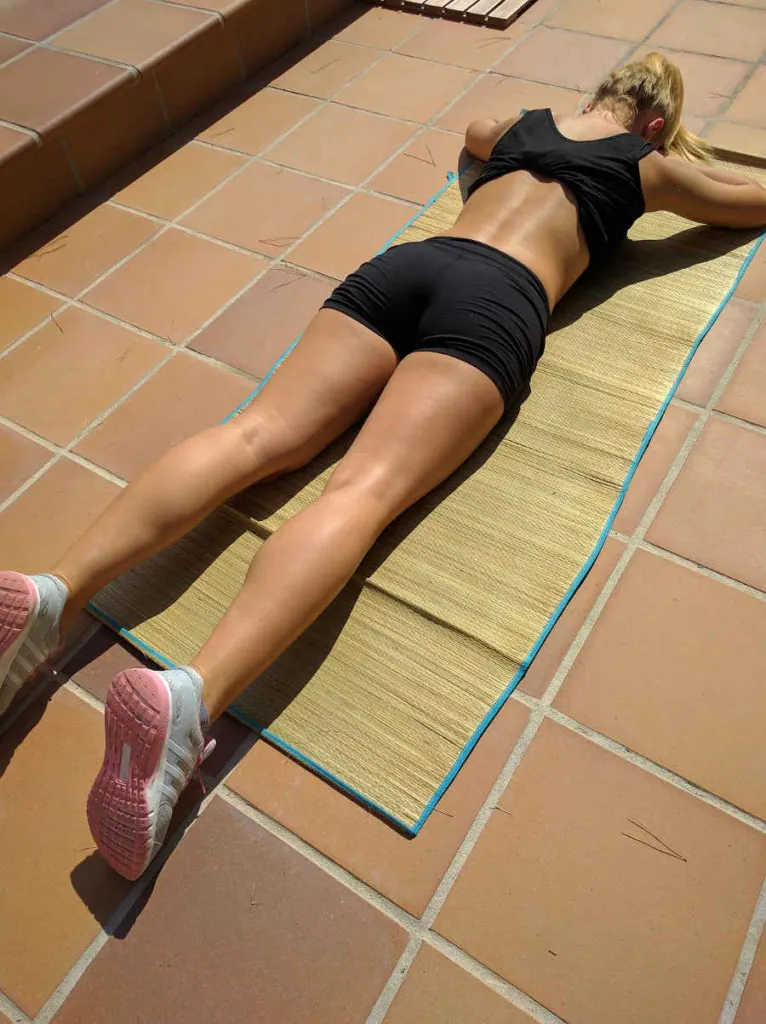
Photo 6. Lying face down
Lie face down with your legs straight and your feet hip-width apart. Place your hands under your forehead so your neck is relaxed.
Contract your pelvic floor muscles following the technical guidelines explained above.
In this position you’ll feel the transverse abdominis activate more, as its contraction against gravity is easier to feel.
It’s important to do these exercises during pregnancy, postpartum, in menopause or if you have any problem related to weakened pelvic floor muscles. To do them and further strengthen your pelvic floor, you could even use vaginal cones.
Pilates exercises are very beneficial for intimate health as long as traditional abdominal exercises aren’t done. Those are the exercises that activate the rectus and external oblique muscles and dramatically increase intra-abdominal pressure. This increase in pressure pushes the pelvic floor down and weakens it.
Always remember to have the condition of your pelvic and abdominal muscles assessed and go to Pilates classes led by a professional who specializes in gynecology and Pilates.


Get your pelvic floor checked in Valencia
Something doesn’t have to go wrong: with a pelvic floor check-up we see how it is and what you should do. Can’t come to Valencia? We also see patients in an online consultation.