
A guide to the types of urinary incontinence, their causes and a self-assessment test




Article content
In Spain, pelvic floor disorders that cause urine leakage affect almost 3 million people. There are several types of urinary incontinence: stress, urge, mixed and continuous. Stress incontinence is the most common in Spain and involves leaking urine during actions such as coughing, sneezing or high-impact exercise such as sit-ups.
Causes and types of urinary incontinence
The main causes of stress urinary incontinence include:
-
Loss of tone in the pelvic floor muscles responsible for support.
Holding in urine requires a certain degree of muscle strength to keep the urethra closed at rest and when pressure rises. It’s this rise in pressure (coughing, sneezing, laughing, jumping…) that makes the internal organs descend and press on the pelvic floor structures and the bladder.
The deepest layers of the pelvic floor have to stop this downward movement thanks to their strength and good muscle tone. The interaction between the deep fascial system and the pelvic floor muscles is essential for supporting the pelvic organs and ensuring continence. Using a pelvic support belt can help you achieve this.
-
Bladder hypermobility and weaker urethral closure.
These are caused by fibrosis of the urethral walls after surgery, injuries to the pelvic floor muscles, injuries to the pelvic nerves or tears in the myofascial support. When the bladder is hypermobile, it prevents the urethra from closing (both during effort and at rest) and causes severe urinary incontinence.
-
Problems in the lumbopelvic stabilization system.
Pelvic instability, chronic lower back pain, joint conditions or diastasis of the rectus abdominis increase intra-abdominal pressure and the pressure transmitted to the perineal region.
-
Lack of awareness and control of the pelvic floor.
A large number of women don’t know how to locate and consciously activate their pelvic floor muscles. Many of them, instead of contracting their pelvic floor, activate their rectus abdominis or glutes, which have no control over holding in urine.
-
Chronically raised intra-abdominal pressure.
Constipation, high-pressure sports (traditional sit-ups), obesity, running, asthma or smoking are some of the factors linked to greater weakness in the pelvic floor structures.
-
Little physical activity during pregnancy, and multiple pregnancies.
Vaginal birth, tears or an episiotomy, as well as multiple pregnancies, weaken the pelvic floor and loosen its muscles.
Urinary incontinence self-assessment test
Below is a very simple questionnaire you can use to assess whether or not you have urinary incontinence and whether you should see a specialist.
The questionnaire is called the International Consultation on Incontinence Questionnaire (ICIQ-SF) and gives us enough information about the type of incontinence and its severity.
It has four questions. The score ranges from 0 to 21 and is obtained by adding up the answers to the first 3 questions, while the fourth question is aimed at finding out what type of urinary incontinence you have.
If your score is above zero, there is a problem, however small, and you need to see a professional who can assess it and decide on treatment. If your score is close to 21, it would indicate severe urinary incontinence that urgently needs more advanced diagnosis.
1. How often do you leak urine? (Tick one answer only)
| A | Never | 0 | Points |
| B | Once a week | 1 | |
| C | 2–3 times a week | 2 | |
| D | Once a day | 3 | |
| E | Several times a day | 4 | |
| F | All the time | 5 |
2. How much urine do you think you leak? That is, the amount of urine you usually leak (whether or not you wear protection). Tick one answer only.
| A | None | 0 | Points |
| B | A very small amount | 2 | |
| C | A moderate amount | 4 | |
| D | A large amount | 6 |
3. Overall, how much does leaking urine interfere with your everyday life?
1 2 3 4 5 6 7 8 9 10
Not at all A great deal
4. When do you leak urine? Tick all that apply to you.
Never
Before you can get to the bathroom
When you cough or sneeze
When you’re asleep
When you’re physically active / exercising
When you’ve finished urinating and are dressed
For no obvious reason
All the time
What gynecological rehabilitation offers to treat urinary incontinence
- Exercises with a perineal trainer (Periform): a vaginal probe with a visual indicator that lets the patient confirm that her contraction is correct.
- Manual techniques: vaginal massage for painful postpartum scars, myofascial techniques for fibrosis, and vaginal palpation to strengthen the pelvic floor contraction.
- Biofeedback: to become aware of the contraction.
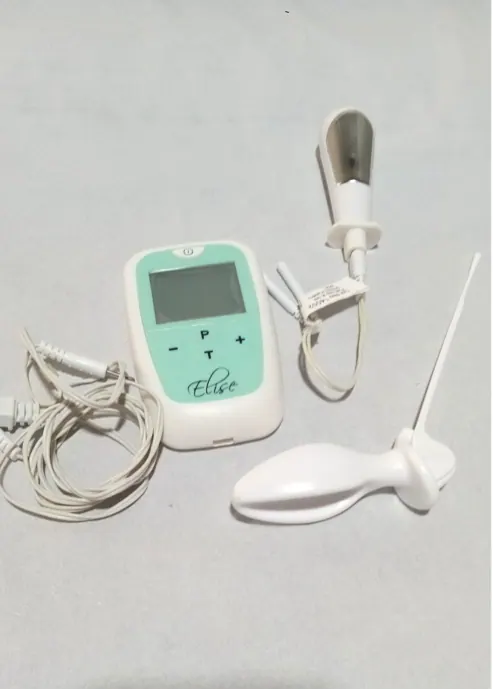
- Vaginal or anal electrical stimulation: to activate the muscles, inhibit bladder overactivity in urge incontinence, reduce pain and improve proprioception.
- Kegel balls or vaginal cones.
- Dry needling: for low pelvic floor tone, muscle knots or shortening.
- Kegel exercises for women: guided by vaginal examination and adapted to each patient.
- Postural re-education: learning the neutral positions of the pelvis and spine, and correct use of the postural muscles to better transmit intra-abdominal pressure.
- Automatic pelvic floor activation
- Hypopressive abdominal exercises
Frequently asked questions about urinary incontinence
-
How often do people normally urinate?
On average, between 4 and 8 times a day. Urinary frequency is considered increased when a patient urinates more than 7 or 8 times a day. Bear in mind that this depends on fluid intake, age and activity level.
-
I’m young and I leak urine. Isn’t this a problem that only affects older people?
No, one in five women over 35 has urine leakage. Pregnancy and birth contribute to it. More and more young women do high-impact sports such as running, tennis, horseback riding or step classes. Drinking a lot of coffee, smoking and living with high levels of stress don’t help either. So age is no longer the only reason for incontinence.
-
Do exercises really help?
Yes. The right exercises, adapted to each type of incontinence and each woman, can help in almost 60% of cases. In addition, exercises such as hypopressive abdominals should be part of the regular training of every woman who has had children. Learning to contract the pelvic floor correctly, knowing which positions are right for activating it and learning to activate the deep abdominal muscles are all essential for perineal health.
-
I leak urine. Should I drink less water?
No. Limiting fluid intake makes urine more concentrated and could irritate the bladder. As a result, you’ll go to the bathroom more often. Drink when you’re thirsty. That way you’ll avoid drinking too much, which could stretch the bladder.
-
I’ve read that Pilates isn’t good if you have urinary incontinence. What exercise should I do?
If you notice urine leakage while doing exercises in Pilates classes, that exercise is definitely not good for you. First, you should see a specialist (urologist or pelvic floor physiotherapist) to assess your muscles and correctly diagnose the type of incontinence you have. Then a suitable exercise program will be chosen: Pilates exercises avoiding postures that activate the rectus abdominis, or Pilates combined with hypopressive exercises.
-
Should I see a gynecologist before going to a pelvic floor physiotherapist?
You don’t need to see a gynecologist first, although in many cases it helps a lot to know whether there are any common genital conditions (such as inflammation, urinary infections, prolapse, endometriosis or hormonal disorders).


Treat urine leakage in Valencia
We work out together why it happens and how to treat it, without embarrassment or judgment, with physiotherapy for urinary incontinence. Can’t come to Valencia? We also see patients in an online consultation.