How to prepare physically for birth without leaving home



Article content
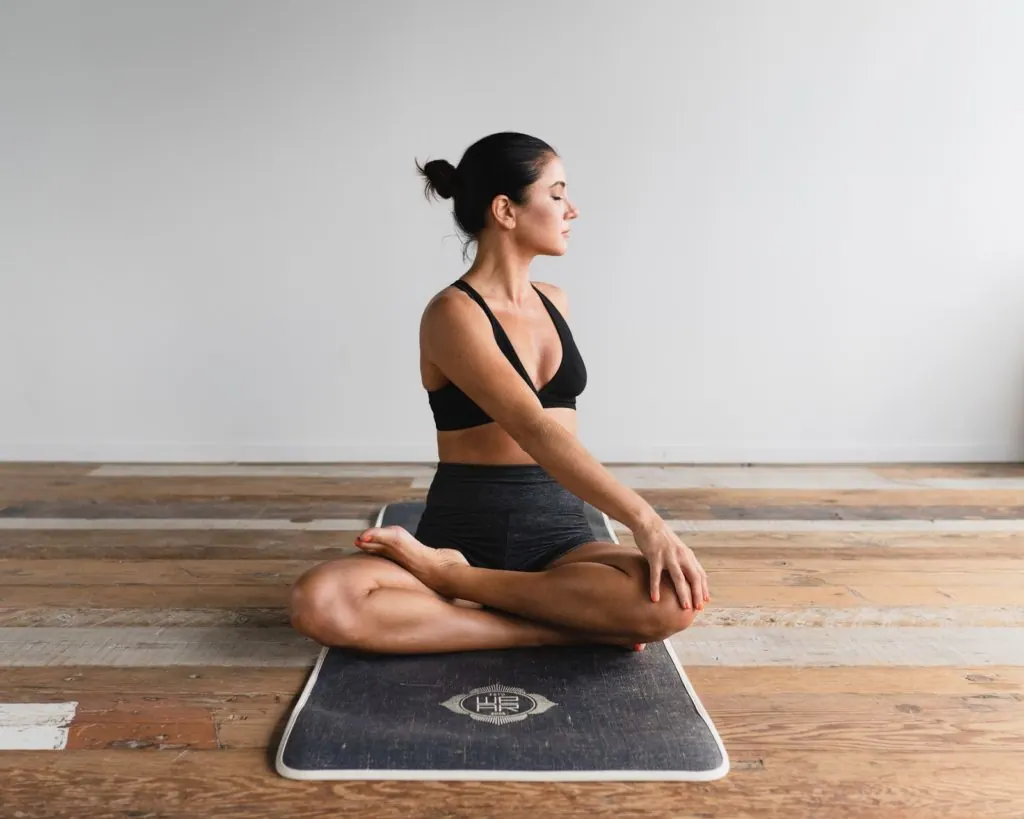
The state of emergency declared in Spain because of the coronavirus means we can’t leave home for at least the next two weeks, and everything suggests it will be longer… In this situation, how can a pregnant woman keep up effective birth preparation? Which exercises should she do more often, and which shouldn’t she? I’ve put together this guide to preparing for birth without leaving home to answer all these questions for pregnant women.
Although we’ve had to stop our usual birth preparation activities (midwife appointments, prenatal Pilates or yoga classes…), it’s important to stay in touch with these professionals and ask them for guidance suited to our situation, as they know best how our pregnancy is going and can personalize their advice. I’m answering my patients’ questions online myself, and I’m sure the professionals who usually care for you will be happy to keep doing so remotely. In these circumstances, the first thing is always to help each other.
But if you hadn’t started any routine yet, I’m writing these standard guidelines with the key points of physical birth preparation so you can prepare as well as possible while we’re in lockdown. Despite the difficult circumstances, we need to keep up the specific exercises and all the recommendations focused on birth preparation.
I’m pregnant: can I exercise at home?
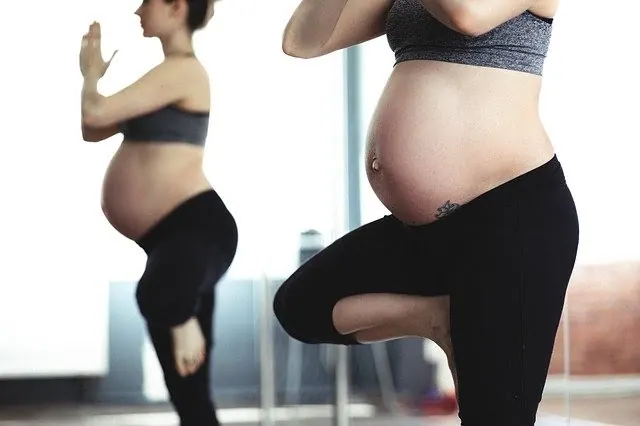
Since I’m going to talk about standard routines, and right now it’s hard to see a doctor to find out whether we can do certain exercises, the first thing is to rule out any of the general contraindications to physical activity during pregnancy. In other words, if you have any of these conditions, you should NOT do any kind of exercise on your own:
- Ruptured membranes, leaking amniotic fluid.
- Vaginal bleeding.
- Placenta previa.
- Preeclampsia.
- Cervical insufficiency.
- Uncontrolled type 1 diabetes.
- Cardiovascular disorders.
- Suspected fetal distress.
- Painful uterine contractions.
Prenatal exercise routine to do at home
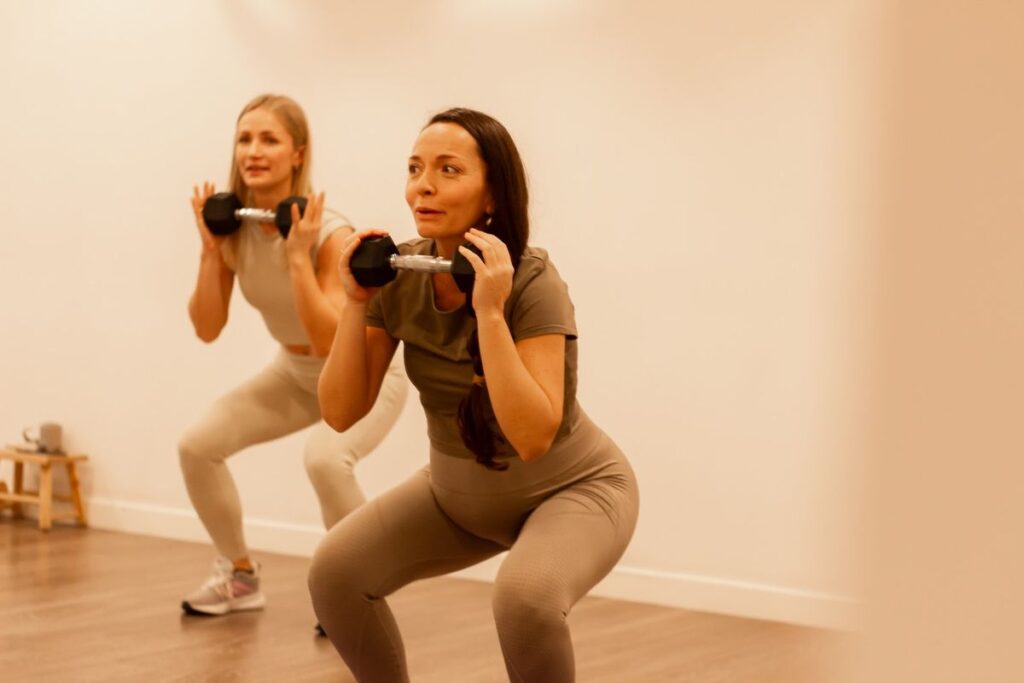
If you haven’t reached week 36 of pregnancy yet, you should prioritize toning exercises. I recommend strengthening exercises for large muscle groups, such as the transverse abdominis, pelvic floor, glutes, arm and back muscles… The frequency should be 150 minutes a week, or 20–30 minutes every day.
Here’s a routine of 5 toning exercises for pregnant women that you can do at home:
1. Pelvic floor toning
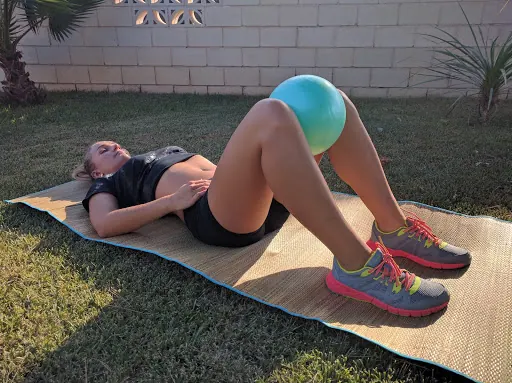
Lying on your back with your legs bent, place a small ball (or a cushion) between your knees. Lengthen your spine by tucking your chin in and keep the natural curve of your lower back.
Take a deep breath and, as you let it out, contract your sphincters (close and lift them) as if you wanted to stop the flow of urine. At the same time, squeeze the ball. Hold the contraction for 10 seconds and then relax completely. If you feel yourself losing strength, don’t worry; contract again. Do 15 contractions.
2. Glute bridge
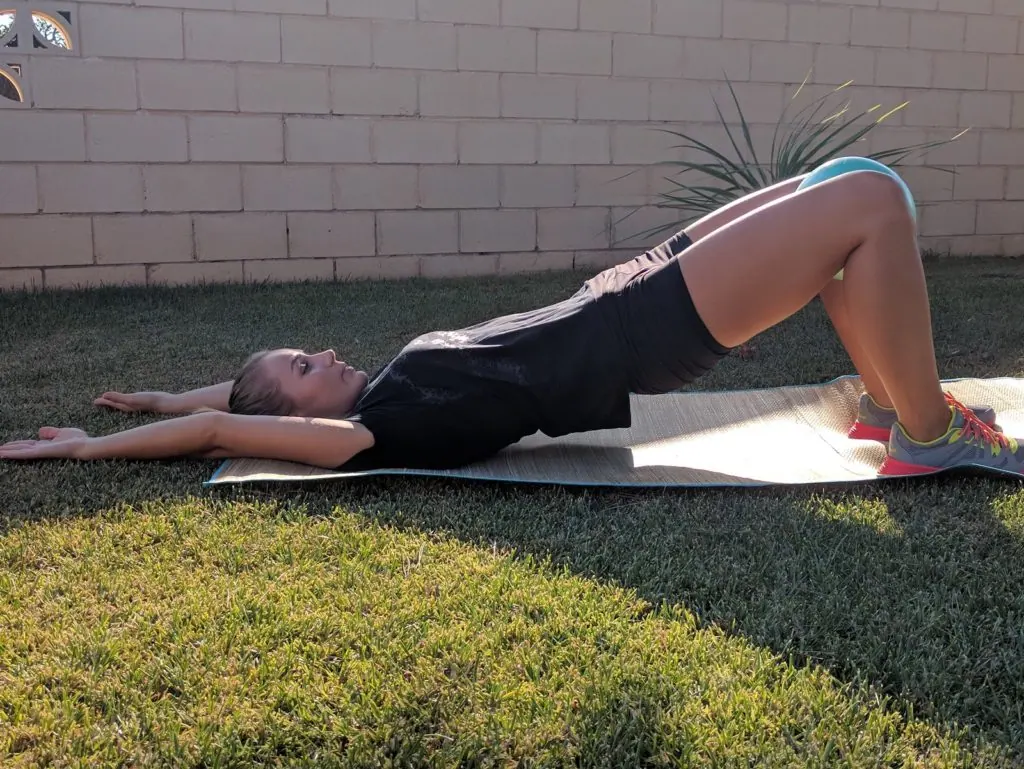
Lying on your back with your legs bent, place the small ball (or a cushion) between your knees and take your arms back. Breathe in and, as you breathe out, activate your glutes (squeeze them hard), squeeze the ball with your legs and lift your hips. Breathe in with your spine raised and, as you breathe out, lower down to the mat one vertebra at a time. This exercise activates the glutes, the transverse abdominis and the back muscles. Do 15 lifts.
3. Core exercise on all fours.
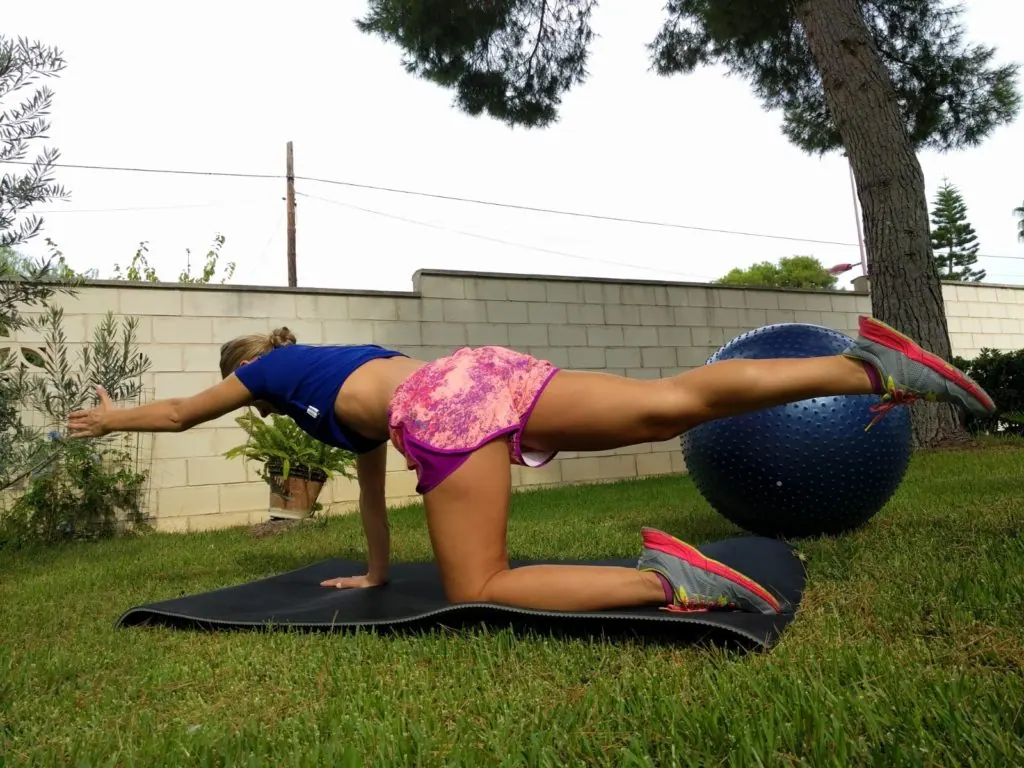
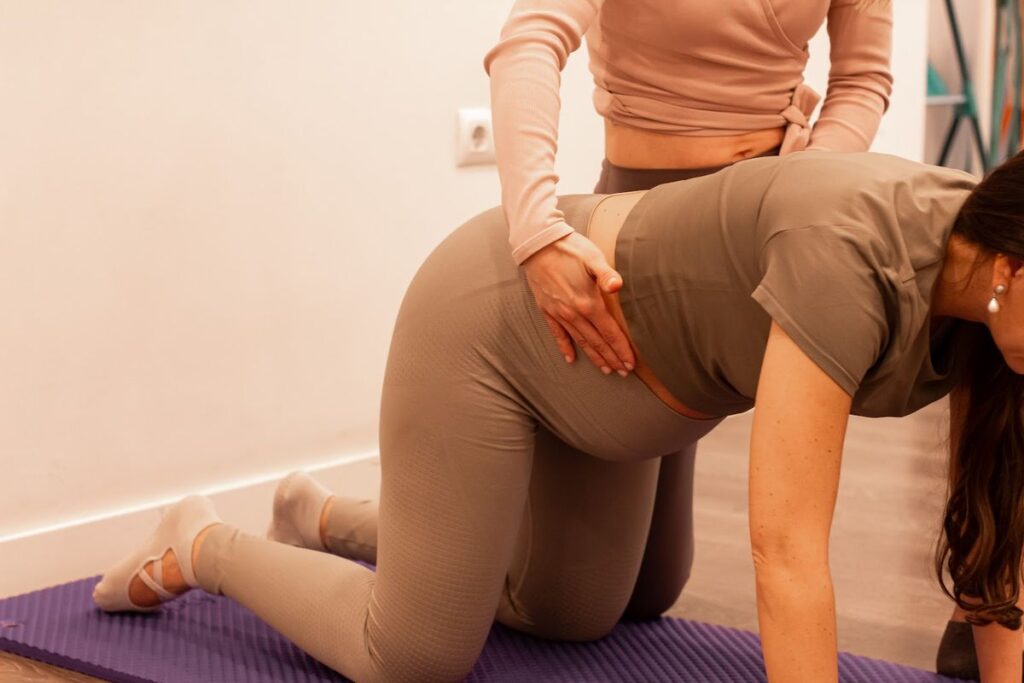
On all fours, place your palms under your shoulders and your knees under your hips. Keep your belly ‘drawn in’ and your spine lengthened (avoid arching your lower back). Take a deep breath and, as you let it out, stretch one leg back (keeping it parallel to the floor) and reach the opposite arm forward. Keep your balance and hold this position for 10 seconds. Then switch sides. Do 8 repetitions on each side.
4. Leg toning
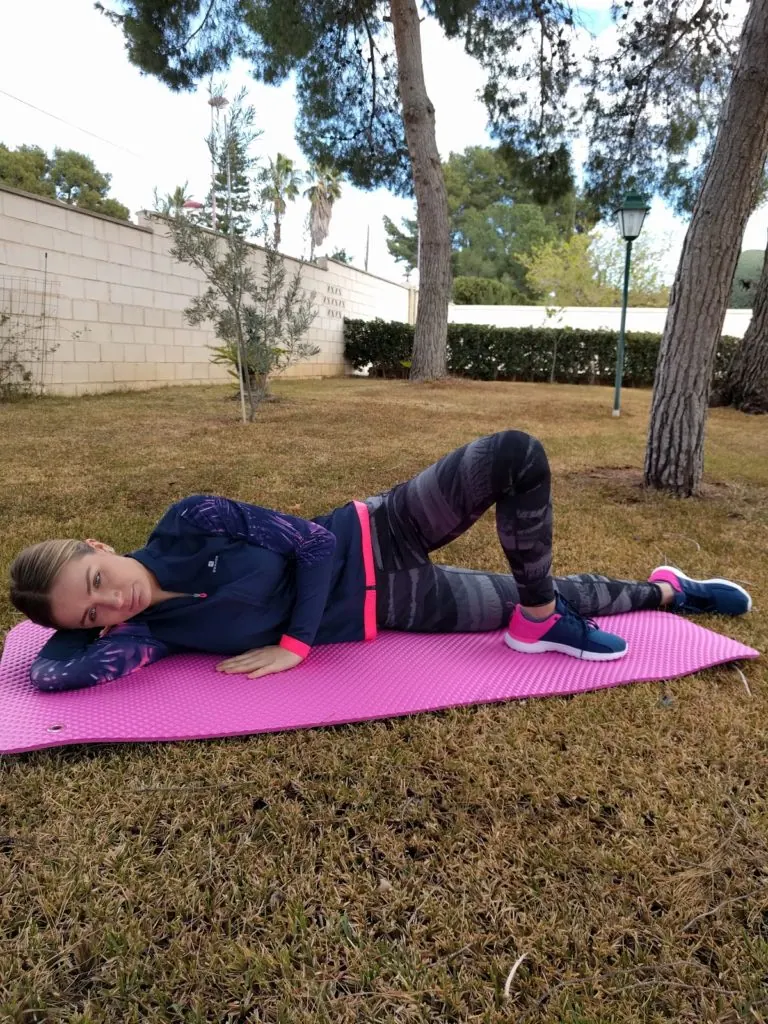
Lie on your side, straighten your bottom leg and keep it in line with your back. Place your top leg (bent) in front and rest the sole of your foot on the floor. Breathe in and, as you breathe out, lift your bottom leg (straight), trying to raise your calf and thigh off the floor. As you lift your leg, activate your abdomen (draw your belly in). Repeat 15 times with each leg.
5. Side plank
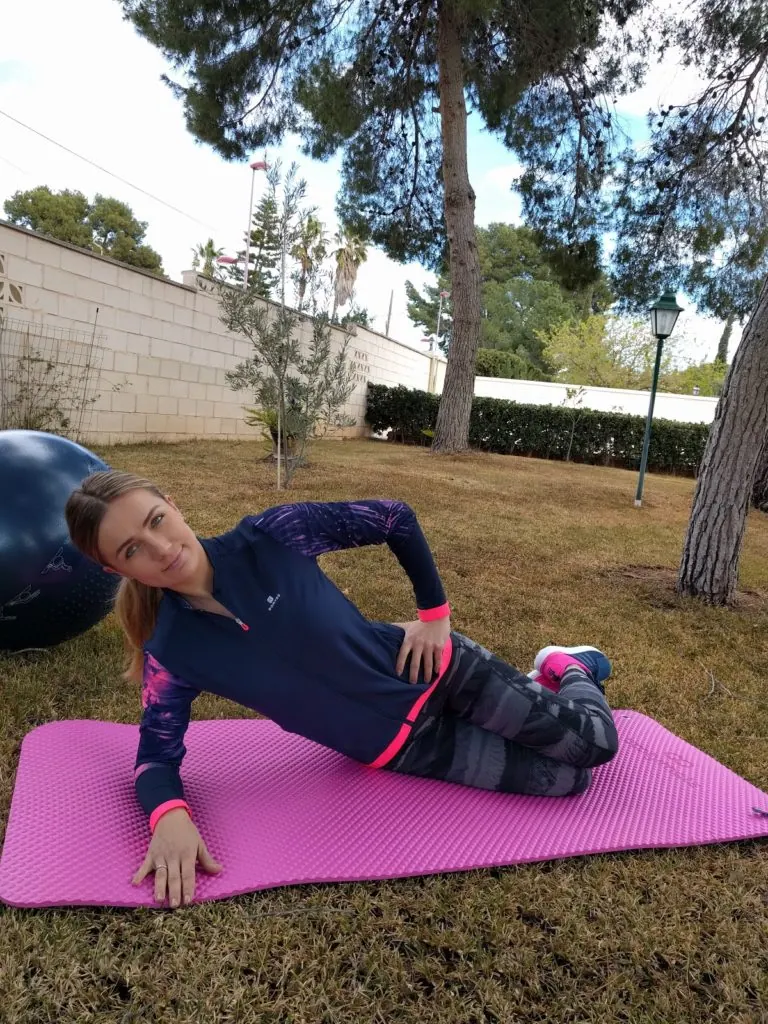
Lie on your side, bend your legs and take them back, keeping your knees in line with your trunk. Rest on your forearm with your elbow under your shoulder. Breathe in and, as you breathe out, lift your hips. As you lift your trunk, draw your belly in (activate your transverse abdominis). Repeat 15 times on each side.
Perineal massage
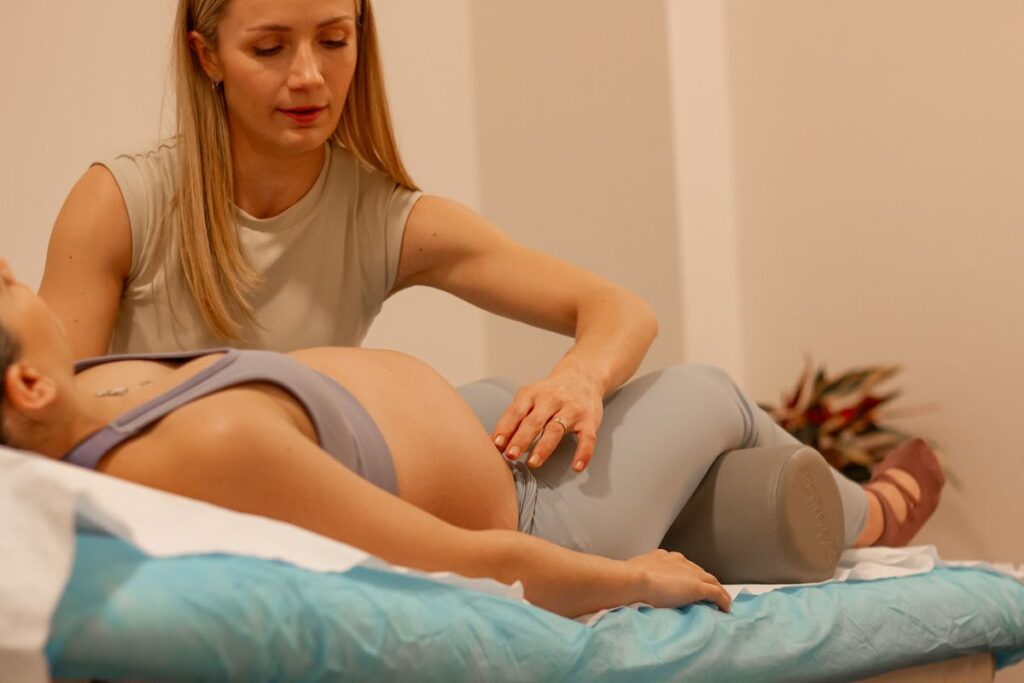
If you’ve already reached week 34 of pregnancy, we advise you to start perineal massage. The aim of the massage is to make the perineal tissues more flexible and prepare them for birth. By moisturizing and stretching the vagina, we can help prevent a perineal tear during a vaginal birth.
In this article we explain how to do perineal massage during pregnancy and what the contraindications are. Remember that for a vaginal birth, it’s essential both to strengthen the pelvic floor and vagina and to make them more flexible.
More exercises at home to prepare for birth
If you’ve already reached week 36 of pregnancy, we recommend stopping strength and toning exercises and focusing on pelvic movements and specific exercises to prepare for dilation.
Kegel exercises, abdominal muscle contractions, and strength and toning exercises aren’t indicated once a pregnant woman has reached week 36. At the end of the third trimester, the goal is to gain mobility in the pelvic region and help the baby engage correctly.
To do this, it’s a good idea to do exercises with the large Pilates ball, which involve movements of the pelvis, hips and lower back. Stretches for the side abdominal muscles and back are also added to relieve lower back pain, back discomfort or a feeling of pressure in the pelvis.
In the next article we’ll present specific exercises to prepare for dilation and vaginal birth. In the meantime, do the toning exercise routine and keep your body active until lockdown is over.


Prepare for your birth at our clinic in Valencia
We support you throughout your pregnancy with physiotherapy for pregnant women, adapted to each trimester and your situation. Can’t come to Valencia? We also see patients in an online consultation.