
10 fitball exercises for pregnant women you can do at home



Article content
Pregnancy changes a woman’s routine, especially when it comes to sport. When you find out you’re pregnant, even more so if it’s your first baby, you quickly want to know whether you can keep doing the activities you’re so used to. But pregnancy is a time of many physical, emotional and hormonal changes… So how do we know which exercise we can do during pregnancy?
When should you start physical activity during pregnancy?
First of all, remember that the best time to start physical activity is the second trimester of pregnancy (from the fourth month), as physical activity isn’t recommended during the first trimester because there’s a higher risk of miscarriage in this period. The second trimester is an ideal time: women already notice the physical changes and are more aware of their condition.
Another important point is to see your gynecologist to get the go-ahead for exercise or sport suitable for pregnant women. It’s essential that your gynecologist or midwife knows you’re going to start a sports activity, as there may be contraindications they need to warn you about. If there aren’t, go ahead. And depending on the type of activity, supervision by a qualified professional is recommended.
Among the many sports, some are ideal for pregnant women because they develop the most important muscle groups for pregnancy. We’re talking about swimming, prenatal Pilates (such as fitball exercises for pregnant women), prenatal yoga, the elliptical, a stationary bike, walking, body balance or stretching. These are the most recommended activities for pregnant women.
In this article I’m going to explain several Pilates exercises for pregnant women that use a fitball and that you can do at home, as long as you take the right preventive measures, such as using a pelvic support belt and a fitball designed especially for pregnant women.
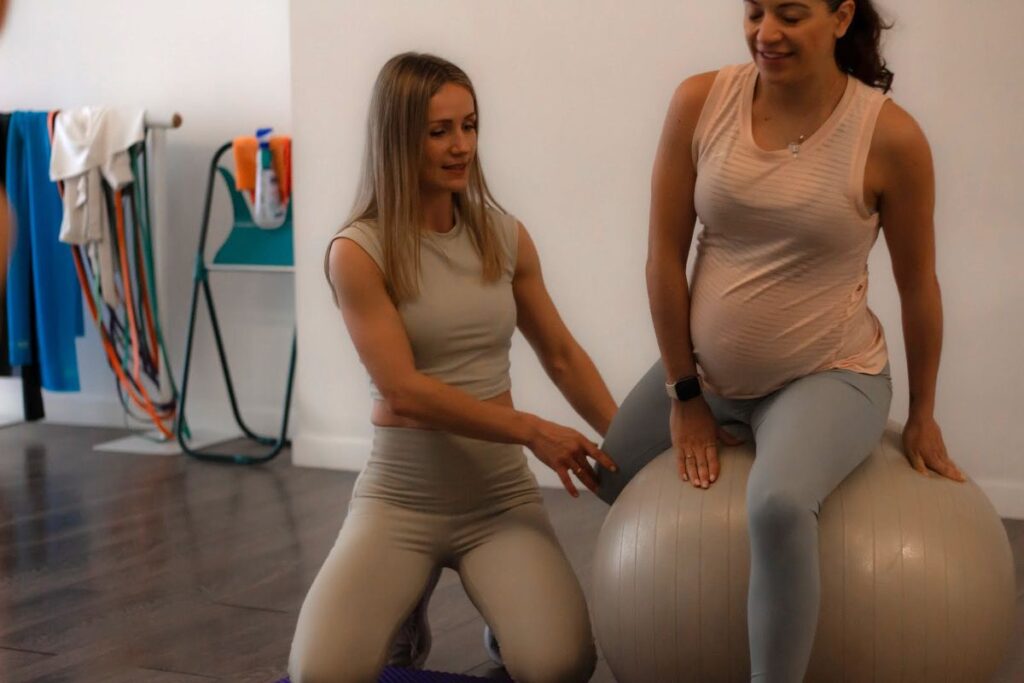
Of course, you can also book a place in the classes for pregnant women I offer at the clinic. Fitball exercises for pregnant women are suitable from the second trimester, as long as there are no contraindications. If that’s your case, I encourage you to try them!
Give classes for pregnant women a try
Exercise routine for pregnant women with a fitball
-
Shoulder bridge
In this exercise we activate the deep abdominal muscles (the transverse abdominis) and tone the glutes. Lifting and lowering the trunk mobilizes the spine and improves its flexibility.
Starting position: Lying on your back, rest your legs on the ball and stretch your arms alongside your trunk.
Take a deep breath and, as you breathe out, start lifting your spine (one vertebra at a time). Breathe in with your trunk raised and, as you breathe out, lower down. This at-home fitball exercise for pregnant women should be repeated 15 times.
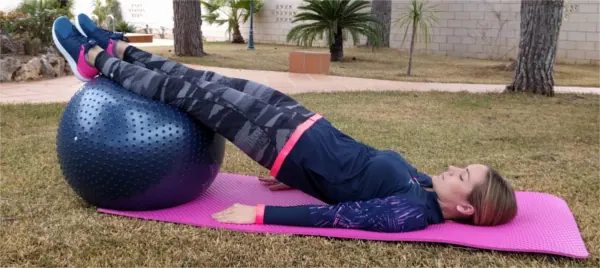
Photo 1. Shoulder bridge. -
Shoulder bridge with arms raised
In this exercise we add a challenge: raising the arms. We’ll activate the core muscles better because we add an element of instability.
Starting position: Lying on your back, with your legs resting on the ball and your arms stretched up.
Take a deep breath and, as you breathe out, lift your spine. Breathe in with your trunk raised, keeping your balance, and as you breathe out, lower down (one vertebra at a time). Keeping the right posture in this fitball pelvic floor exercise is important to get results.
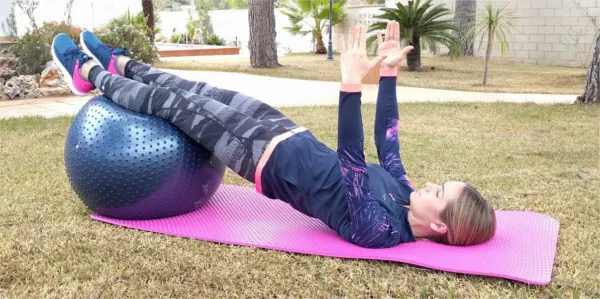
Photo 2. Shoulder bridge with arms raised. -
Pelvic floor activation in the ‘frog’ position
The key thing in pregnancy is to exercise the deep muscles of the pelvis. By doing pelvic floor contractions (Kegel exercises for women) we prevent leaking urine or gas and other intimate health problems postpartum.
Starting position: Lying on your back, rest your legs on the ball, open your knees and hips and bring the soles of your feet together (frog position).
Take a deep breath (opening your rib cage) and, as you breathe out, activate your pelvic floor (contract your sphincters as if you wanted to stop the flow of urine). Hold the contraction for 5–8 seconds and relax. Remember that the contraction should go with the out-breath (letting the air out). Repeat this fitball exercise for pregnant women 15 times.
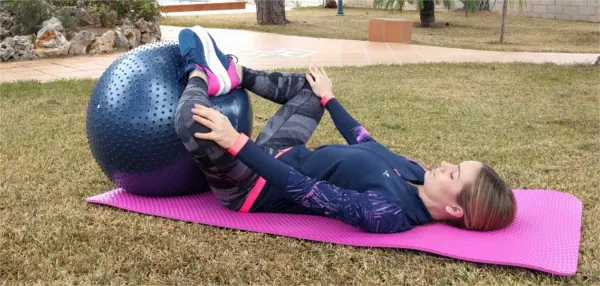
Photo 3: Pelvic floor exercise with a fitball: pelvic floor contraction in the frog position. -
Hip mobilization
The aim of this fitball exercise for pregnant women is to make the adductors more flexible (the inner thighs) and gain elasticity in the pelvic joints ahead of a vaginal birth. During the first stage of labor (dilation), it’s important for the pelvis to have as little muscle tension as possible. If the outer pelvic muscles are knotted and tense, the pelvic joints lose their mobility. This could make dilation harder and labor longer.
Starting position: Kneeling, take your left leg out to the side and place the sole of your foot on the floor (with your toes pointing to the side). Rest one hand on the ball for more stability.
Take a deep breath and, as you breathe out, shift your pelvis (your body weight) to the left (toward your left leg); you’ll feel a gentle stretch in your groin, inner thigh and pelvic floor. As you breathe in, return to the starting position.
It’s a dynamic stretch, which means we shouldn’t hold still, but move the trunk with each breath in and out. Repeat 20 times. Switch sides and do another 20 repetitions.
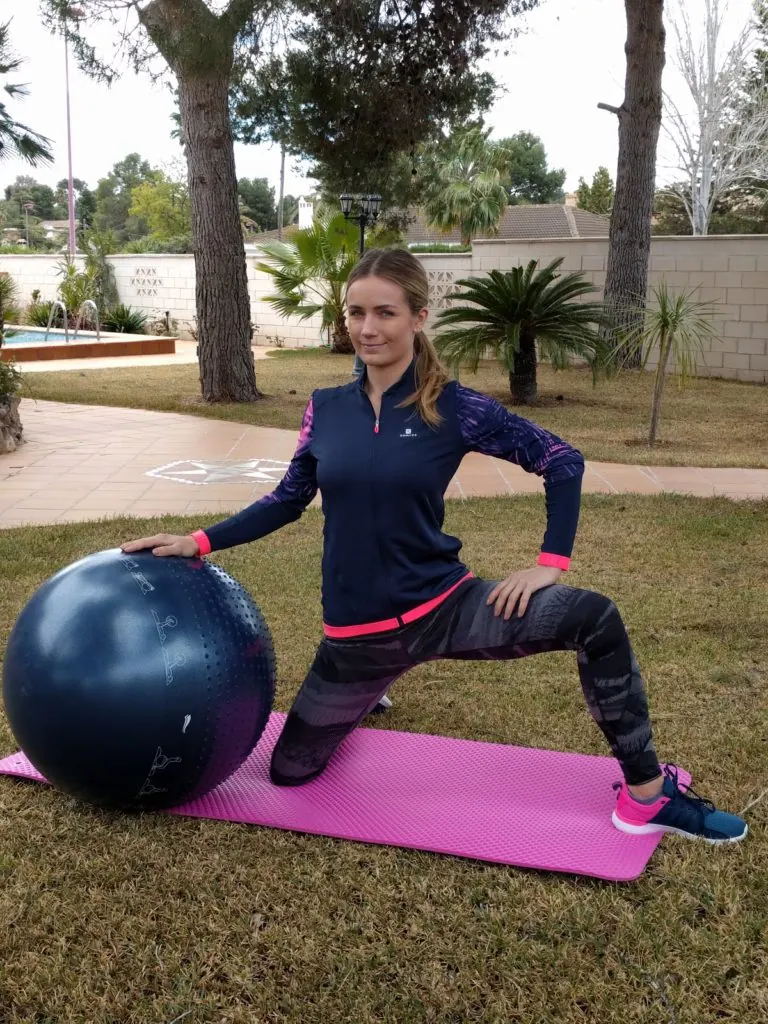
Photo 4: Hip mobilization. -
Relaxing the lower back muscles
After the previous prenatal fitball exercise, you may feel tension in your lower back. It’s important to stretch the lower back from time to time (between fitball exercises), as an increased lower back curve leads to more muscle tension and pain.
Starting position: Kneeling, sit your buttocks on your feet, open your knees (to leave room for your belly) and rest your head and chest on the ball. Make gentle side-to-side movements, moving the ball and your trunk. Remember not to lift your buttocks off your heels at any time.
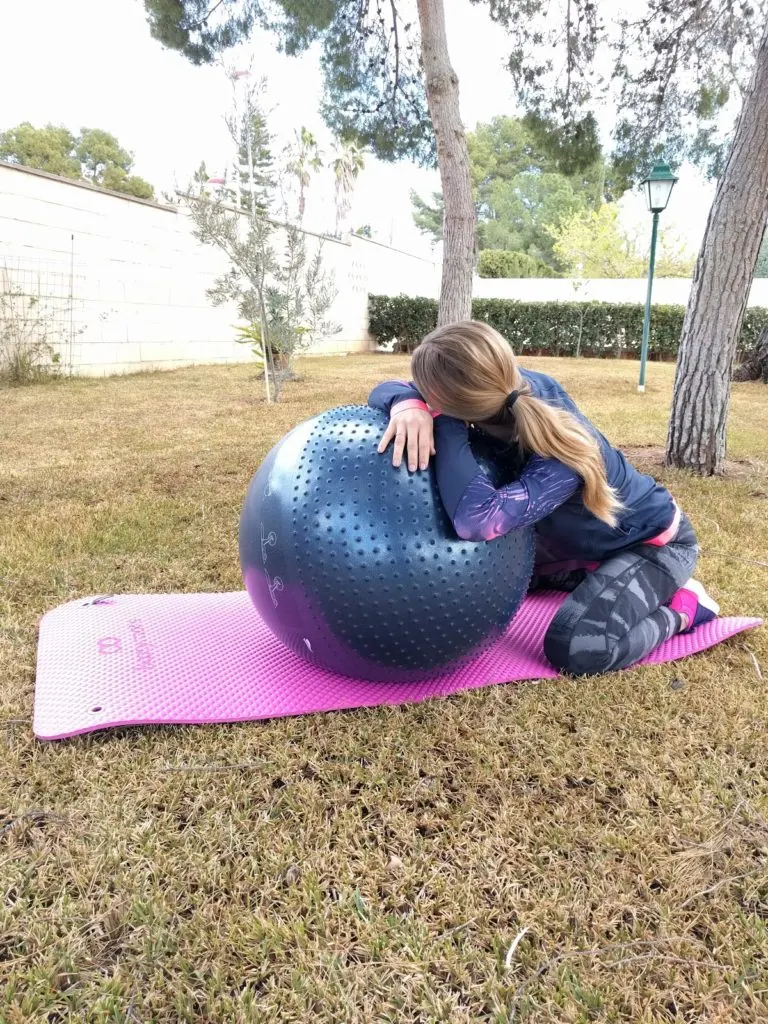
Photo 5: Lower back relaxation. -
‘Free pelvis’ exercise
The ‘free pelvis’ concept in training for pregnant women is based on hip movements that help the baby engage in the birth canal. It’s a very beneficial fitball exercise for pregnant women to do during pregnancy and also in the first stage of a vaginal birth. It relaxes the lower back, mobilizes the pelvic joints and encourages the baby to engage correctly in the pelvis.
Starting position: Sitting on the ball, with your legs in external rotation (knees out), lean your trunk slightly forward and rest your hands on your legs. Make side-to-side hip movements.
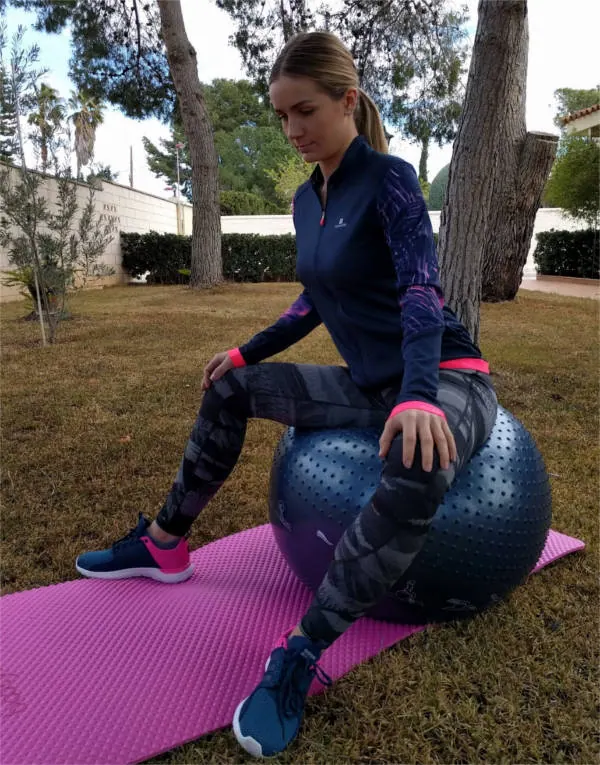
Photo 6: Side-to-side pelvic movement. -
Pelvic mobilization with the legs in an asymmetrical position
In the third trimester we add exercises with the legs in an asymmetrical position because they prevent complications, such as the baby tilting toward one hip. This could make birth harder and increases the risk of instruments being used in the pushing stage.
Starting position: Kneeling, rest both hands on the ball. Bring your left leg forward, place the sole of your foot on the floor and open your knee slightly (for comfort). Move your body forward (shifting your weight onto the front leg) and return to the starting position. Repeat 20 times and then switch legs.
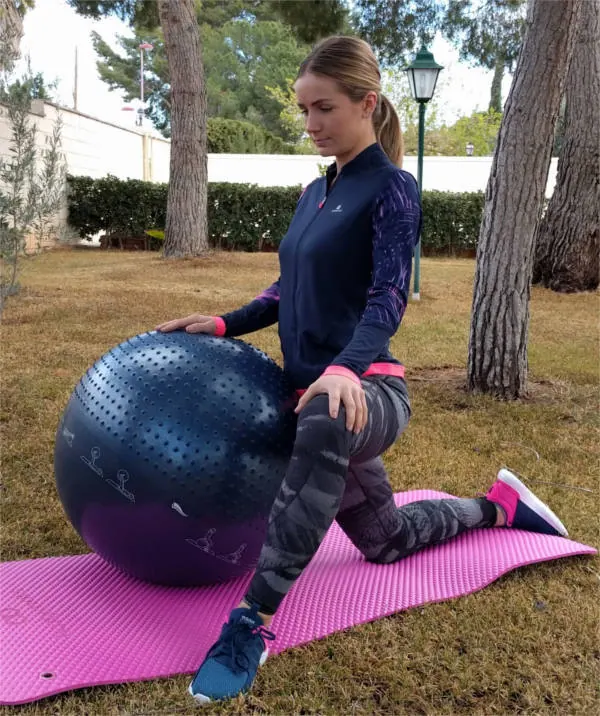
Photo 7: Exercise with the legs in an asymmetrical position. -
Pelvic floor and transverse abdominis activation
Working the pelvic floor and transverse abdominis together is essential for more effective work. The deep muscles of the pelvis and abdomen work as a unit and should also be trained that way.
Starting position: On all fours, rest your upper body on the ball, with your knees hip-width apart.
Take a deep breath and, as you breathe out, press down on the ball with your arms and at the same time contract your pelvic floor and transverse abdominis (drawing your belly button in). Pushing with your arms will strengthen the muscle contraction. As you breathe in, relax everything. Repeat this fitball pelvic floor exercise 20 times.
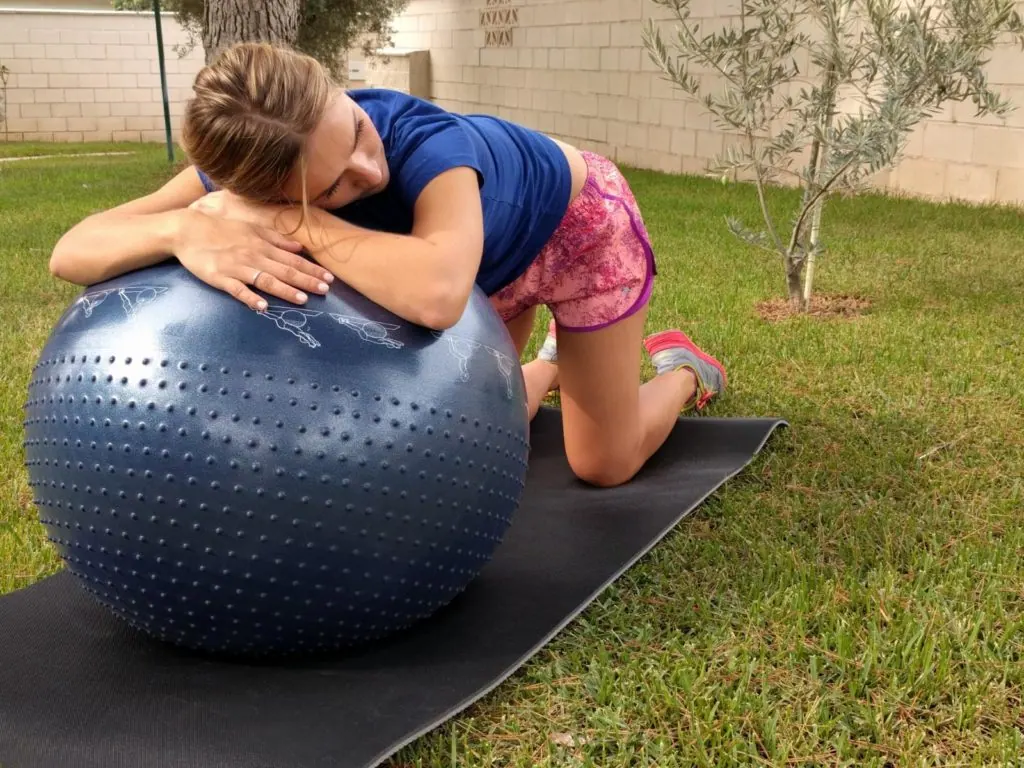
Photo 8: Pelvic floor and transverse abdominis activation. -
Side stretch
The aim of this fitball exercise for pregnant women is to gain flexibility in the muscles along the sides of the rib cage, as during pregnancy they’re tight, the ribs are compressed and women often feel ‘short of breath’. Stretching the back muscles, the sides of the trunk and the rib cage muscles can ease this discomfort.
Starting position: Sitting on the ball, with your legs hip-width apart.
As you breathe in, raise your right arm (straight) and, as you breathe out, bend your spine to the left (lean your trunk to the left) and stretch your arm toward the same side. Repeat 10 times and then switch arms.
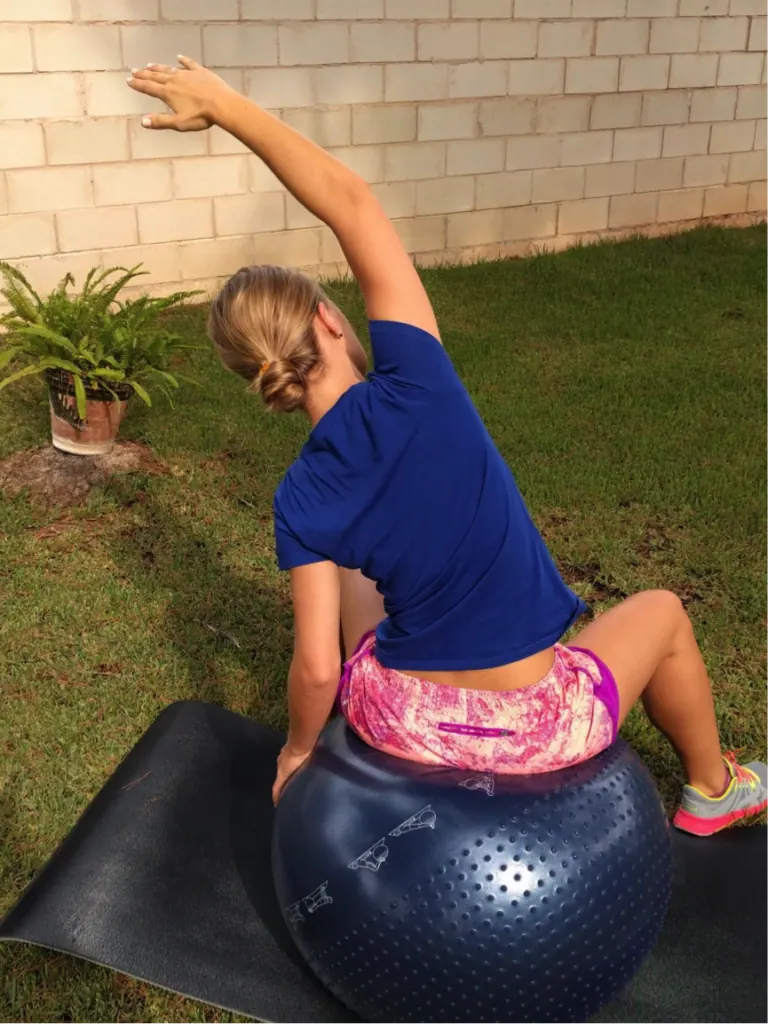
Photo 9: Side stretch. -
Shoulder bridge holding the ball
In this at-home fitball exercise for pregnant women, we lift the trunk while holding the ball in our hands. We’ll feel more stability in the shoulder girdle, as the weight of the ball helps keep the shoulder blades and shoulders well supported on the floor.
Starting position: Lying on your back with your legs bent, hold the ball in your hands and stretch your arms up.
Take a deep breath and, as you breathe out, lift your spine (one vertebra at a time); as you breathe in, lower down. Make sure the ball doesn’t move, your arms don’t drift back and your wrists stay in line with your shoulders. Repeat 15 times.
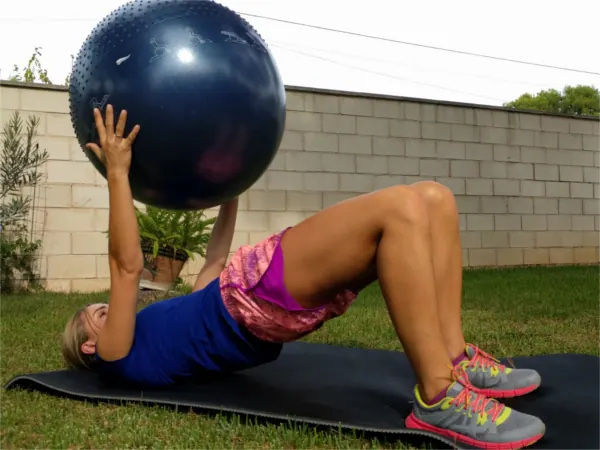
Photo 10: Shoulder bridge holding the ball.
What do you think of these fitball exercises for pregnant women? Put them into practice during your pregnancy and see the results for yourself.


Prepare for your birth at our clinic in Valencia
We support you throughout your pregnancy with physiotherapy for pregnant women, adapted to each trimester and your situation. Can’t come to Valencia? We also see patients in an online consultation.