Ball exercises to help dilation during labor



Article content
Vaginal birth is a physiological process triggered by the production of certain hormones, such as oxytocin, that set off the baby’s birth. For it to progress normally, it’s essential to keep moving for as long as possible until the pushing stage. That’s why I’ve put together this list of comfortable ball exercises that help dilation during labor, which can be done with a fitball, now increasingly available in delivery rooms.
Uterine contractions trigger the start of labor and the descent of the fetus into the birth canal. The pelvis and its movements play a key role in the correct engagement of the baby’s head and its descent toward the vagina. In the first stage of labor, the cervix dilates until it reaches 10 centimeters (4 inches), which is called full dilation. For this to happen, the baby’s head must apply pressure and the mother’s pelvis must create ‘space’ for the baby to descend. Without the right pelvic movements and specific exercises to help dilation, this process can last far too long.
How does your pelvis change during labor?
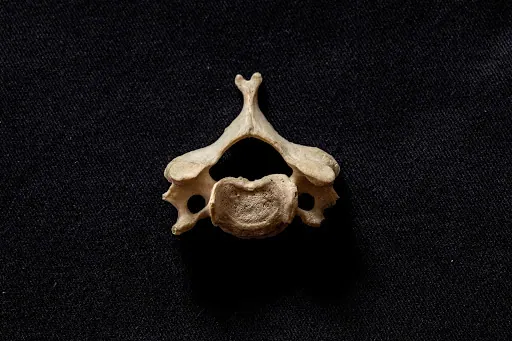
Although it may not seem like it, the pelvis is made up of bony structures that move in relation to each other. During dilation, the dimensions of the upper pelvis increase (the area of the iliac bones, the base of the sacrum and the pubic bone). Thanks to this anatomical change, the baby’s head and shoulders can adapt and descend into the lower pelvis.
The bone that plays the most important role in birth is the sacrum. The base of the sacrum (its highest part) tilts backward, leaving more room in the upper pelvis. That’s why we shouldn’t stay lying on our back, as this position blocks the movement of the sacrum. The hips should be in external rotation; in other words, during dilation women should look for positions with the legs slightly open to the sides.
Which movements help dilation?

In the first stage of dilation, when the baby is still very high, we look for upright positions. Using gravity and our own body weight, and moving our legs and hips, we help the baby descend into the mid-pelvis. What can we do standing up?
- Walk around the house, or around the labor room or hospital corridor.
- Go up and down stairs.
- Do pelvic movements standing, with your arms resting on the wall.
- Make small dance movements.
- Stand leaning on your partner, making gentle hip movements.
Ball exercises to help dilation during labor: sitting on the Pilates ball
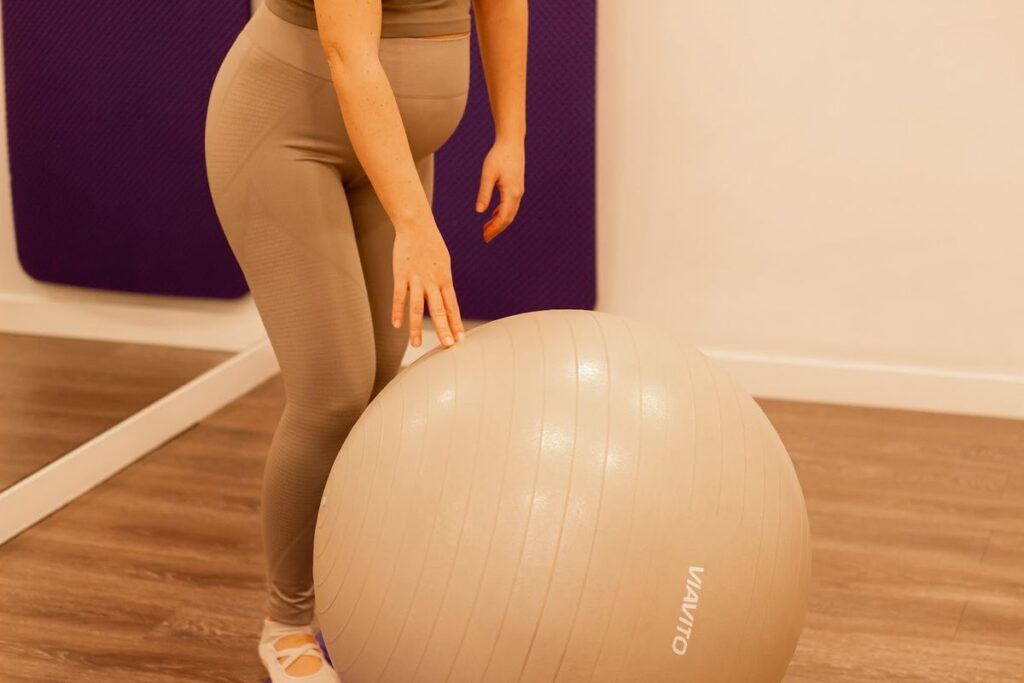
The large Pilates ball for dilation is an ideal tool for the day of the birth. It lets us relax the pelvic floor muscles, helps mobilize the hips, and we can lean on it when we’re on all fours, etc. Every woman in labor should be able to use a fitball in the hospital labor room. And if that’s not possible, we should have the option of taking our own ball to the hospital. I always recommend this to my patients.
The specific ball exercises for pregnant women that we can do to help dilation and help the baby engage are:
- Pelvic tilt in a sitting position.
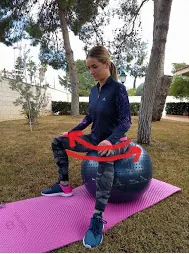
Sitting on the fitball, with your legs in external rotation, make pelvic movements forward and back. Move your pelvis together with the ball. Aim for a wide range of movement.
2. Side-to-side pelvic movements.
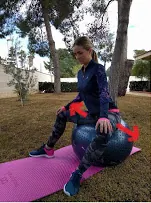
Sitting on the fitball, with your legs in external rotation, make side-to-side pelvic movements.
3. The ‘infinity’ pelvic movement.
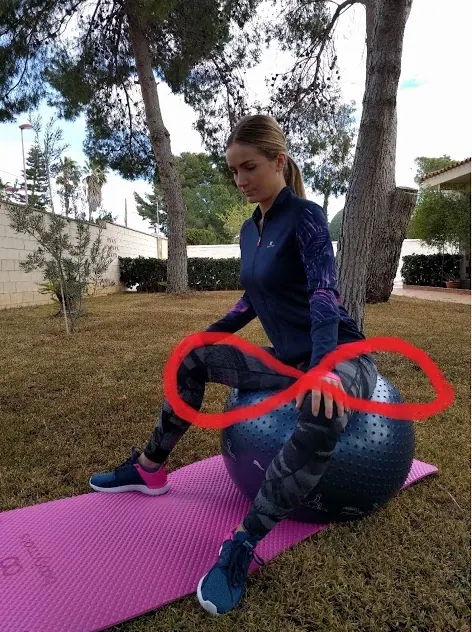
Sitting on the large Pilates ball, place your legs in external rotation. Make figure-‘8’ pelvic movements (from side to side).
4. Pelvic tilt with the legs in an asymmetrical position.
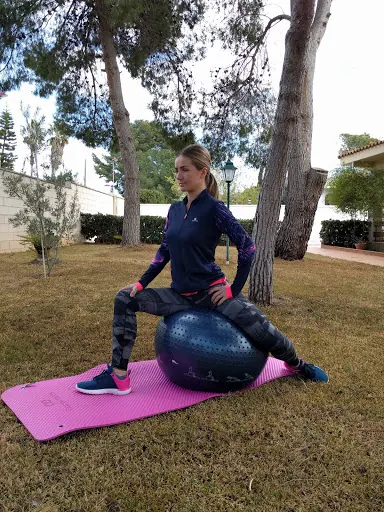
Sitting on the large Pilates ball, place one leg in front and the other behind. Make hip movements forward and back (8–10 movements) and then switch legs.
The pelvic movements are done between contractions. During a contraction, it’s recommended to stay still, with your spine leaning forward. To do this, find something to lean on (a chair, the bed, the wall), lean your trunk forward and stop the exercises.
To make the contraction more effective and more bearable, it’s advisable to:
- Breathe deeply, in through your nose (for 5–8 seconds) and out through your mouth (for 5–8 seconds).
- Don’t hold your breath. Holding your breath can increase the feeling of pain.
- Open your hips more, moving your knees apart and rotating your hips further.
- Lean your trunk forward to reduce pressure on the sacrum and lower back.
- Don’t squeeze your glutes or pelvic floor.
- Place warm compresses on the lower back and sacrum.
- Have someone massage your lower back by hand.
Exercises to help dilation during labor: on all fours with the Pilates ball
If pain keeps you from sitting, or you simply don’t feel comfortable sitting, the other option is to do the Pilates ball exercises for dilation on all fours.
On all fours we’ll feel less pressure in the sacral and lower back area, so we can relax the pelvic muscles more easily. It’s an ideal position for women who feel comfortable resting on their knees, and for those used to doing exercises on all fours. We don’t recommend this position for women who have never exercised face down or who have knee problems.
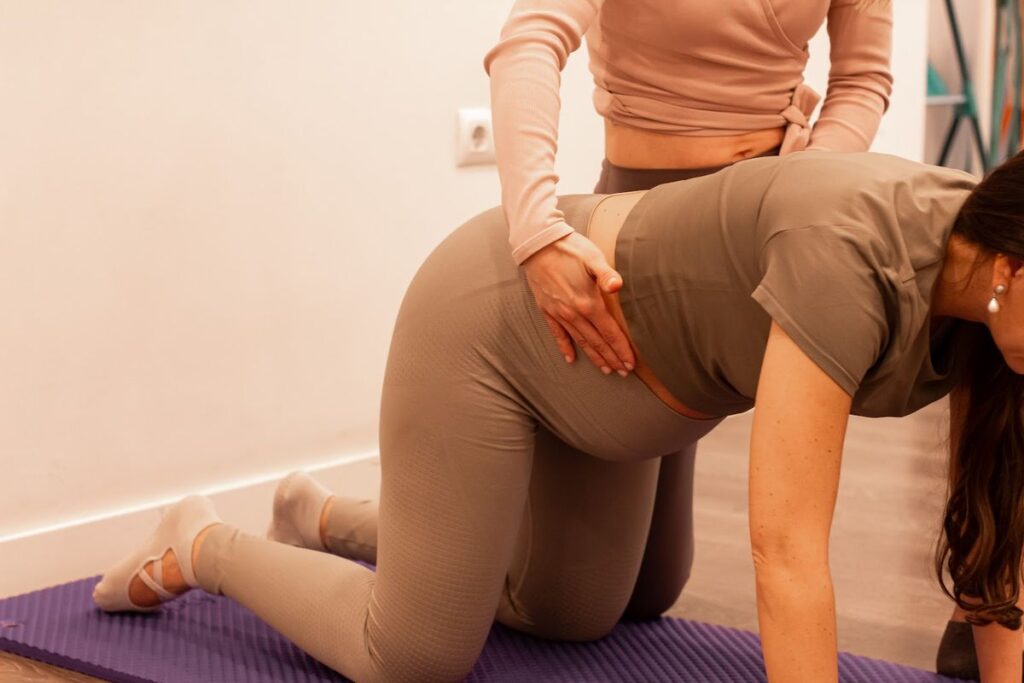
- On all fours, rocking forward and back.
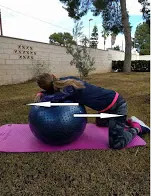
Get on all fours with your legs in external rotation (knees wider than hip-width apart). Lean on the ball and relax your back. The idea is to make movements with your whole body: forward and back.
2. On all fours, circular movements.

On all fours, keep your legs in external rotation. Make circular movements with your whole body: 8–10 circles in each direction.
During a contraction, staying on all fours, it’s recommended to:
- Lower your hips, resting your buttocks on your feet.
- Relax your pelvic floor.
- Open your legs more, rotating your hips outward.
- Breathe deeply, in through your nose (5–8 seconds) and out through your mouth (5–8 seconds).
- Don’t hold your breath.
Which movements can you do to help dilation with an epidural?

Once the epidural is in, we’ll probably be in bed. Many hospitals use the minimum dose of anesthesia so the patient can feel the contractions and have freedom of movement. Unfortunately, there are still many situations in which women lose muscle strength and motor control in their legs and can’t do any kind of exercise.
Remember that, for labor and dilation to progress, being able to move is essential. So, in bed, as long as we can make small leg movements, it’s recommended to continue with the following exercises:
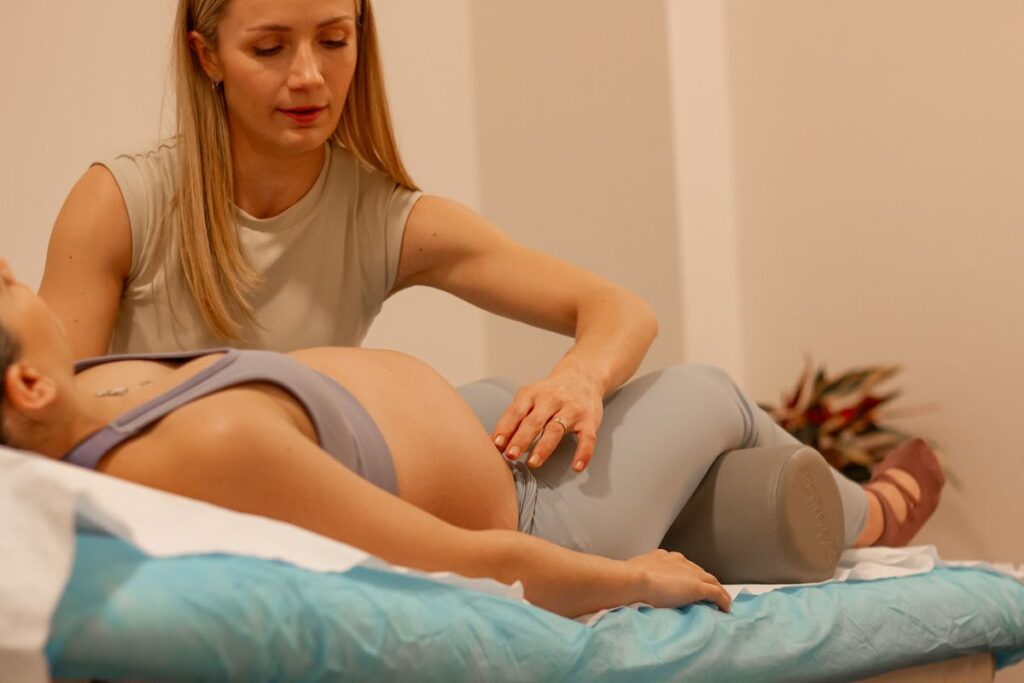
- Lying on your side, make circular movements with your top leg.
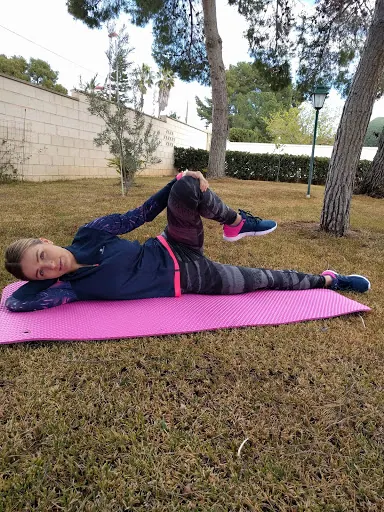
Hold your leg, bending your hip and knee as far as possible, and make circular leg movements. First in one direction (8–10 repetitions) and then the other. You can also bring your knee toward your shoulder and then away from it. The aim is to give the hip and sacrum as much mobility as possible.
After doing the exercises for about 10–20 minutes with one leg, switch sides and repeat with the other leg.
What you should never do during labor
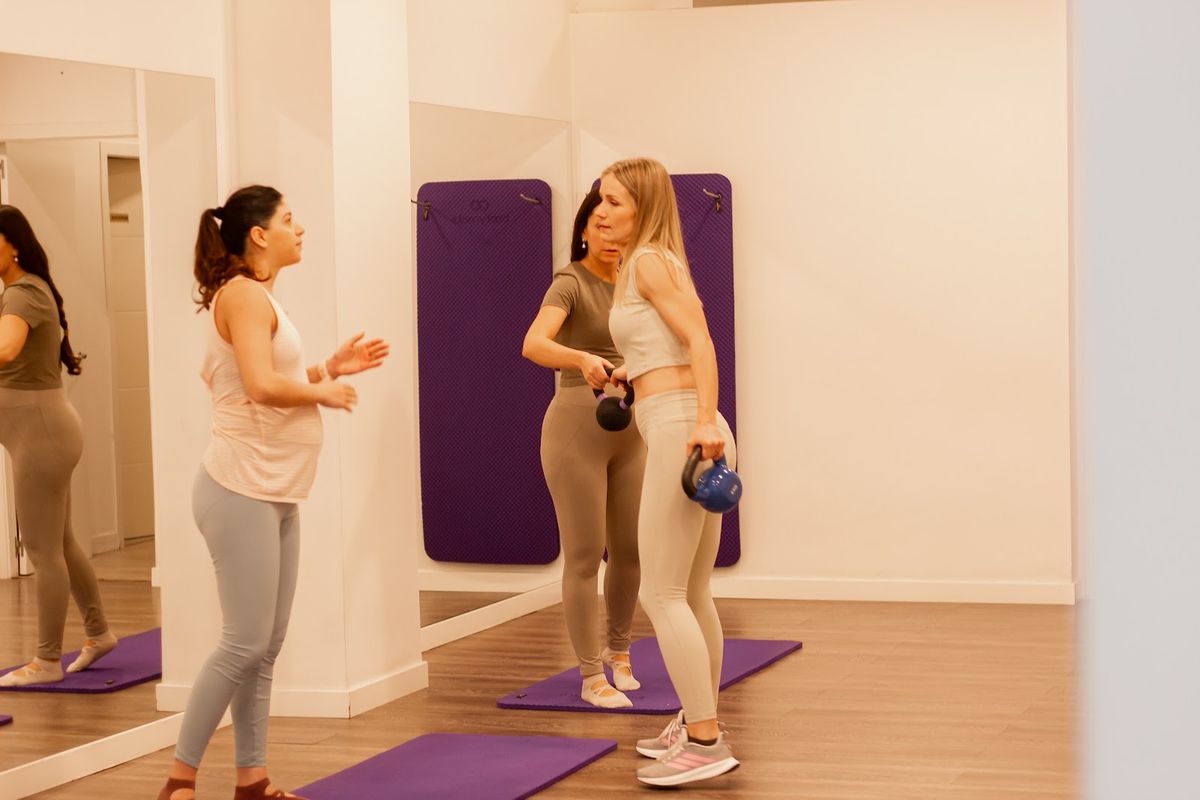
As we mentioned, movement, changes of position, exercise and breathing are our allies during a vaginal birth. But we should also know which positions to avoid and which situations can have a negative effect on how labor progresses.
- Avoid lying on your back. This is rule number one. During dilation we always look for positions in which the sacrum isn’t resting on anything and the pelvis is free to move.
- Don’t close your hips. Positions with crossed legs, knees together, etc. can be harmful and put the pelvic ligaments under tension.
- Don’t squeeze your pelvic floor. Sometimes, as a natural response to pain, we women tend to tighten our sphincters. During dilation you need to leave ‘space’ in the pelvis for the baby, and that’s only possible when the pelvic muscles are relaxed. Tip: practice conscious relaxation during pregnancy.
- Avoid staying in one position for a long time. The latest studies show that what helps dilation most is changing position, that is, changing positions every 10–15 minutes. A change of position means, for example, getting up from sitting on the ball and walking around the labor room.
- Don’t get stressed. Cortisol, the stress hormone, inhibits the production of oxytocin (the hormone that triggers labor). So we do everything we can to relax: we play music in the labor room, have someone with us the whole time, wear comfortable clothes, get a massage, stay hydrated, etc.
The exercises in this article should be practiced during pregnancy, in the third trimester. That way we get familiar with the pelvic movements and prepare our joints and muscles for the day of the birth.
The movements and ball exercises for dilation described here are suitable for women in labor without contraindications and for women having a birth without complications or risk to the baby.
To round out your dilation exercise routine even more, see our guide to exercises for dilation during labor, or this one on ball exercises for pregnant women.
If you’d like more information after reading this article on ball exercises for dilation during pregnancy, I’ll be happy to help! Call me or book an appointment online!
Below is a demonstration video with toning exercises designed specifically to improve mobility during pregnancy. These easy-to-follow, safe exercises will help you stay active and comfortable during this very special time.


Prepare for your birth at our clinic in Valencia
We support you throughout your pregnancy with physiotherapy for pregnant women, adapted to each trimester and your situation. Can’t come to Valencia? We also see patients in an online consultation.