Postpartum exercise guide
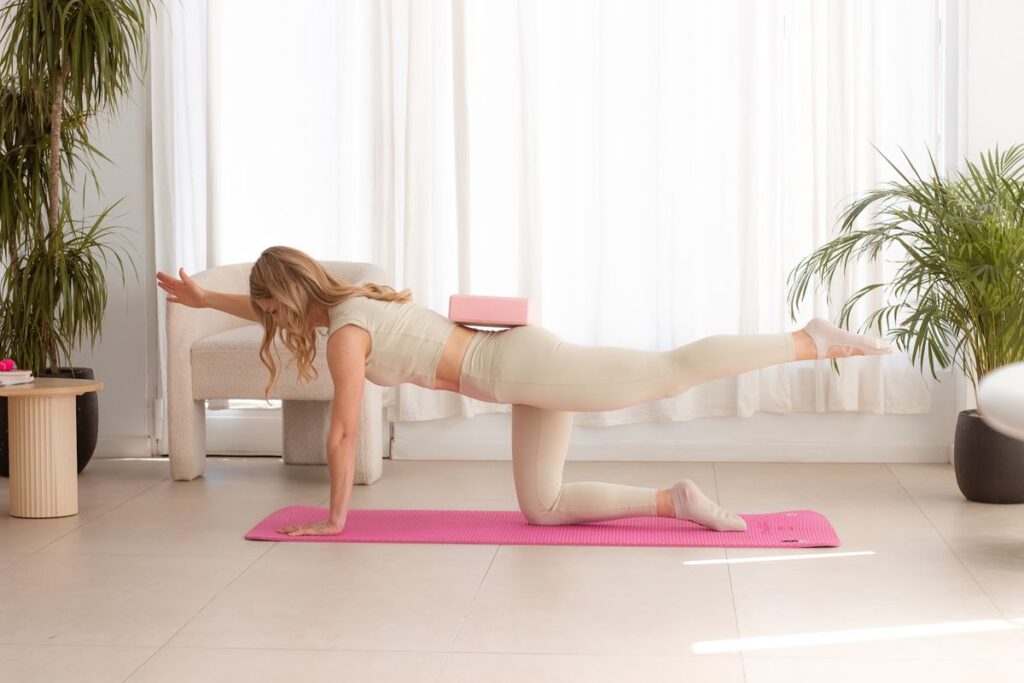



Article content
The type of birth, vaginal or cesarean, and the interventions performed (episiotomy, use of instruments, induced labor or an epidural) shape a woman’s condition postpartum. That’s why today we’re going to talk about the importance of doing postpartum exercises.
After a vaginal birth, in the immediate postpartum period, during the first 3 weeks it’s normal to feel pain in the perineal area and changes in how you urinate because the pelvic nerves have been stretched.
Discomfort in the lower abdomen, similar to period pain, is also very common and comes from the contractions of the uterus as it gradually returns to its original size. What worries us most is the wound from the vaginal cut, which is usually made during the pushing stage.
Washing with a special soap after a bowel movement will help. It’s a good idea to dry the area well, with toilet paper or a hair dryer, to avoid infections. Pads should be changed every 2 hours, because too much moisture can make the perineum inflamed.
After a cesarean, the abdominal wound causes tightness and sometimes pain for a week. To help it heal, it should be kept as dry as possible. During the first 6 weeks postpartum, we shouldn’t do any effort that requires contracting the abdominal muscles, to protect the scar. You can also use silicone scar-reduction sheets.
For a good recovery, you need to follow a series of postpartum exercises and treatments. In our classes we use personalized methods adapted to each woman’s needs. Remember that we’re specialists, and it’s very important to follow guidance so you don’t do exercises that are not advised and could cause harm.
Immediate postpartum exercises: the first 6 weeks after birth
During the first days after a vaginal birth or a cesarean, rest is essential. We need time to recover our strength, let the uterus return to its original size through its own contractions and, above all, enjoy the arrival of our baby.
Short walks, breathing exercises, Kegel exercises for women and the use of Kegel balls are recommended, as well as leg movements in bed to prevent blood from pooling. Since the perineal area is very sensitive in the first weeks postpartum, any exercise done with a vaginal device, such as Kegel balls, should involve inserting it with a natural lubricant. Friction between the device and the vaginal walls should be minimal, which is why you should use a good-quality lubricant.
The goals in the immediate postpartum period are:
- Start activating the pelvic floor muscles.
- Maintain blood circulation.
- Help healing (perineum, abdomen).
- Reduce pain.
Late postpartum exercises: from the sixth week after birth
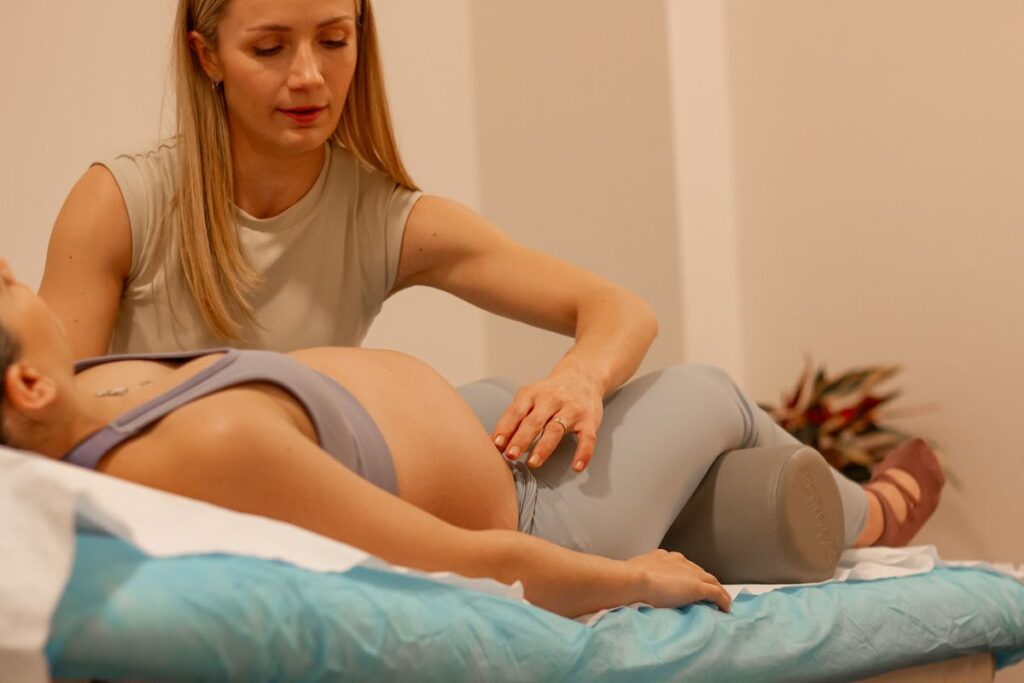
This is the ideal time for your first pelvic floor assessment after birth. A specialized physiotherapist will assess the tone, the quality of the contraction, muscle endurance, any hypotonia or hypertonia, and the scar on your pelvic floor. She will then assess the condition of your abdominal muscles.
If you had a cesarean, the scar is examined: pain, trigger points and its flexibility. The tone of the abdominal muscles and the presence of diastasis are assessed.
Tips for recovering pelvic floor and abdominal strength and muscle tone
Here are 3 star Pilates exercises for recovering the strength and tone of the pelvic floor and abdominal muscles. They can be done after a vaginal birth or after a cesarean.
-
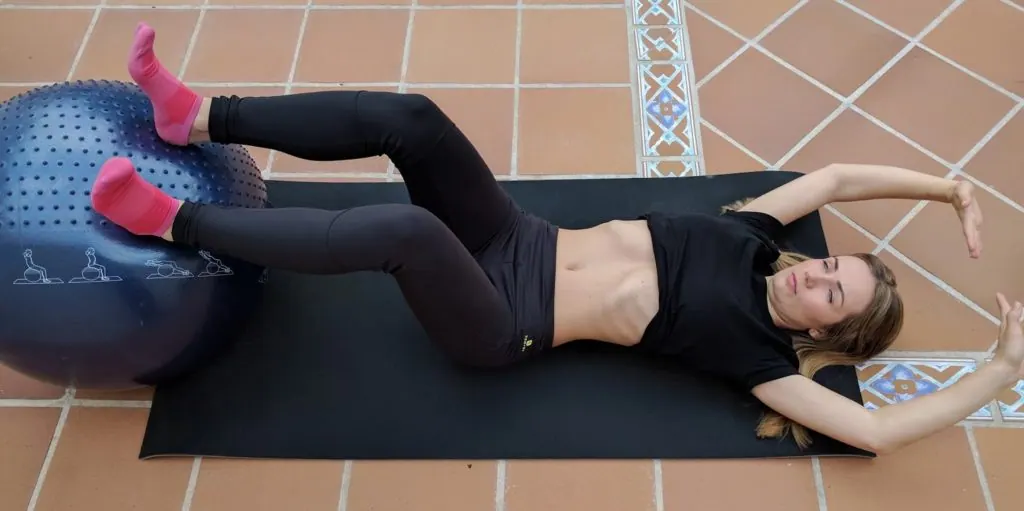
Hypopressive exercise with the fitball
Lie on your back with your legs raised. Your knees and hips should be bent at a 90º angle. Rest your heels on the large ball. Flex your ankles and bring your toes toward your head.
Find the neutral position of your pelvis, rest your sacrum on the floor and check that there’s a small gap under your lower back. Take your arms back: bend your elbows and wrists. Lengthen your spine and stretch the back of your neck by tucking your chin in.
Movement: Breathe in, filling your lungs completely. As you breathe out, empty your lungs until no air can come in through your nose or mouth. Then expand your rib cage without taking in air (as if you wanted to inhale, but without doing so). Feel your ribs open and your abdomen hollow out. Hold your breath for 10 seconds. Then breathe in and repeat 5 more times.
-
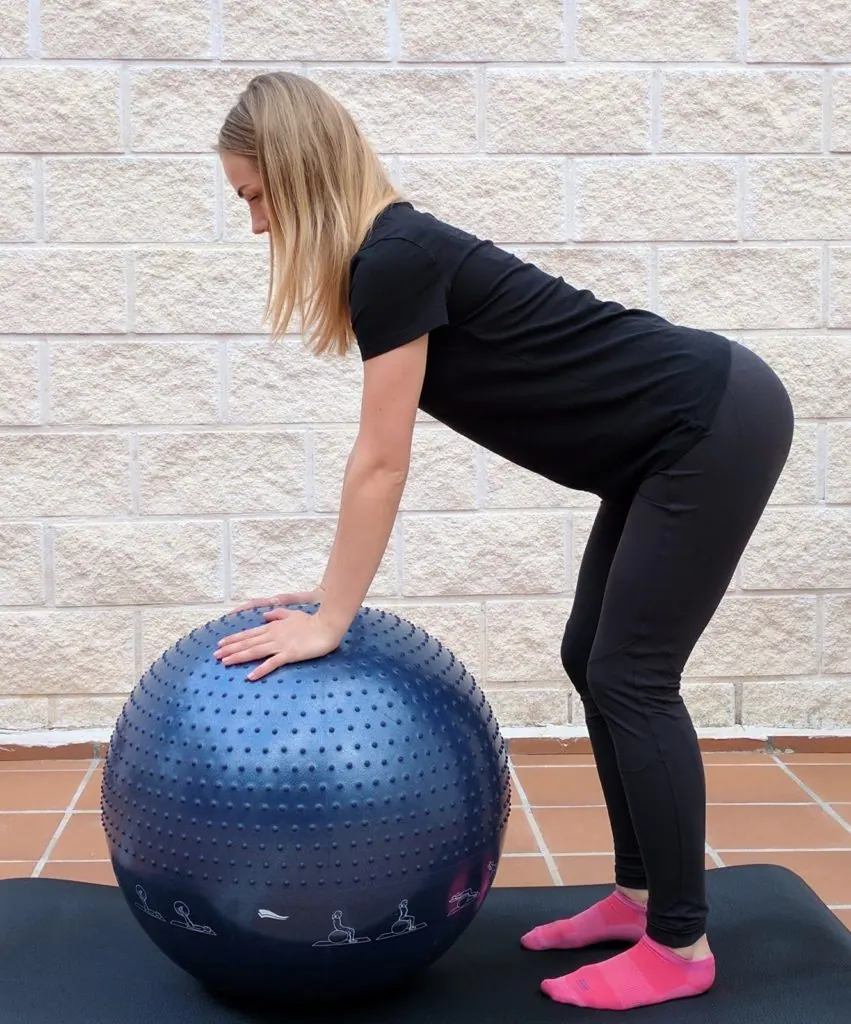
Core activation exercise
Starting position: standing, with your ankles hip-width apart and your hands resting on the large ball. Bend your knees slightly and make sure your spine and pelvis are in neutral. Keep the natural curves of your neck and lower back.
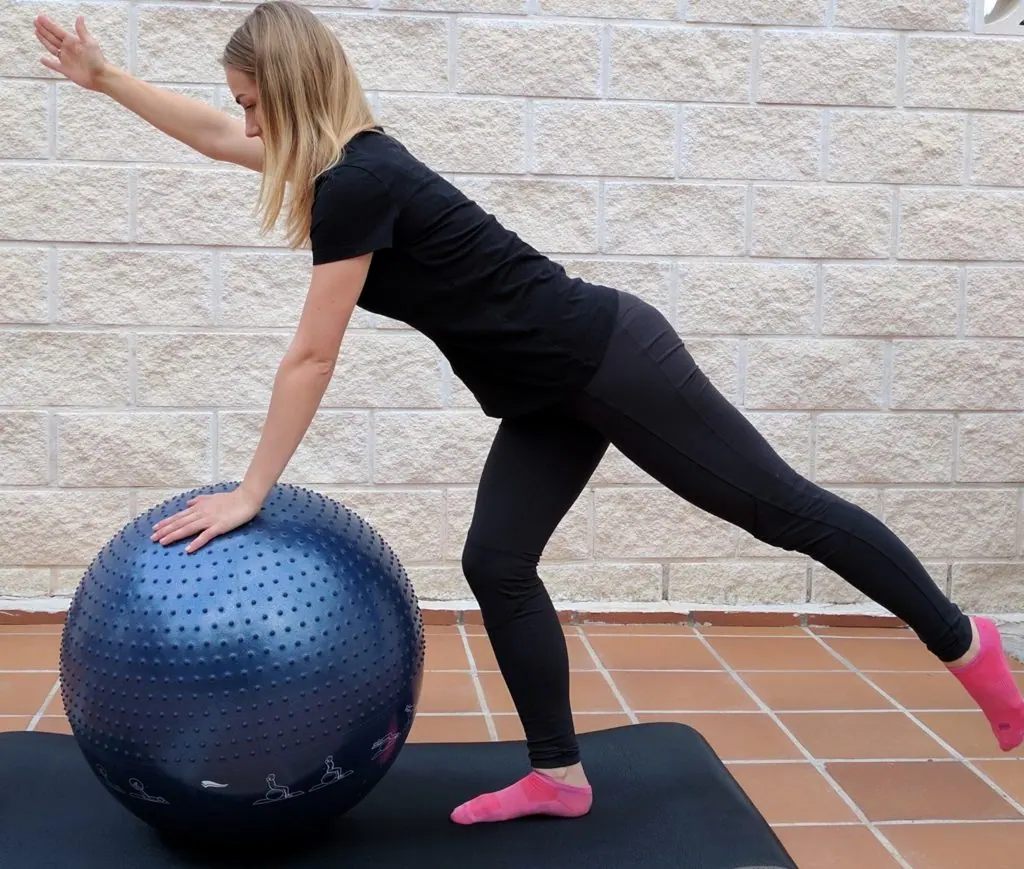
Movement: Breathe in deeply, sending the air into the sides of your rib cage. As you breathe out, close your ribs and draw your belly button in. At the same time, stretch your right leg back and your left arm forward. The aim is to keep your arm, spine and leg aligned in a diagonal line.
Then switch sides. To complete the exercise, do five repetitions on each side.
-
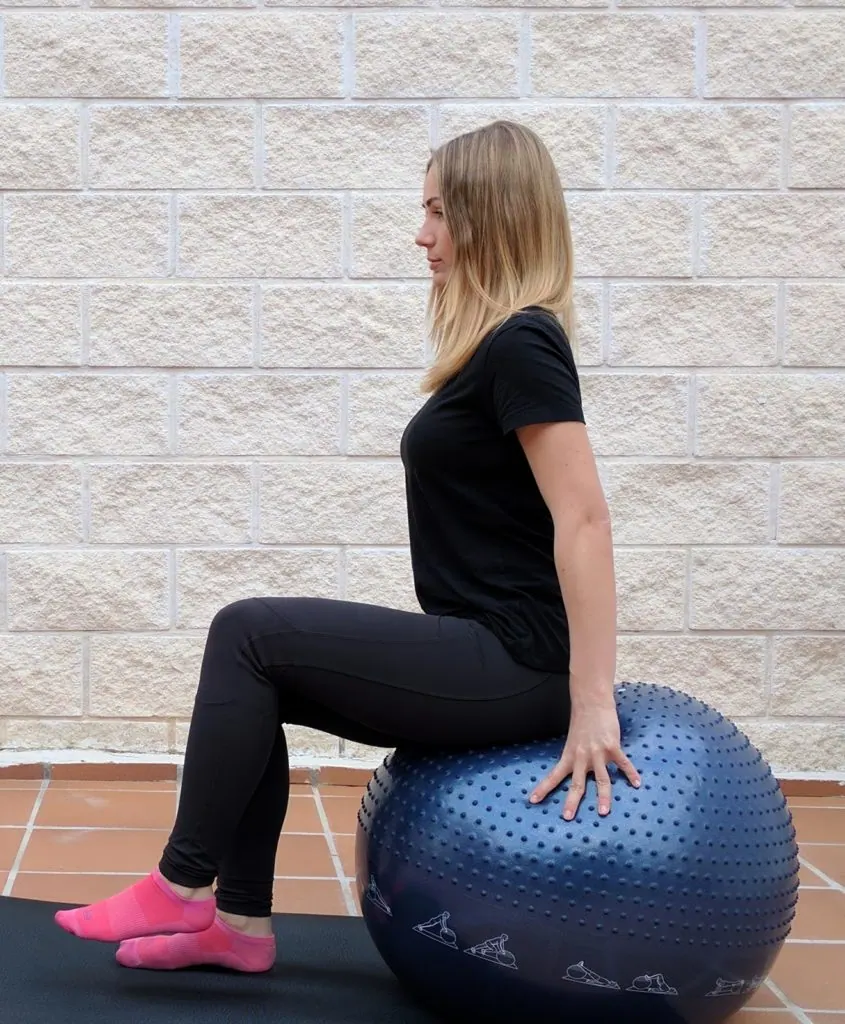
Pelvic floor + transverse abdominis activation exercise
Sit on the large ball and place your heels under your knees. Make sure your pelvis is in neutral. Feel your sit bones, the bones in your bottom, resting on the ball, and keep the curve of your lower back the whole time.
You can rest your fingertips on the ball.
Movement: Breathe in deeply and, as you breathe out, activate your pelvic floor. Close your ribs, draw your belly button in and, holding this contraction, lift one foot. Important: lift your leg only 2 centimeters (about 1 inch) off the floor so you don’t lose the neutral position of your pelvis and spine. In this exercise you activate your abdominal muscles while lengthening your whole spine upward. You’ll feel your postural muscles working hard. Repeat 10 times with each leg.
Which exercises should you avoid postpartum?
Until a year after a vaginal birth or a cesarean, the following exercises are not advised:
- Traditional sit-ups.
- Roll Up (from Pilates).
- Abdominal exercises with both legs raised.
- Running.
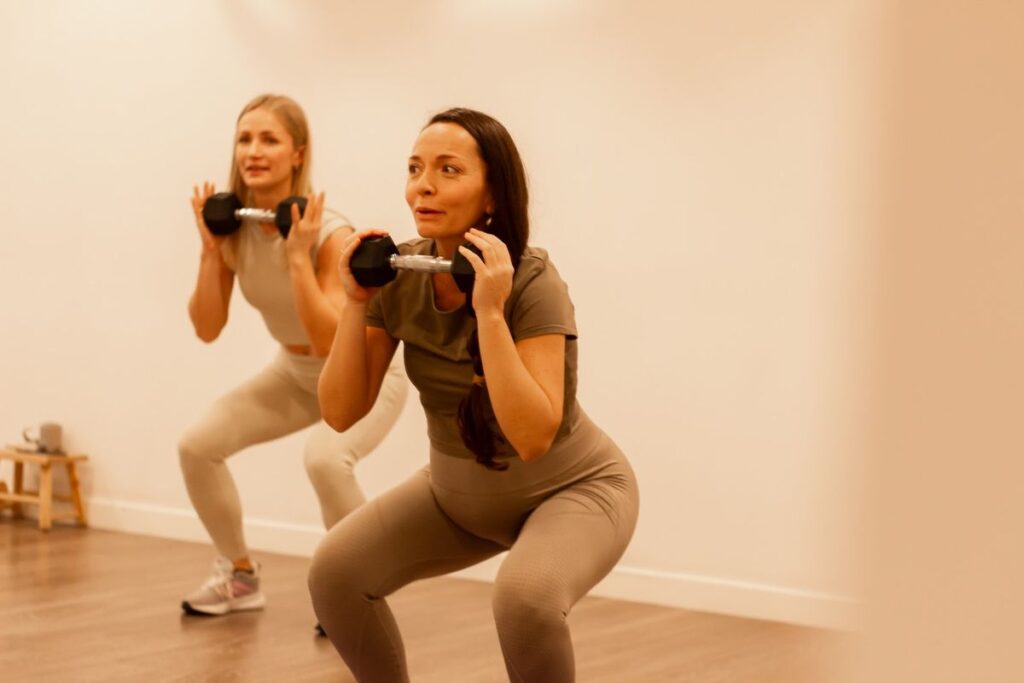
- Squats with weights.
- Aerobics, step (classes with jumping).
We gradually increase the frequency and intensity of the postpartum exercises shown here. In the first weeks of the late postpartum period, we suggest doing these exercises two or three times a week. With this routine, you’ll recover the tone of your pelvic floor muscles and deep abdominal layer. They’ll then let you do more full-body postpartum exercises the rest of the time.


Recover after giving birth in Valencia
We see how you’re doing and support you at your own pace with postpartum physiotherapy, whether you had a vaginal birth or a cesarean. Can’t come to Valencia? We also see patients in an online consultation.