
How to treat abdominal diastasis with physiotherapy



Article content
Have you heard about separation of the rectus abdominis muscles postpartum? Do you feel your abdomen is more bloated, and do you notice it doming when you exert yourself? When you do a traditional sit-up, do you notice a bulge pushing out around your belly button? If so, you may have abdominal diastasis, so I’ve written this article to explain what this condition is and how to treat it with physiotherapy.
Abdominal diastasis is defined as the separation of the right and left rectus abdominis muscles below the belly button (infraumbilical) and/or above it (supraumbilical). The gap is the result of damage to the connective tissue that normally holds the two bands of the rectus muscle together.
At first, abdominal diastasis is a cosmetic issue, but if it isn’t treated in time it can cause lumbopelvic stability problems or pelvic floor dysfunction.
I’m not sure if I have diastasis. How is it diagnosed?
Checking for separation of the rectus abdominis should always be part of a postpartum assessment, together with a pelvic floor examination, and always by a physiotherapist specializing in gynecology.
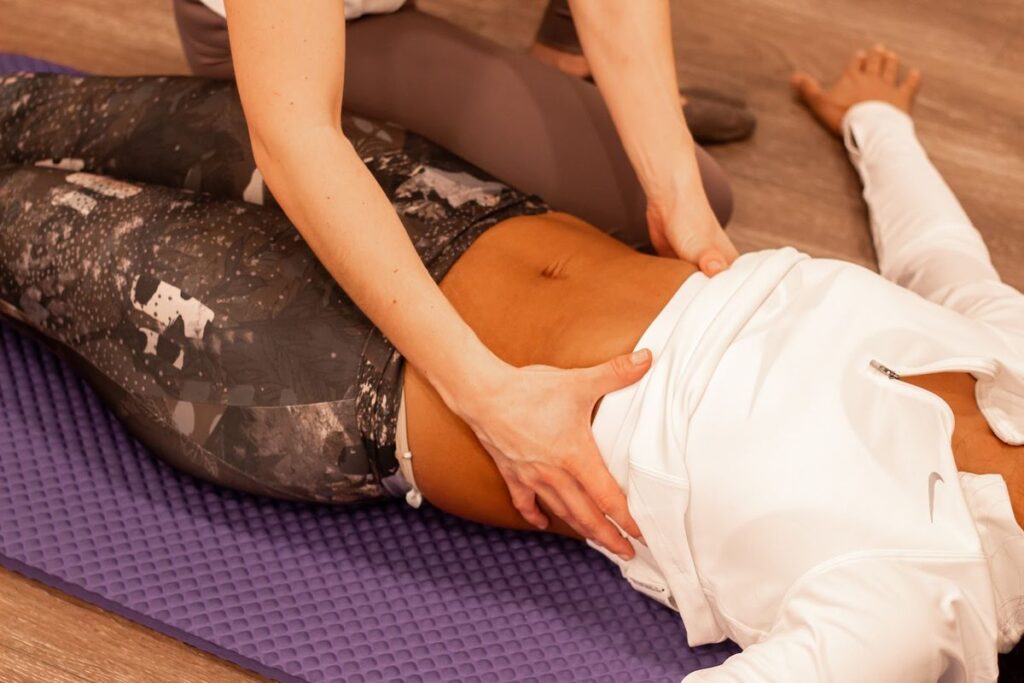
The examination is done with the woman lying on her back. The therapist places her thumbs horizontally on the linea alba (the midline of the abdomen). The patient is asked to contract her rectus abdominis by lifting her head and neck.
Diastasis is diagnosed when these measurements are exceeded:
- 0.9 cm (about 3/8 in) halfway between the pubic symphysis and the belly button.
- 2.7 cm (about 1 in) just above the belly button.
- 1.0 cm (about 3/8 in) halfway between the belly button and the xiphoid process.
It’s important to know that during pregnancy, because of the baby’s growth and the increase in the size of the abdomen, more than half of women in the third trimester have abdominal diastasis. 53% of women in the immediate postpartum period (the first 5 weeks after birth) have changes in the rectus muscles. So the assessment should be done from the second month postpartum.
Risk factors for abdominal separation
-
Pregnancy.
Postural changes, the baby’s growth and hormonal changes weaken the connective tissue of the rectus muscles and can cause it to tear.
-
Weight gain.
-
Prolonged labor.
In complicated, long labors with a prolonged pushing stage, muscle tears in the abdominal area are more likely. The mother’s pushing increases intra-abdominal pressure and can tear the tissue that joins the rectus muscles.
-
Excessive abdominal work.
Doing traditional sit-ups postpartum can cause diastasis or even an abdominal hernia. Jobs that involve a lot of physical work, lifting or bending forward, such as factory work, cleaning, childcare or nursing assistance, also expose women to more harmful abdominal strain.
If we do nothing to reduce the separation of the rectus abdominis, we risk:
- Lower back pain, due to poor lumbopelvic stability
- Digestive problems: gas buildup and constipation
- Hernias of the abdominal organs
- A weakened pelvic floor
Treatments and how to heal abdominal diastasis
- Avoid traditional sit-ups.
- Work the deepest layers of the abdominal cavity: the transverse abdominis.
- Eat a light diet to avoid constipation.
- Do hypopressive abdominal exercises.
- Avoid carrying heavy loads.
- Recover before getting pregnant again.
- Combine electrical stimulation with hypopressive abdominal exercise.
- If you run regularly, run less often or even drop it from your exercise routine.
- Add Kegel trainers.

Get your diastasis assessed in Valencia
We check your abdomen and pelvic floor and adapt your exercise with physiotherapy for abdominal diastasis. Can’t come to Valencia? We also see patients in an online consultation.