A guide to Kegel exercises for women



Article content
Here’s a complete guide to Kegel exercises for women, covering their benefits, when to do them, common mistakes and the main workouts you can do at home as part of your routine.
The Kegel technique for women is one of the most recommended activities for strengthening the pelvic muscles, which makes it one of the most practiced and highly rated exercise routines for women.
What Kegel exercises are and when it’s best to do them
Kegels are a set of exercises based on controlling the contraction and relaxation of the sphincters, with the aim of learning to activate or deactivate those muscles voluntarily.
These exercises are designed to strengthen the pelvic floor muscles, which support the weight of the internal organs of the pelvic and abdominal cavity: the uterus, bladder, urethra, bowel, and so on.
That’s why it’s so important to keep these muscles strong and trained: it will help you prevent urinary and fecal incontinence, gas leakage or descent of the internal organs postpartum or during menopause.
Kegel exercises are suitable for women of all ages. Young women, mothers and older women all need to keep their pelvic muscles toned and elastic.
Every woman, before getting pregnant and during pregnancy, should prepare her perineum for the great effort of a vaginal birth. Because of the mother’s own pushing and the pressure of the baby’s head, the pelvic muscles are put under a great stretch that could cause a tear. To prevent this, you need to keep them in shape and, above all, elastic.
What are the benefits of Kegels postpartum?
Postpartum, from the first day after a vaginal birth, or two weeks after a cesarean, a woman can return to her exercise routine. Especially after a vaginal birth, you need to give this area more time and exercise it, starting with gentle contractions.
How the Kegel technique helps later in life
From the age of 60, because of falling estrogen levels, women develop atrophy of the bladder wall and/or urethra. In addition, the vaginal walls dry out faster and the pelvic floor muscles lose collagen, which is responsible for keeping the muscle elastic. Most menopausal women who practice Kegel exercises eliminate the risk of stress urinary incontinence and can continue to have sex.
How to do the recommended Kegel exercises for women
What is the right position to activate the pelvic floor muscles?
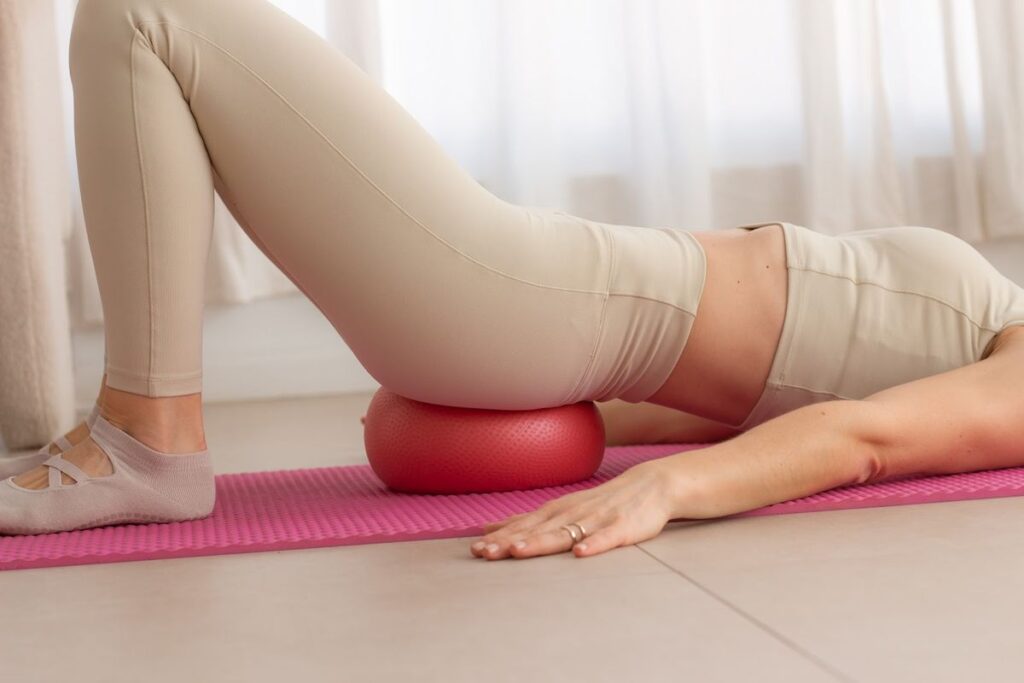
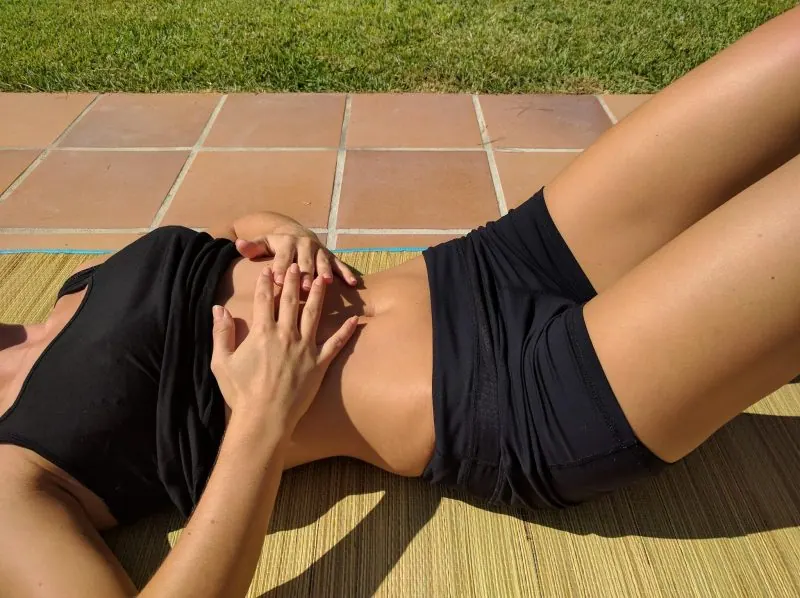
The position in which it’s easiest to contract the pelvic floor is lying on your back. This removes the force of gravity acting on your pelvic organs, making it easier to contract the perineum.
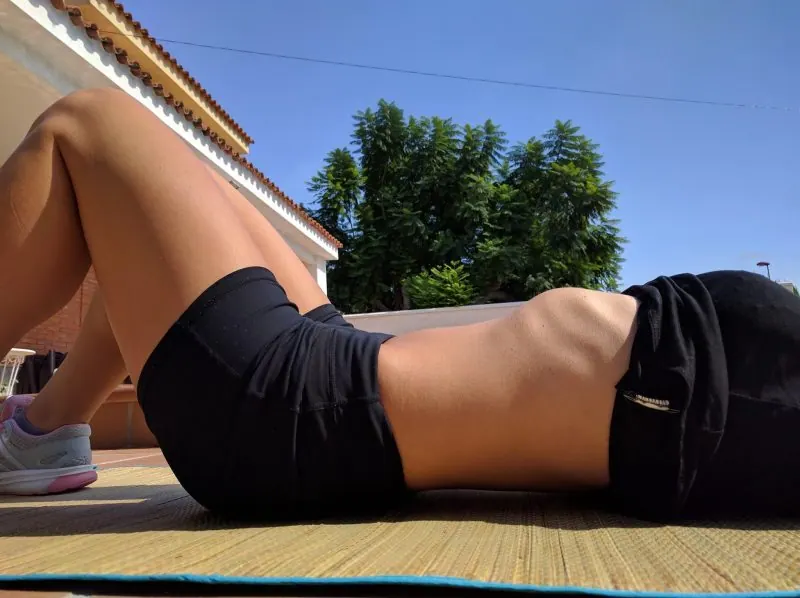
- Lie on your back, bend your legs and put the soles of your feet on the floor.
- Relax your shoulders and shoulder blades, and place your hands on your lower ribs to feel your rib cage move as you breathe.
- Find the neutral position of your pelvis. Imagine you have to leave a gap under your lower back (a passage for ants that you mustn’t squash).
- Your sacrum should be resting on the floor and your lower back should keep its natural curve. A common mistake is to press the lower back into the floor (flattening the curve); try to avoid it.
How to breathe correctly and activate your core
The pelvic floor doesn’t work in isolation. Many studies have shown that it works in synergy with the transverse abdominis.
The transverse abdominis is one of the deepest muscles of the trunk. It stabilizes the spine and keeps the internal organs in place (including the uterus and bladder). So the transverse abdominis plays a very important role in preventing prolapse of the internal organs.
Every contraction of the transverse abdominis lifts and activates the pelvic floor, so it’s more effective to exercise them together.
- Breathe in through your nose, expanding your rib cage. You’ll feel your breastbone rise and your ribs open.
- As you breathe out, close your rib cage and draw your belly button in and up, toward your breastbone. This movement will activate your core, as you’ll be contracting the transverse abdominis. Imagine that as you breathe out you’re fastening a very wide belt or a corset around your waist.
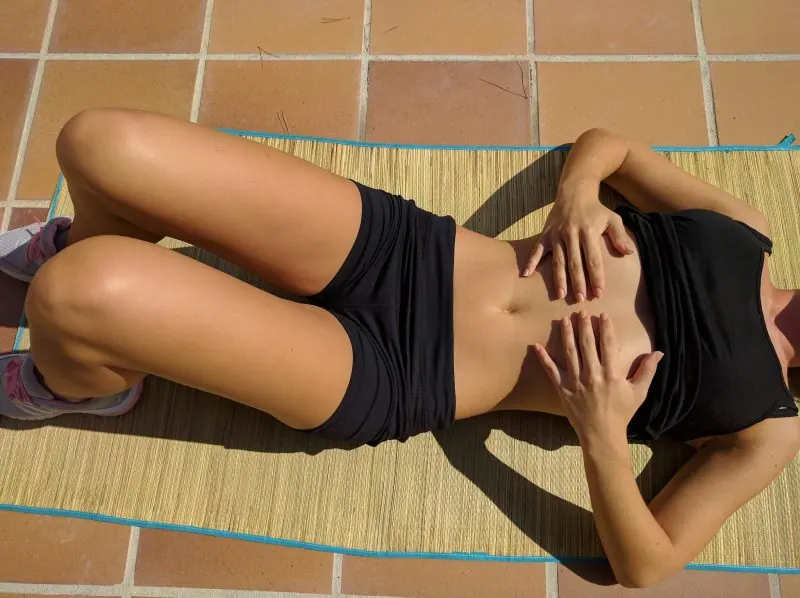
This exercise is enough to activate your core. Repeat it a few times before moving on to the next exercise.
How to learn the correct pelvic floor contraction
Now that you’ve learned how to activate your core, add a gentle contraction of your sphincters.
To do this, breathe in through your nose and expand your rib cage. As you breathe out, activate your core (transverse abdominis, closing the ribs, drawing your belly button toward your lower spine) and contract your perineal muscles as if you wanted to close your vagina.
You can do this exercise in three sets of ten repetitions, with five minutes’ rest between sets.
It’s important that the out-breath is longer than the in-breath, so that the pelvic floor contraction is effective (it should last at least five to eight seconds).
What are the most common positions for doing Kegels?
Kegel exercises can be done in several positions. Here are some of the most common:
- Lying on your back: with your legs bent, with your legs straight, or with a small ball between your knees (squeezing the ball as you contract).
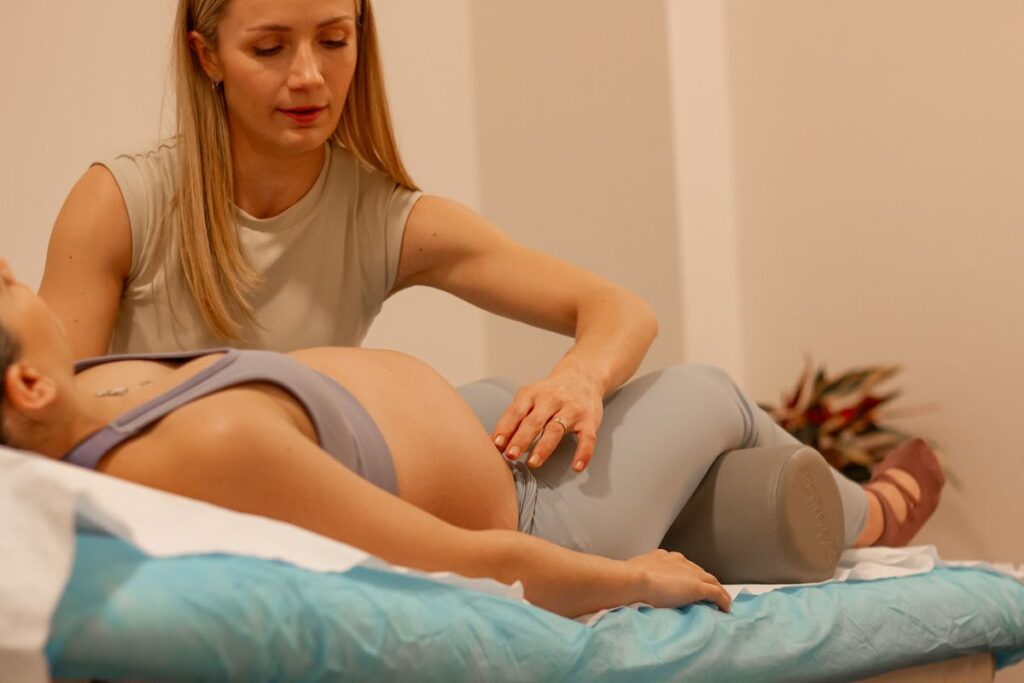
- Lying on your side: with your legs bent, with a ball between your knees, or with your legs straight.

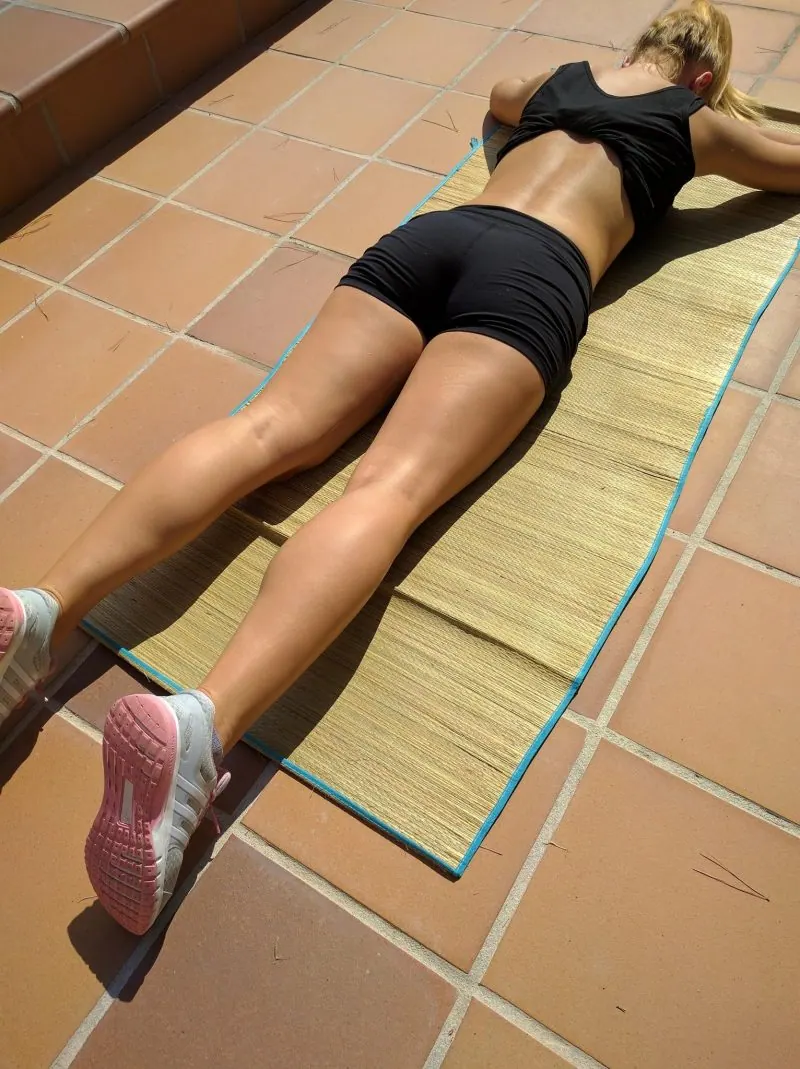
- Lying face down: with your legs stretched out on the floor (as you breathe out, draw your belly button toward your lower spine, as before, but in this position that means “toward the ceiling”).
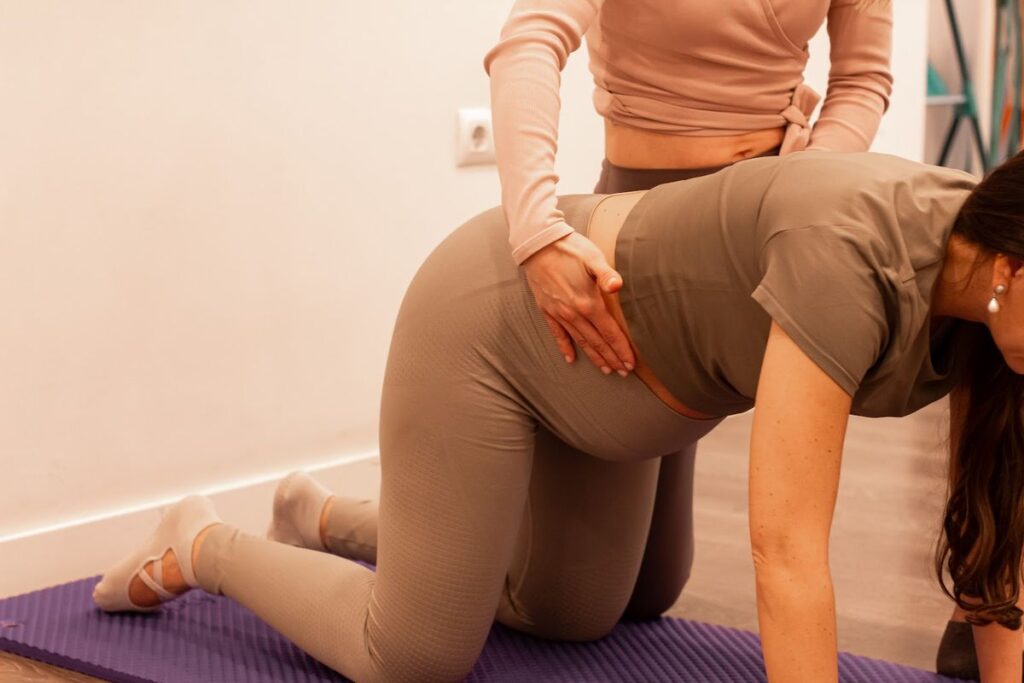
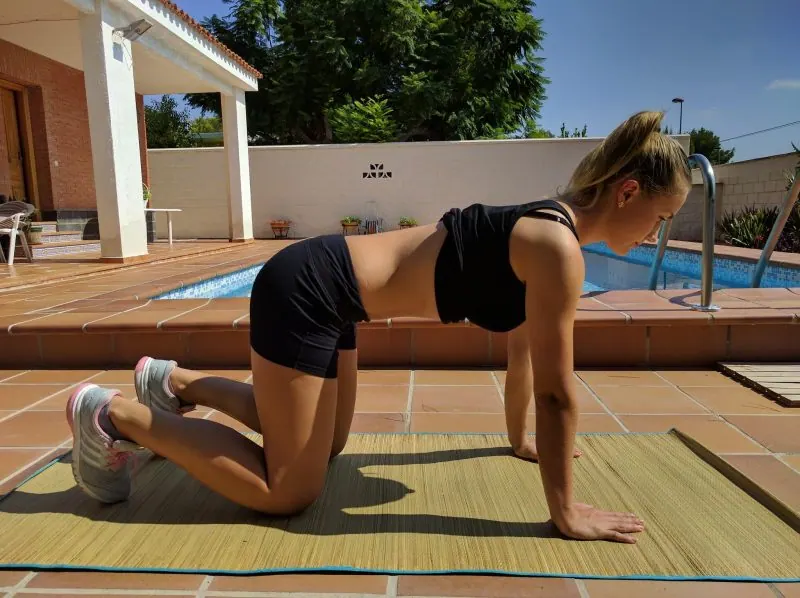
- On all fours: place your knees under your hips and your hands under your shoulders, with your pelvis and spine in a neutral position.
- Sitting on a chair: feet flat on the floor, keeping two fists’ width between your feet and between your knees.
While practicing these exercises, you could add Kegel trainers to help tone your pelvic floor.
Common mistakes to avoid when doing Kegels
- Don’t press your lower back into the floor when lying on your back.

- Don’t push down when you contract: do the opposite; you should lift the whole pelvic muscle unit upward (into the abdominal and pelvic cavity).
- Don’t change your breathing pattern: always contract as you breathe out (that’s when your diaphragm rises and leaves room for the pelvic organs to lift).
- Don’t squeeze your glutes or rectus abdominis: remember to keep your glutes relaxed and the superficial muscles of your abdomen free of tension.
If you’d like to practice Kegels in Valencia with a specialist physiotherapist, join our classes. Whether or not you’re pregnant, we can help you, especially if you find these exercises difficult. Remember that this training technique is one of the most effective pelvic floor exercises for women among the different routines we offer.


Get your pelvic floor checked in Valencia
Something doesn’t have to go wrong: with a pelvic floor check-up we see how it is and what you should do. Can’t come to Valencia? We also see patients in an online consultation.