How can I tell for sure if my pelvic floor is weak?



Article content
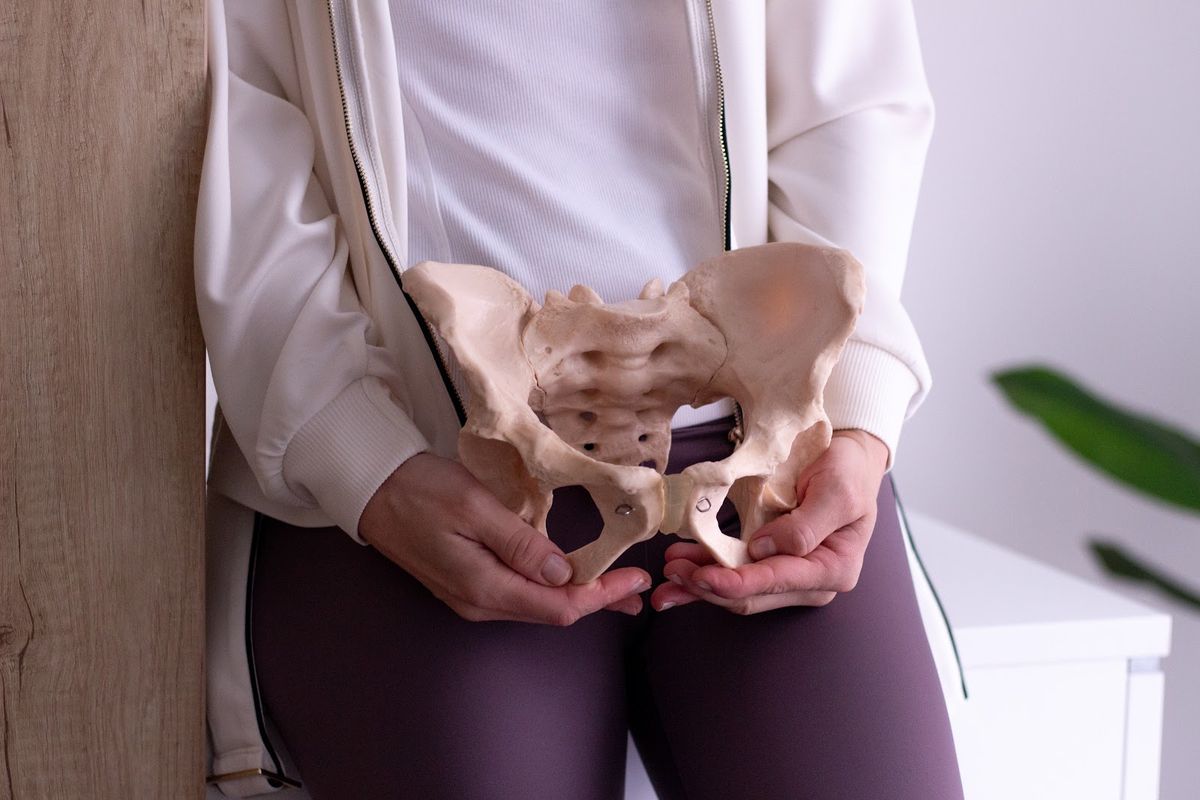
I always explain it to my patients like this: the pelvic floor is like a hammock stretched between two trees. You need it to be strong, to absorb the impacts and rises in pressure that happen every day or the weight of the baby when you get pregnant, and at the same time elastic, to stretch and let the baby through during birth. If it were your biceps or your abs, it would be obvious at a glance whether you had trained them or not, but that isn’t the case with the pelvic floor. So how can I tell if my pelvic floor is weak?
Not leaking urine doesn’t mean your pelvic floor is in good shape. In fact, based on what I usually see in my clinic, I’d say your pelvic floor is probably weak. Why? Very simple: bear in mind that the pelvic floor is a set of layers of muscle, ligament and fascia, and like any muscle… if you don’t train it, it loses tone. Now think about the last time you exercised it. See? Statistically, most women have a weak pelvic floor.
There are times in a woman’s life when the pelvic floor is put under great pressure and tends to weaken: pregnancy, postpartum, after a vaginal birth, recovery from pelvic surgery such as a hysterectomy, and menopause… I don’t recommend waiting for one of those moments to check whether your pelvic floor is weak. It’s better to start looking after it and exercising it, just as you take care to eat well or play sports.
Symptoms of a weak pelvic floor
I’ve already said that prevention is your best ally, but if you’ve just realized that you’ve never trained that part of your body, these are some of the warning signs of a weak pelvic floor:
-
Leaking urine, gas or stool when you exert yourself
Stress incontinence is the most common type of incontinence in women. It can appear during pregnancy, because the muscles carry more weight, or postpartum if the woman has had an episiotomy or tear. It also appears if you weren’t exercising your sphincters properly during pregnancy. Urine leakage also occurs in women during menopause. And if you don’t belong to any of these groups and have still experienced it, it’s an unmistakable sign of a weak or undertrained pelvic floor. The most common symptoms are leaking urine, gas and/or stool when you laugh, cough, sneeze, lift something heavy, exercise, and so on.
-
A bulge in the vagina
A feeling of heaviness in the vagina, pressure in the anus or a bulge between the labia minora are some of the symptoms of genital prolapse, the second most common consequence of a weak pelvic floor. Bladder prolapse (cystocele) is the type most often seen after vaginal births, in women whose pelvic floor muscles are weak and who also do high-impact sports such as running or weightlifting.
-
Vaginal wind
Low muscle strength in the pelvic floor can make the vaginal canal more open. Women notice air getting into the vagina and, when they make a sudden movement, they hear “vaginal farts.” It’s a symptom that causes a lot of embarrassment and also affects women psychologically.
-
Chronic lower back pain
The pelvic floor muscles, together with the abdominal muscles, the diaphragm and the deep back muscles, form a unit that works in synergy. When some muscles contract, others contract reflexively. If one of the pieces in this unit loses tone, the rest of the muscles have to work twice as hard. As a result, lower back stability can get worse, the lower back muscles often become overloaded and lower back pain appears.
-
Loss of vaginal sensation
Women with a weak pelvic floor often notice that the vagina gradually becomes looser and the vaginal opening wider. This affects the quality of their sex life. Vaginal sensation decreases and, in more severe cases, disappears. As the vaginal canal loses tone, it also loses its tube shape, and friction during penetration gets significantly worse, reducing pleasure.
-
Your menstrual cup or tampon slips down
Wearing a menstrual cup during your period is possible thanks to good tone in the perineal muscles and the vagina. Often, after giving birth, when the pelvic floor is weak, women notice that the menstrual cup slips down shortly after inserting it. If you use tampons, a weak pelvic floor may make the tampon tilt and cause discomfort, or slip down after a while.
-
A bloated lower abdomen
Some women, even if they’re slim, notice that their lower belly always pokes out. This is a weakening of the lower abdominal muscles, especially the transverse abdominis, which works in synergy with the pelvic floor. So, in many cases, to get a flat, toned tummy you also need to strengthen your pelvic floor. Lack of tone in the perineum will make it harder to build strength in the lower abs.
-
Pain in the perineal scar
Any perineal scar caused by an episiotomy or a tear can be a source of pain. That’s why it’s so important to moisturize it with suitable products, such as perineal massage oils, which help you stretch it by hand until it becomes smooth and no longer uncomfortable to the touch. It has been observed that women with a weak pelvic floor take longer for the perineal scar to heal. Strengthening the perineal muscles when you have a scar is important not only to prevent incontinence or prolapse, but also to improve wound healing.
What should I do if I have symptoms of a weak pelvic floor?
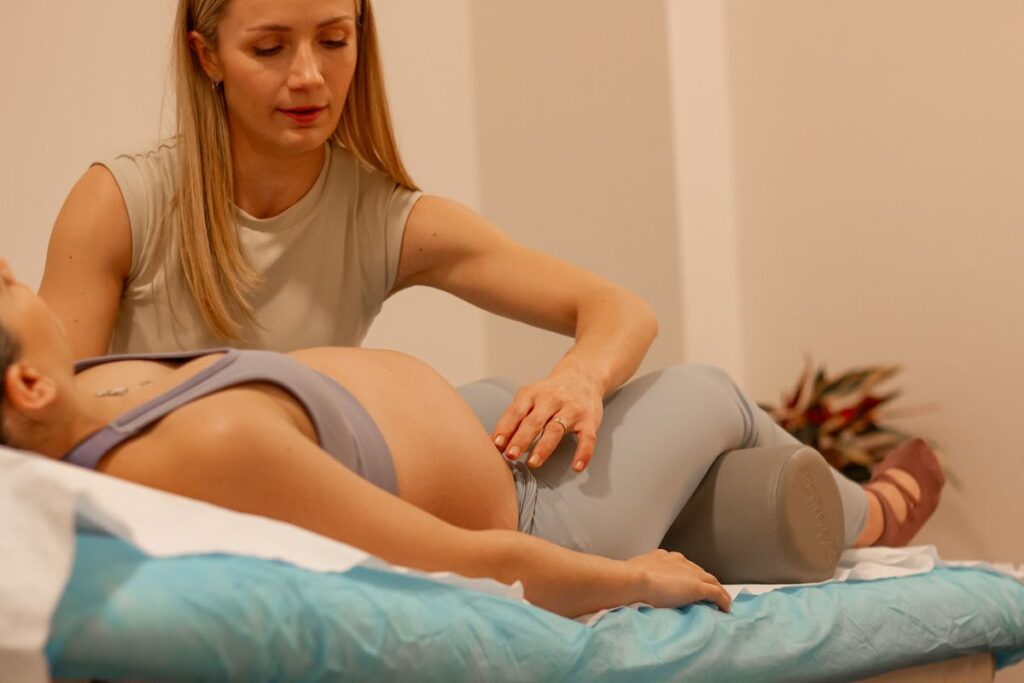
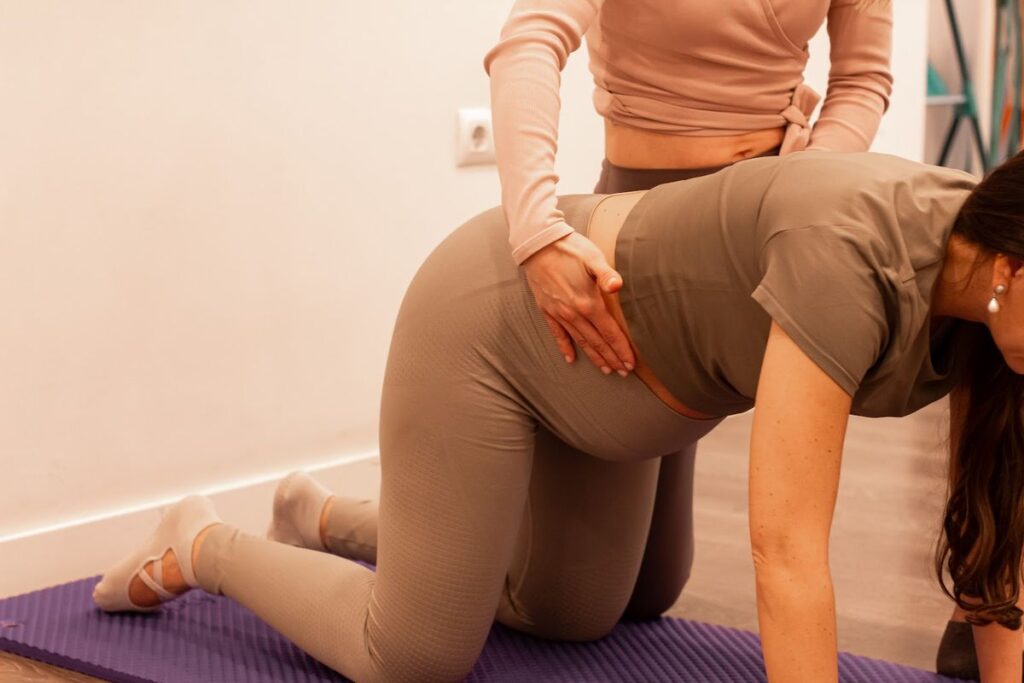
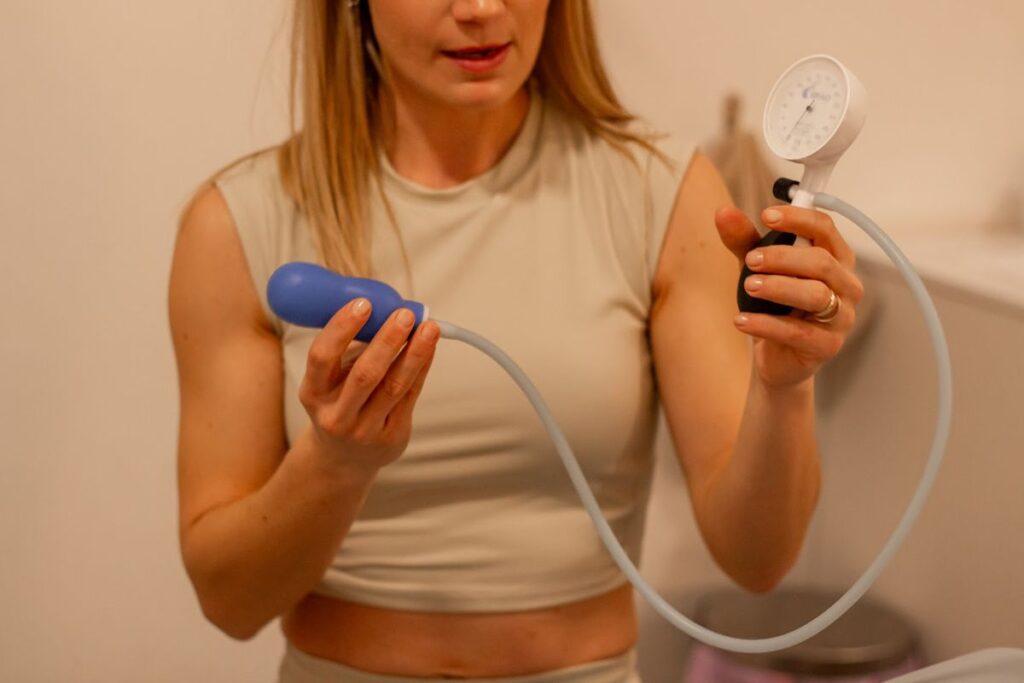
Put yourself in the hands of a professional. The most important thing is to contact a specialist in urogynecological physiotherapy and have a full assessment of your pelvic floor and abdomen. By testing the muscles with vaginal probes and biofeedback, we can determine how weak they are and plan exercise and rehabilitation adapted to each case.
If your symptoms are mild and you simply need to strengthen the perineal muscles, you should start with Kegel exercises and gradually add pelvic floor activation exercises in movement. You need to train the sphincters to contract before any effort (coughing, sneezing, lifting) so that, over time, you develop an involuntary reflex contraction.
Exercises to strengthen the pelvic floor should include:
-
Slow and fast Kegel contractions

Every day, do Kegel contractions in different positions: first slow ones (lasting 8 to 12 seconds) and then fast ones (as fast as you can). You need to do at least 30 slow contractions and 5 fast ones every day. Try to do them in different positions, a different one each day. If you don’t know these exercises, take a look at this Kegel exercise routine for women that I published earlier.
-
Involuntary pelvic floor activation
With specific exercises we can trigger a reflex (involuntary) contraction of the perineal muscles. These exercises should be done slowly, coordinated with your breathing and with full concentration. One example is a squat leaning on a Pilates ball:
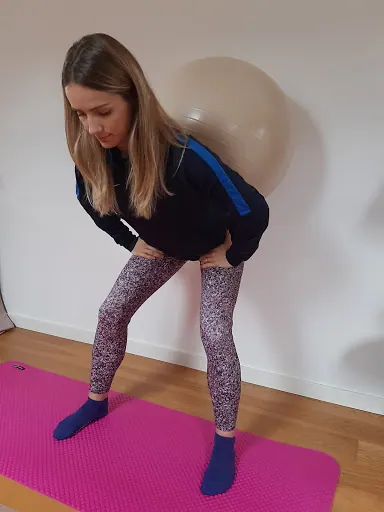
Stand up, place the fitball against the wall and lean on it. Place your feet wider than hip-width apart. Take a deep breath and, as you breathe out, bend your legs, push your buttocks back (toward the wall) and lean your trunk forward. Breathe in as you come back up to the starting position.
When you’re at the bottom, with your spine tilted, you should feel a gentle suction around the vagina. Your pelvic floor should activate involuntarily.
-
Kegel exercises with vaginal devices
Pelvic floor contractions are only effective when we do them correctly, that is, without help from other muscle groups. A very common mistake is to squeeze the glutes or adductors instead of the sphincters. Various vaginal trainers help us learn and exercise the perineal muscles correctly. These devices are inserted into the vagina and, when switched on, you feel the vibration. The more you contract your sphincters, the stronger the vibration you’ll feel. This way you can locate your pelvic floor better and gradually increase its strength.
Here’s a selection of trainers that I know and recommend.
-
Hypopressive abdominal exercises
To improve support in the pelvis, prevent vaginal prolapse or strengthen the deep abdominal muscles, the hypopressive abdominal method will help.
Unlike traditional sit-ups, hypopressives reduce abdominal pressure and strengthen the abdominal wall without harming the perineum. They also have a positive effect on the pelvic floor, because during the breath-hold it is “sucked” upward. This lift helps the pelvic ligaments and deep muscles do a better job of supporting the weight of the bladder, uterus and rectum.
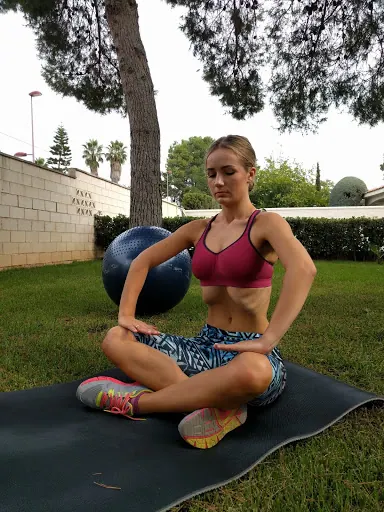
Sit cross-legged; you can lean your back against the wall. Place your hands on your knees, keep your elbows bent and point your fingertips inward. Take 2–3 deep breaths. On the last exhalation, breathe all the air out and, while holding your breath, open your ribs. Hold your breath for 10–15 seconds. Notice how your abdomen sinks in (empties) and your rib cage expands. Repeat 3 times.
If you don’t want your pelvic floor to weaken, don’t hesitate to get in touch and book your appointment online with a clinic specializing in pelvic floor physiotherapy like ours. We’ll help you improve, whatever your situation!


Get your pelvic floor checked in Valencia
Something doesn’t have to go wrong: with a pelvic floor check-up we see how it is and what you should do. Can’t come to Valencia? We also see patients in an online consultation.