




Pelvic floor check-ups and care in Valencia
Something doesn’t have to go wrong for you to look after your pelvic floor. We assess it together and you learn to train it, whether or not you have symptoms.




Article content
How do you know if your pelvic floor is weak?
Many women only discover their pelvic floor when they already have a problem. If you’re here before that, even better. An assessment helps you find out how it is and what you should do at your stage of life.
We always explain it to our patients like this. The pelvic floor is like a hammock stretched between two trees. It has to be strong, to absorb impacts and everyday rises in pressure or the weight of the baby in pregnancy, and at the same time elastic, to stretch and let the baby through during birth.
If it were your biceps or your abs, you’d be able to see at a glance whether you’d trained them. That’s not the case with the pelvic floor. It’s a set of layers of muscle, ligament and fascia and, like any muscle, it loses tone if it isn’t trained. Not leaking urine doesn’t mean it’s in good shape.
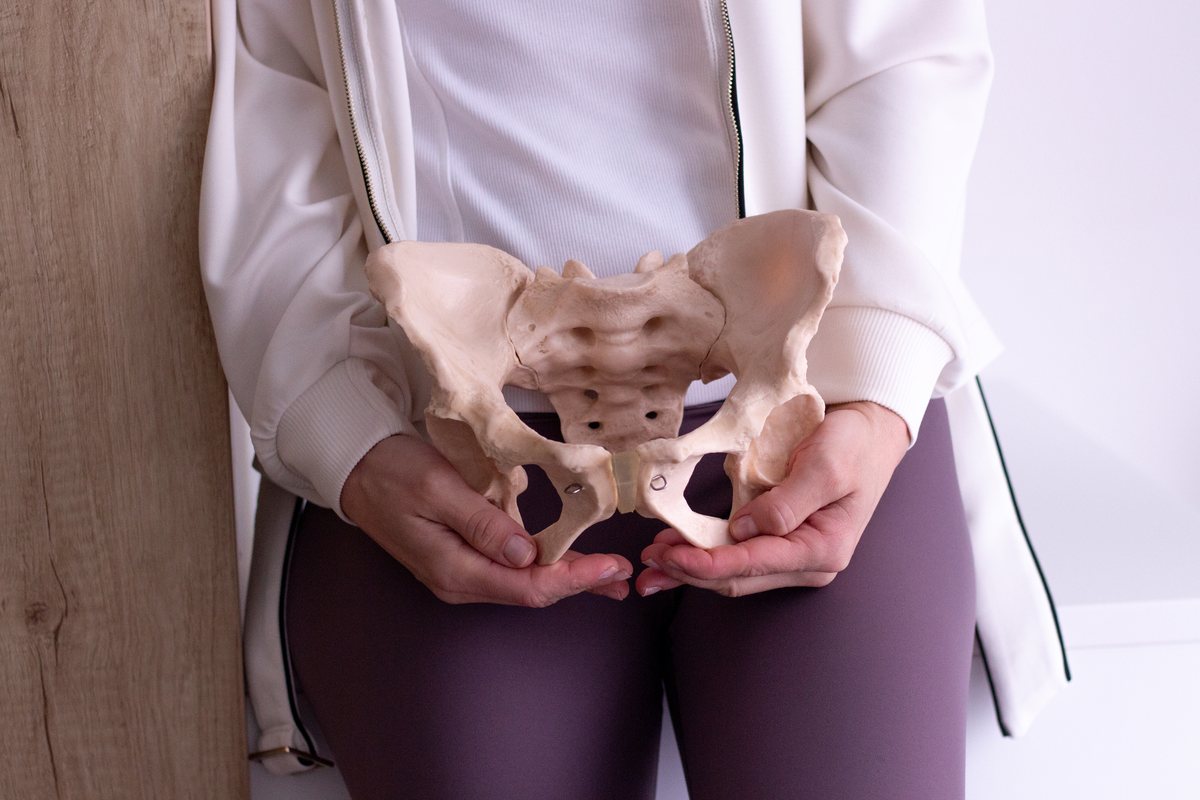
Times when it’s worth having it checked
There are stages when the pelvic floor bears more pressure and tends to weaken. You don’t need to wait for them to start looking after it, just as you look after your diet or exercise. We recommend booking an assessment if you’re in any of these situations:
- Pregnancy and postpartum, both the first few weeks and the first year after the birth.
- Menopause.
- After gynecological, abdominal or pelvic surgery, such as a hysterectomy.
- If you do high-impact sports, such as running, jumping, CrossFit, tennis or weightlifting.
- If you have constipation, chronic diarrhea or other digestive problems.
- If you have asthma or another chronic respiratory condition, because of the persistent coughing.
The UK’s NICE guidelines on pelvic floor dysfunction encourage women of all ages to train their pelvic floor and keep it up throughout life. They also recommend that these programs are supervised by a physiotherapist or other healthcare professional with specific training, who checks that you can contract and relax the muscles correctly.

“Not leaking urine doesn't mean your pelvic floor is in good shape”

How we look after your pelvic floor
We talk about your age, your work, the sport you do, your rest and, if you’re a mother, your pregnancies and births. Also about any discomfort you’ve noticed and how it affects your daily life.
We assess your posture, abdominal wall, diaphragm and pelvic floor, externally and vaginally. Before starting we explain every step, and we use probes and biofeedback so you can see how your muscles work.
You learn to locate your pelvic floor and contract it without squeezing your glutes or adductors, coordinating the contraction with your breathing. Probes and biofeedback help check that you’re doing it right.
We teach you the hypopressive technique and exercises that activate the pelvic floor reflexively, so it contracts before efforts such as coughing, sneezing or lifting.
After the assessment you receive a report by email with the exercises recommended for you. If you need it, you can continue with one-to-one sessions or in one of the clinic’s groups.
Article content
Signs that your pelvic floor needs attention
If you’ve never trained this area, these are some signs that your pelvic floor may be weak:
- Leaking urine, wind or stools when you laugh, cough, sneeze, lift or exercise.
- A feeling of heaviness in the vagina, pressure in the anus or a bulge between the labia.
- Air entering the vagina that you can hear when you move.
- Recurring lower back pain, because the pelvic floor works together with the abdomen, diaphragm and deep back muscles.
- Less sensation during sex.
- Your menstrual cup or tampon slipping down soon after inserting it.
- Discomfort in an episiotomy or tear scar.
Noticing any of these signs isn’t a reason to panic, but it is a reason to book a physiotherapy assessment. If you also have bleeding, severe pain or the vaginal bulge appears suddenly, see a gynecologist or your primary care doctor first.
NICE guidelines list risk factors for pelvic floor dysfunction including a body mass index above 25, smoking, lack of exercise and constipation. These are also things we go over with you in clinic.


What happens in a pelvic floor check-up?
Most women have never had their pelvic floor assessed, and many discover in clinic that they were doing their Kegel exercises incorrectly. The check-up tells you how your muscles are and teaches you to train them properly from the start.
We work on pelvic floor strength and coordination, its relationship with breathing and the abdominal wall, and the reflex contraction during everyday efforts. All with a plan adapted to your stage of life, whether you’re preparing for pregnancy, have just started running or are entering menopause.
It’s physiotherapy, not a gynecological check-up, so it doesn’t replace your gynecology appointments or seeing your doctor if a new symptom appears.
Finding out how your pelvic floor is, even if you have no discomfort.
Training the reflex contraction for coughing, sneezing or sport.
Learning to do Kegel exercises properly, with probes and biofeedback.
A written plan to keep training at home.



Your journey at the clinic starts like this
STEP 1.
Initial assessment
All patients start with an initial one-to-one session.
- We analyze your case in depth.
- We carry out the necessary examination.
- We explain what is happening and why.
- We design a personalized treatment plan.
- All with no further commitment.
STEP 2.
STEP 3.
Follow-up and progress
Your process doesn’t end after one session. It evolves with you.
- We regularly reassess your progress.
- We adjust the plan when necessary.
- You can combine one-to-one and group sessions depending on your progress.


Frequently asked questions
If you’re asking yourself these questions, you’re not the only one. Here we answer them clearly.
Yes. The pelvic floor loses tone if it isn’t trained, and it’s hard to know how it is without an assessment. What’s more, many women do their Kegel exercises incorrectly without realizing.
It has three parts: an interview about your health and habits, an examination of your posture, abdomen, diaphragm and pelvic floor, and learning the exercises. Afterwards you receive a report by email with your plan.
Usually yes, because that’s the way to properly assess the muscles. We explain every step beforehand and you can stop whenever you like. If you’d rather not have it at the first appointment, or there’s a reason not to, we start externally.
It isn’t done if you have a urine infection or active bacterial infection, on the first or second day of your period, in the first three weeks after a birth with an episiotomy or tear, in a pregnancy at risk of premature labor, with active cervical cancer or if pain prevents examination.
You can, and it’s worth doing throughout your life. It’s best to learn first with a physiotherapist, to check that you contract and relax the muscles correctly, and then continue at home with the plan we give you.
An internal vaginal examination is the most appropriate way to assess and exercise the pelvic floor, and our work requires access. You can refuse, and it does not have to happen at the first appointment. If it is a barrier for you, we can build trust gradually and start with other measurements and palpation until you feel more comfortable.
It depends on what we have planned for the session. If your period coincides, check with Ágata beforehand: we’ll see whether you can come as normal or whether it’s better to find another date.
It depends on each patient: your starting point, whether there is a deeper injury or condition, and how committed you are to the exercises at home. After the first session we decide on the right treatment. If you need individual follow-up, most people notice an improvement with a first pack of 5 sessions. From there, if you follow the guidelines at home, you may only need to come back for occasional check-ups. If there is a deeper injury, you may need to go beyond that first pack.