




Physiotherapy for cesarean scars in Valencia
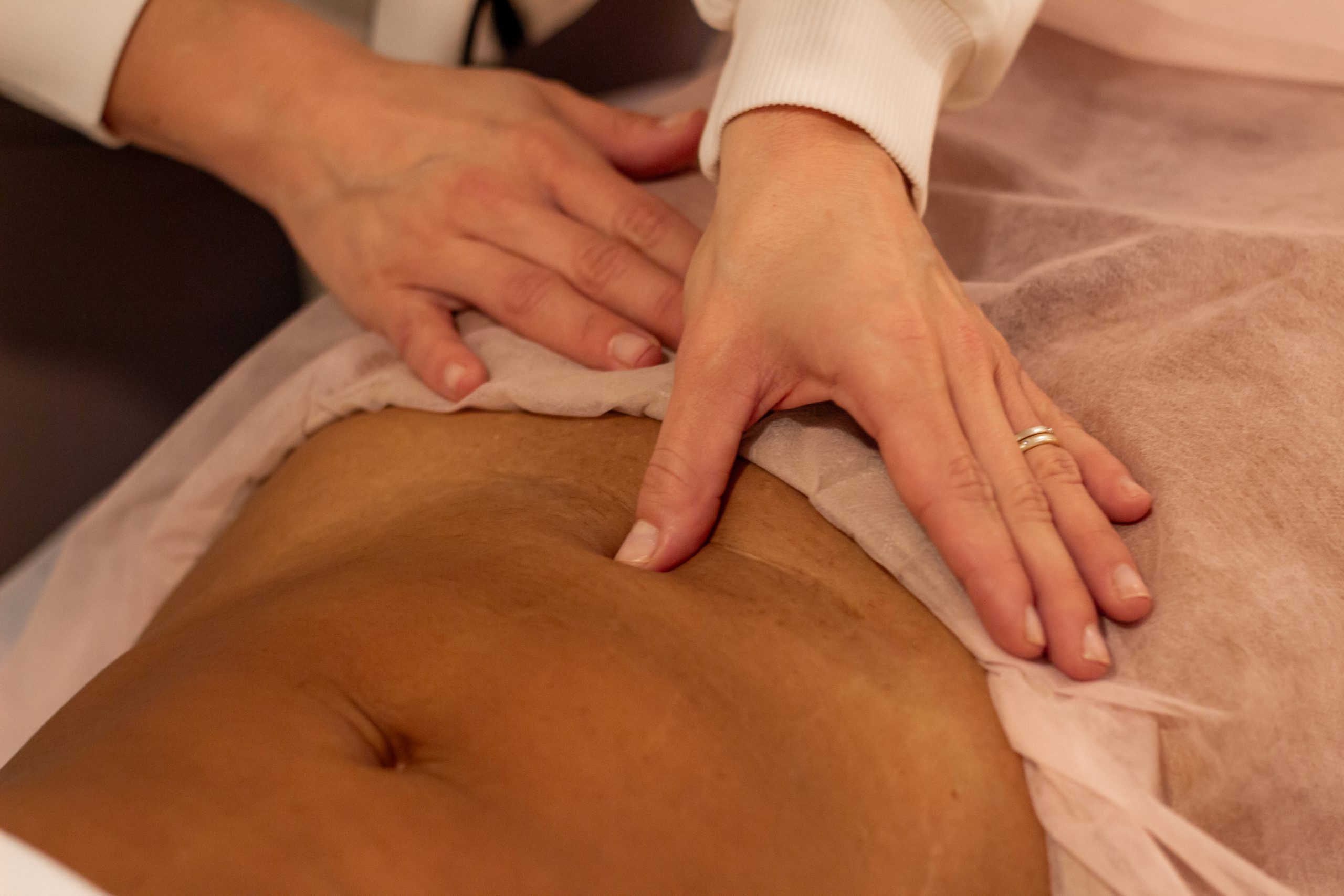
Your cesarean scar deserves attention, even if time has passed. We assess it together and work on it so it feels more like yours and more comfortable day to day.



Article content
Cesarean scar treatment
Some women find it hard to touch or look at their scar, or notice tightness years later. If that’s you, that’s fine: here we go slowly and at your pace. It’s never too late to look after it.
“I went to Ágata for postpartum recovery after a cesarean and, after 5 sessions and work at home with specific exercises she prepared for my case (abdominal diastasis), I’m now perfectly fine”
— Aroa Casañ, pelvic floor patient
In a cesarean, several layers of tissue are cut through to reach the uterus: the skin, the subcutaneous fat, the aponeurosis covering the abdominal muscles (the abdominal muscles are not usually cut but separated), the peritoneum and finally the uterus. After the baby is delivered, it is closed layer by layer. That’s why the cesarean scar isn’t only in the skin you see, but in all the layers of the abdomen.
Abdominal scars after a cesarean, and after other surgery in the abdominal area, need to be assessed and treated by a specialist. The goal is to work on adhesions and improve the function of the affected muscles.
Why assess the scar and the pelvic floor
A common mistake is to think that, because the baby didn’t pass through the vaginal canal, the pelvic floor hasn’t been affected. During pregnancy the pelvis changes, weight increases and some hormones affect the tone of the pelvic muscles, whatever the type of birth.
A troublesome or adhered scar can be linked to tightness in the abdominal and perineal area, lower back and pelvic pain, vaginal discomfort, urinary urgency or pain during sex. Sensation under the scar can also change. Some women feel the area is numb and others feel nothing when it’s touched.
What a scar that is healing well looks like
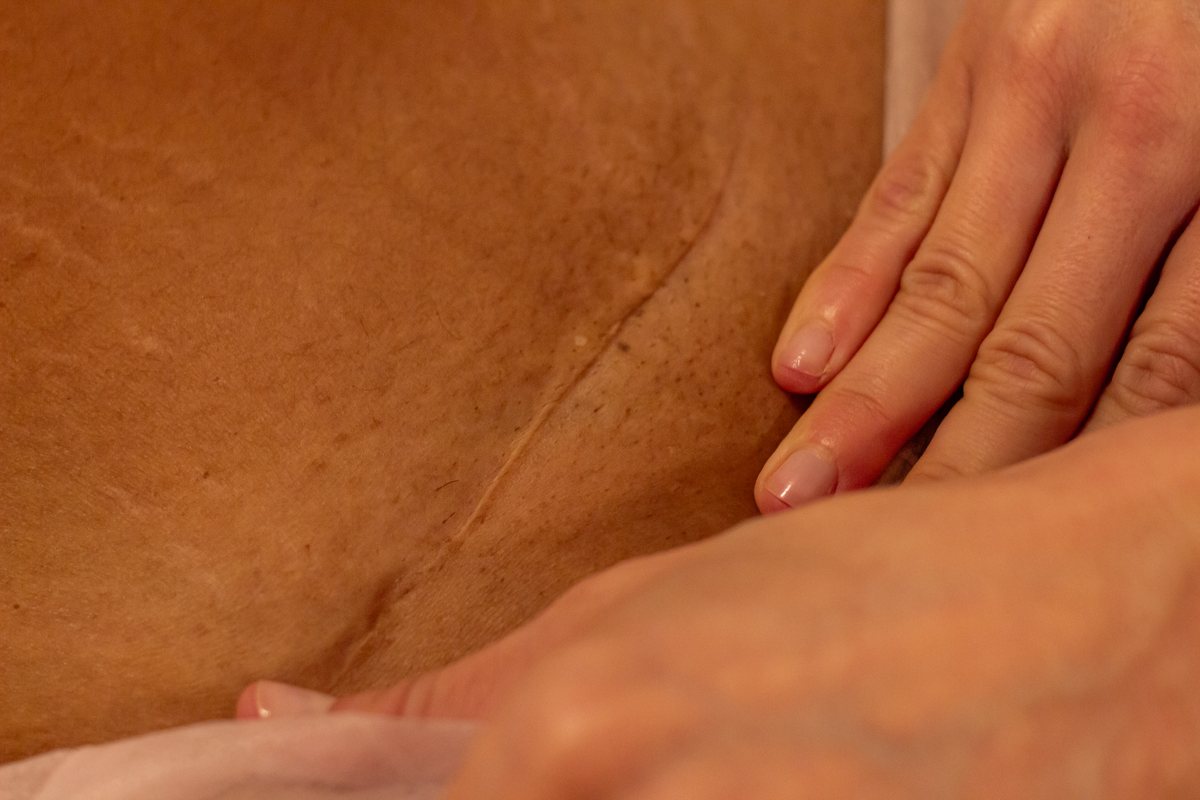
A healthy-looking cesarean scar is usually flat, paler than the surrounding skin, painless and as mobile as the skin around it. During healing, inflammation, infection or poor posture can affect how it matures. If it looks red or purple, sunken, raised or has painful ends, it’s worth having it assessed. If you have fever, discharge, spreading redness or pain that’s getting worse, see your doctor or gynecologist first.

“The cesarean scar isn't only in the skin you see, but in all the layers of the abdomen”

How we treat cesarean scars
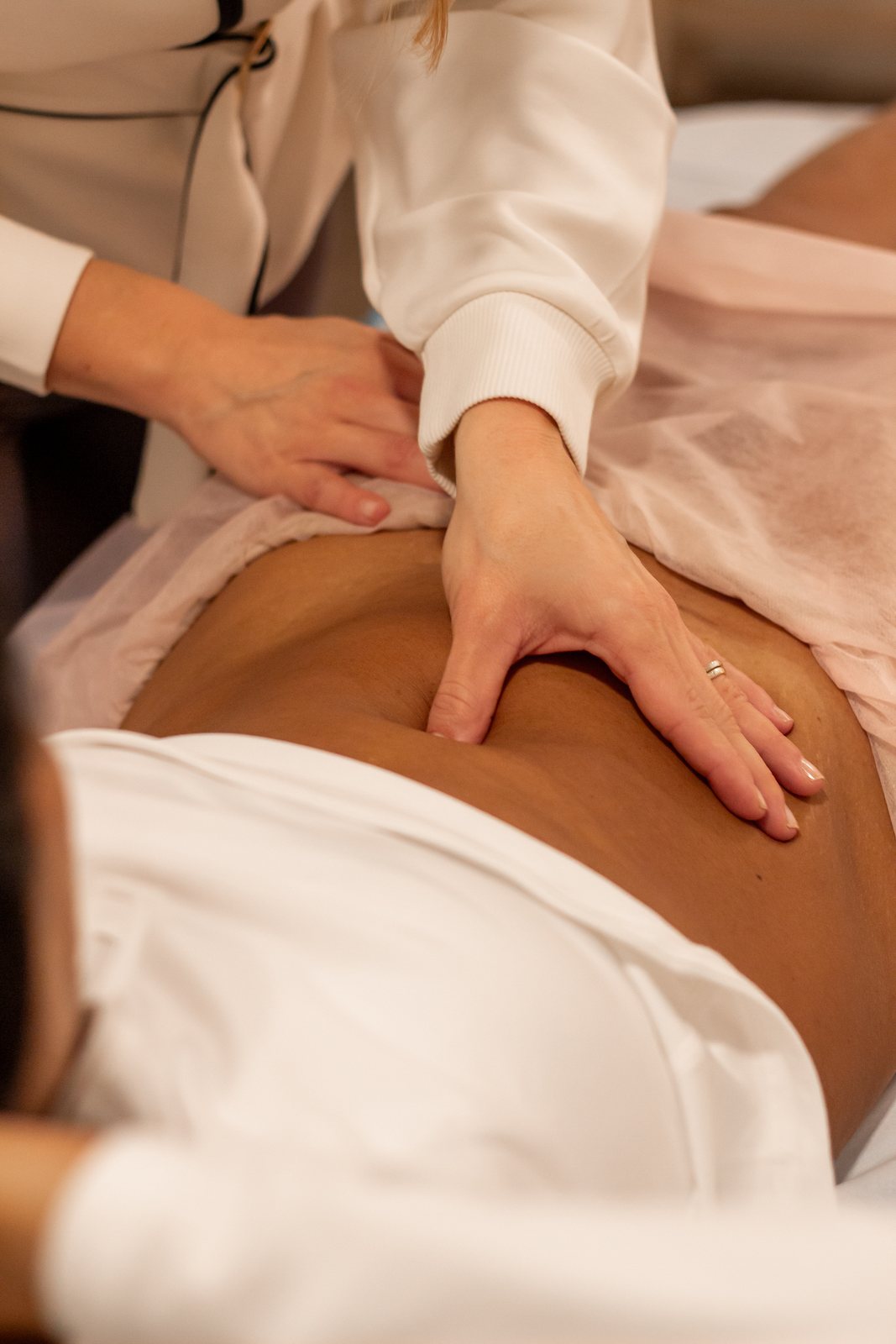
We examine the scar (pain, trigger points and flexibility), the tone of the abdominal muscles, whether there is diastasis and the condition of the pelvic floor. Before starting exercises, even Kegels, it’s important to know whether the pelvic floor tone is too high.
Once the wound has fully closed we start with the skin and later move on to the deeper tissues. In clinic we teach you how to do the massage at home over the following weeks.
Depending on the condition of the scar, we use manual techniques such as the Cyriax method, myofascial techniques, ultrasound or kinesiology tape to work on tightness, hardness and adhesions.
After a cesarean, some women change the way they breathe and the diaphragm becomes more tense, which increases pressure on the pelvic floor. We work on postural re-education, breathing and relaxing the diaphragm.
The transverse abdominis connects the pelvic floor with the trunk and acts as the corset that contains and supports. We activate it with sustained contractions in different positions, then with exercises on all fours and on unstable surfaces, and later with hypopressives.
Article content
Caring for your scar at home
Keep the wound clean and dry. Wash it with water and dry it well after each wash. If the skin of your abdomen hangs over the scar, pay particular attention to that area.
Once the wound has fully closed, you can moisturize the skin of your lower abdomen and the scar with gentle circular movements, without causing itching or burning. Deep massage comes later and is best learned first with a physiotherapist specializing in gynecology.
At moments of greater abdominal pressure, such as coughing, sneezing, laughing, bending down or getting out of bed, you can protect the scar by placing one hand above it and one below and gently bringing them together, as if you wanted to close it.
The steps after a cesarean
A cesarean is surgery and the body needs time to heal, so the first thing is to rest. After that, the order we usually follow at the clinic is:
- Assessment with a physiotherapist specializing in gynecology.
- Scar work: moisturizing, massage and mobilization.
- Pelvic floor exercises.
- Transverse abdominis exercises, especially in inverted positions such as on all fours.
- Hypopressive exercises.
- Gentle aerobic exercise, such as walking, swimming, the elliptical or cycling.
If you did high-impact sports before pregnancy (running, jumping, lifting weights, tennis or horse riding), we return to them once your pelvic floor, abdominal wall and lumbopelvic stability are ready, and with your gynecologist’s go-ahead.


What do we work on in physiotherapy after a cesarean?
A cesarean doesn’t affect the pelvic floor in the same way as a vaginal birth, but the abdominal scar needs a professional assessment followed by specific work. What we aim for is a scar with good mobility and color, without adhesions or keloids.
The abdominal muscles are also affected, especially the deepest one, the transverse abdominis. If it is weakened, the pelvic floor loses some of the protection the abdominal wall gives it, and symptoms such as stress incontinence can appear.
That’s why we combine scar treatment with pelvic floor, transverse abdominis and breathing exercises, adapted to how you are at each stage.
Making the scar more flexible and working on tissue adhesions.
Activating the transverse abdominis and pelvic floor in coordination with breathing.
Improving local circulation and oxygenation of the affected muscle.
Returning to exercise in stages, with guidelines to follow at home.



Your journey at the clinic starts like this
STEP 1.
Initial assessment
All patients start with an initial one-to-one session.
- We analyze your case in depth.
- We carry out the necessary examination.
- We explain what is happening and why.
- We design a personalized treatment plan.
- All with no further commitment.
STEP 2.
STEP 3.
Follow-up and progress
Your process doesn’t end after one session. It evolves with you.
- We regularly reassess your progress.
- We adjust the plan when necessary.
- You can combine one-to-one and group sessions depending on your progress.


Frequently asked questions
If you’re asking yourself these questions, you’re not the only one. Here we answer them clearly.
Once the wound has fully closed you can start gently moisturizing and massaging the skin. Massage of the deeper tissues comes later, and the first time it’s best done by a physiotherapist, because the technique depends on how the scar looks and the condition of your abdomen.
There isn’t always pain. A scar can be adhered or have lost mobility without causing discomfort, and over time be linked to tightness, abdominal discomfort or pain during sex. At the assessment we check its mobility, sensation and the surrounding tissues.
If the wound has discharge or opens, if you have a fever, spreading redness or pain that’s getting worse, see your doctor or go to the ER. Physiotherapy works on the scar once it has closed and complements your gynecology follow-up; it doesn’t replace it.
In the first few months it’s best to avoid traditional sit-ups, carrying heavy weights and high-impact sports such as running, step, aerobics, Zumba or padel, because they increase pressure on the abdomen and pelvic floor. Constipation also adds pressure, so look after your hydration and diet. Your physiotherapist will tell you when and how to return to them.
Yes. Abdominal scars after cesareans and other surgery in the area also need to be assessed when time has passed. At the assessment we see how it is and explain what we can work on.
It depends on each patient: your starting point, whether there is a deeper injury or condition, and how committed you are to the exercises at home. After the first session we decide on the right treatment. If you need individual follow-up, most people notice an improvement with a first pack of 5 sessions. From there, if you follow the guidelines at home, you may only need to come back for occasional check-ups. If there is a deeper injury, you may need to go beyond that first pack.