




Physiotherapy for vaginismus in Valencia
If penetration hurts or is impossible, you’re not broken and it’s not your fault. We work with you step by step, without rushing and without doing anything you don’t understand.



Article content
What vaginismus is
Perhaps you find it hard to insert a tampon, gynecological check-ups are an ordeal or penetration is impossible. Many women live with this in silence for years, and here you can talk about it completely openly.
Vaginismus is a persistent difficulty in allowing a penis, a finger or a device such as a speculum into the vagina. The pelvic floor muscles contract involuntarily and close the entrance to the vagina.
Types of vaginismus
- Primary. You have never been able to have penetrative sex without pain. It is often related to psychological factors or the sex education you received.
- Secondary. It appears after a pain-free period, following an event such as a difficult birth, surgery, an assault or hormonal changes.
Most common symptoms
- Pain, burning or itching during sex.
- Superficial pain at the entrance to the vagina that prevents penetration.
- Muscle tension before starting.
- Difficulty or pain when inserting a tampon.
- Painful gynecological examinations.

“The goal is to teach the muscles to respond in a controlled way”

How we treat vaginismus
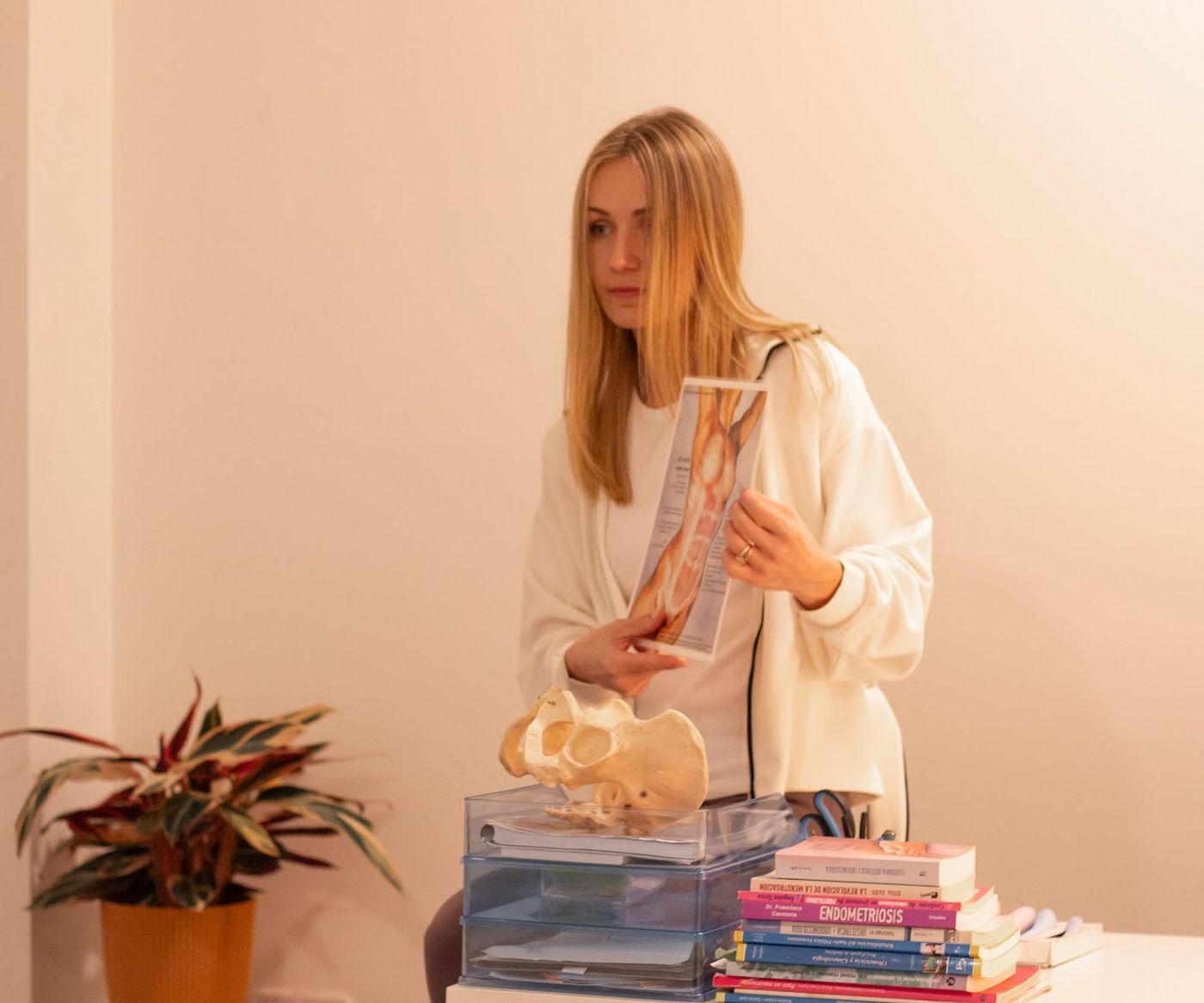
In the first sessions we explain what your pelvic floor is like and what it does, using diagrams and pelvic models. Understanding what is happening is often the first relief.
You learn to feel where your pelvic floor is and to release it consciously, with simple exercises in a comfortable position.
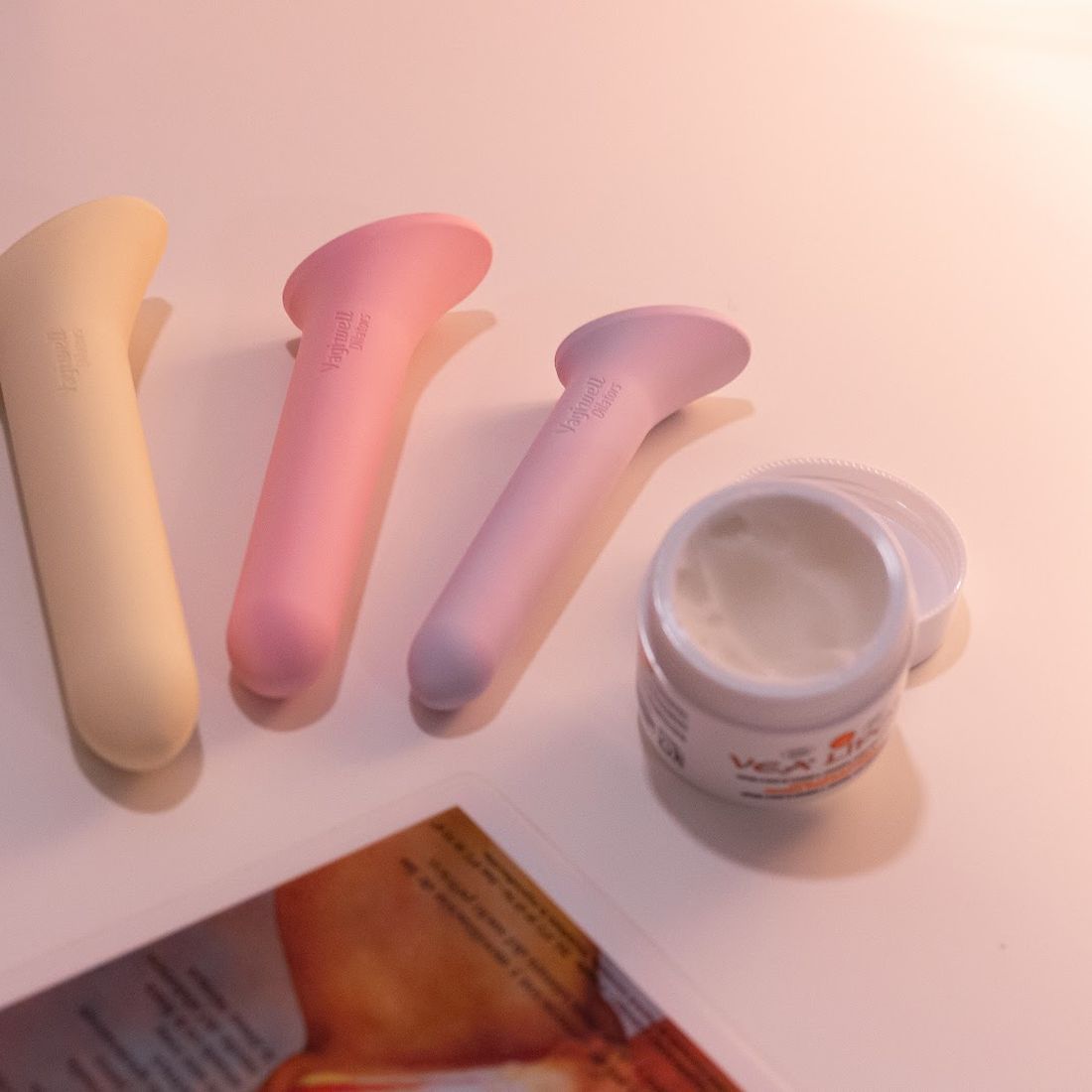
We start with very slim sizes to stretch the tissues little by little. We only move up when you are ready.
We work on tension in the area with techniques adapted to you. We explain every step beforehand and stop whenever you need.
Vaginismus usually involves a combination of physical and emotional causes, which is why working together with psychologists is so important.
Article content
Why it happens
Physical and emotional causes almost always combine. Physical causes include perineal scars, difficult births, surgery or the hormonal changes of menopause. Emotional causes include fear of pain, pregnancy or birth, anxiety, relationship problems or past abuse.
The body learns to protect itself: it anticipates pain and contracts. That’s why treatment needs time and patience, and a professional who understands you.


What do we work on in physiotherapy for vaginismus?
The goal is to teach the pelvic floor muscles to respond correctly and in a controlled way to any touch or penetration. We combine education, instrumental techniques and exercises, always at your pace.
Knowing your anatomy and how your pelvic floor works.
Stretching the tissues progressively with dilators.
Learning to relax the muscles consciously.
Gradually losing the fear of pain.



Your journey at the clinic starts like this
STEP 1.
Initial assessment
All patients start with an initial one-to-one session.
- We analyze your case in depth.
- We carry out the necessary examination.
- We explain what is happening and why.
- We design a personalized treatment plan.
- All with no further commitment.
STEP 2.
STEP 3.
Follow-up and progress
Your process doesn’t end after one session. It evolves with you.
- We regularly reassess your progress.
- We adjust the plan when necessary.
- You can combine one-to-one and group sessions depending on your progress.


Frequently asked questions
If you’re asking yourself these questions, you’re not the only one. Here we answer them clearly.
It can be worked on, and many women improve, but it takes time and consistency. Every case is different, so at the assessment we look at yours and explain the plan we suggest.
It doesn’t have to be at the first appointment. If it’s a barrier for you, we start by talking, with anatomy and exercises, and move forward when you feel ready.
It depends on your case. As there is usually a physical and an emotional side, working together helps in many cases. We’ll talk it through with you.
Vaginismus is an involuntary contraction that closes the entrance to the vagina and makes penetration difficult. Dyspareunia is pain during sex, which can have many causes.
Yes. It’s something we see in clinic, and you don’t have to give any explanations you don’t want to.
It depends on each patient: your starting point, whether there is a deeper injury or condition, and how committed you are to the exercises at home. After the first session we decide on the right treatment. If you need individual follow-up, most people notice an improvement with a first pack of 5 sessions. From there, if you follow the guidelines at home, you may only need to come back for occasional check-ups. If there is a deeper injury, you may need to go beyond that first pack.