




Physiotherapy for constipation in Valencia
Straining every time you go to the bathroom ends up affecting your pelvic floor. We review your habits, your posture and your muscles to make emptying easier.



Article content
Constipation and the pelvic floor
We talk about constipation when you go to the bathroom fewer than three times a week, or when your stools are hard and you need a lot of effort to pass them. Sometimes there is also bloating, wind, a feeling of heaviness or of not having fully emptied.
It’s not just a nuisance. When you push again and again, the pressure goes down onto the pelvic floor, weakens it and pushes the organs downwards. If you already have a prolapse, that effort can make it worse.
When the problem is coordination
Sometimes the bowel works, but the muscles don’t relax when they should. This is what we call defecatory dysfunction: instead of letting go, the pelvic floor tightens just as you try to empty your bowels. Here physiotherapy has a lot to offer.
Situations where it is more common
- Pregnancy. Progesterone slows the bowel down and the uterus presses on the rectum.
- Postpartum. Fear of pushing, scars and changes in routine don’t help.
- A sedentary lifestyle, stress and anxiety.
- Some medicines and illnesses, which your doctor should assess.

“To empty your bowels well, the sphincters need to relax”

How we treat constipation
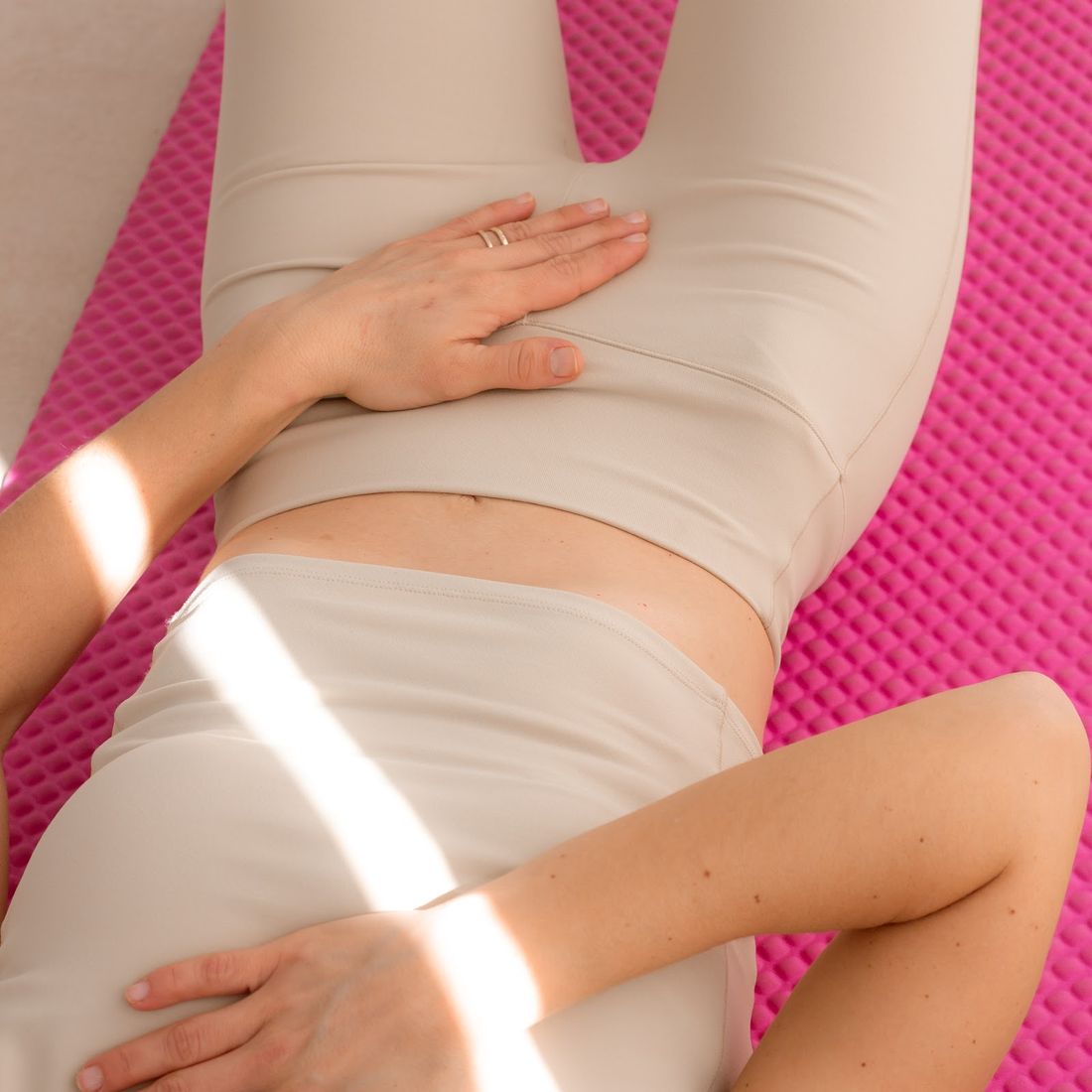
With your knees above your hips and your feet on a stool, tension around the anus is reduced and you can empty your bowels without straining.
You learn to release your pelvic floor and use your breathing instead of pushing hard.
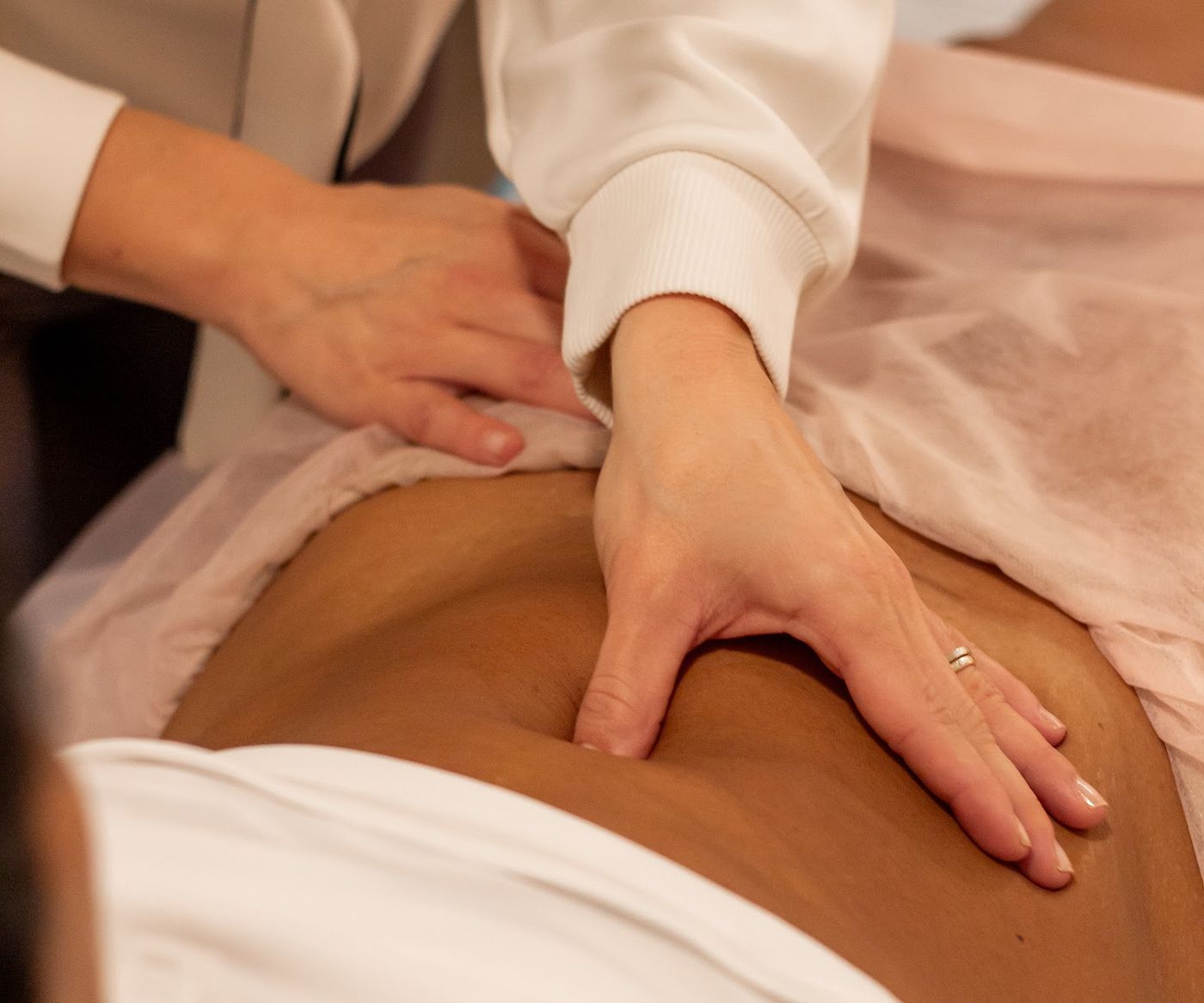
We teach you a gentle massage that follows the path of the colon and helps bowel movement.
Activating the transverse abdominis improves bowel function and reduces pressure on the perineum.
We review diet, water, movement and routine. If you hold on when you need to go, the reflex gradually fades.
Article content
What you can do at home
- Eat fiber-rich foods such as wholegrains, fruit and vegetables, and drink enough water.
- Walk briskly, swim, dance or cycle.
- Go to the bathroom when you need to, without delaying it.
- Put a stool under your feet.
While your pelvic floor is weak, it’s best to avoid traditional sit-ups and high-impact sports such as running.


What do we work on in physiotherapy for constipation?
We assess your pelvic floor, abdomen, posture and habits. The goal is for emptying to stop being an effort and to protect your pelvic floor from repeated pressure.
Coordination between breathing, abdomen and pelvic floor.
Abdominal massage and posture guidelines.
Relaxing the muscles when emptying your bowels.
Habits adapted to your daily life.



Your journey at the clinic starts like this
STEP 1.
Initial assessment
All patients start with an initial one-to-one session.
- We analyze your case in depth.
- We carry out the necessary examination.
- We explain what is happening and why.
- We design a personalized treatment plan.
- All with no further commitment.
STEP 2.
STEP 3.
Follow-up and progress
Your process doesn’t end after one session. It evolves with you.
- We regularly reassess your progress.
- We adjust the plan when necessary.
- You can combine one-to-one and group sessions depending on your progress.


Frequently asked questions
If you’re asking yourself these questions, you’re not the only one. Here we answer them clearly.
It can help, especially if the problem lies in how the muscles coordinate or if there are habits to improve. It does not replace medical investigation when that is needed.
If you see blood in your stools, lose weight for no reason, have a lot of pain or notice a sudden change in your bowel habits, see your doctor before starting.
Yes, because it puts your knees above your hips and helps relax the sphincters, so you need to push less.
Repeated straining weakens the pelvic floor and can make a descent of the pelvic organs worse. That’s why it’s worth treating.
It’s common, but it can be treated. We look at it together with your scars and your pelvic floor.
It depends on each patient: your starting point, whether there is a deeper injury or condition, and how committed you are to the exercises at home. After the first session we decide on the right treatment. If you need individual follow-up, most people notice an improvement with a first pack of 5 sessions. From there, if you follow the guidelines at home, you may only need to come back for occasional check-ups. If there is a deeper injury, you may need to go beyond that first pack.