




Physiotherapy for fecal and wind incontinence in Valencia
It’s the thing people talk about least and that weighs on them most. Here you can talk about it openly: we assess your pelvic floor and work so you regain control.
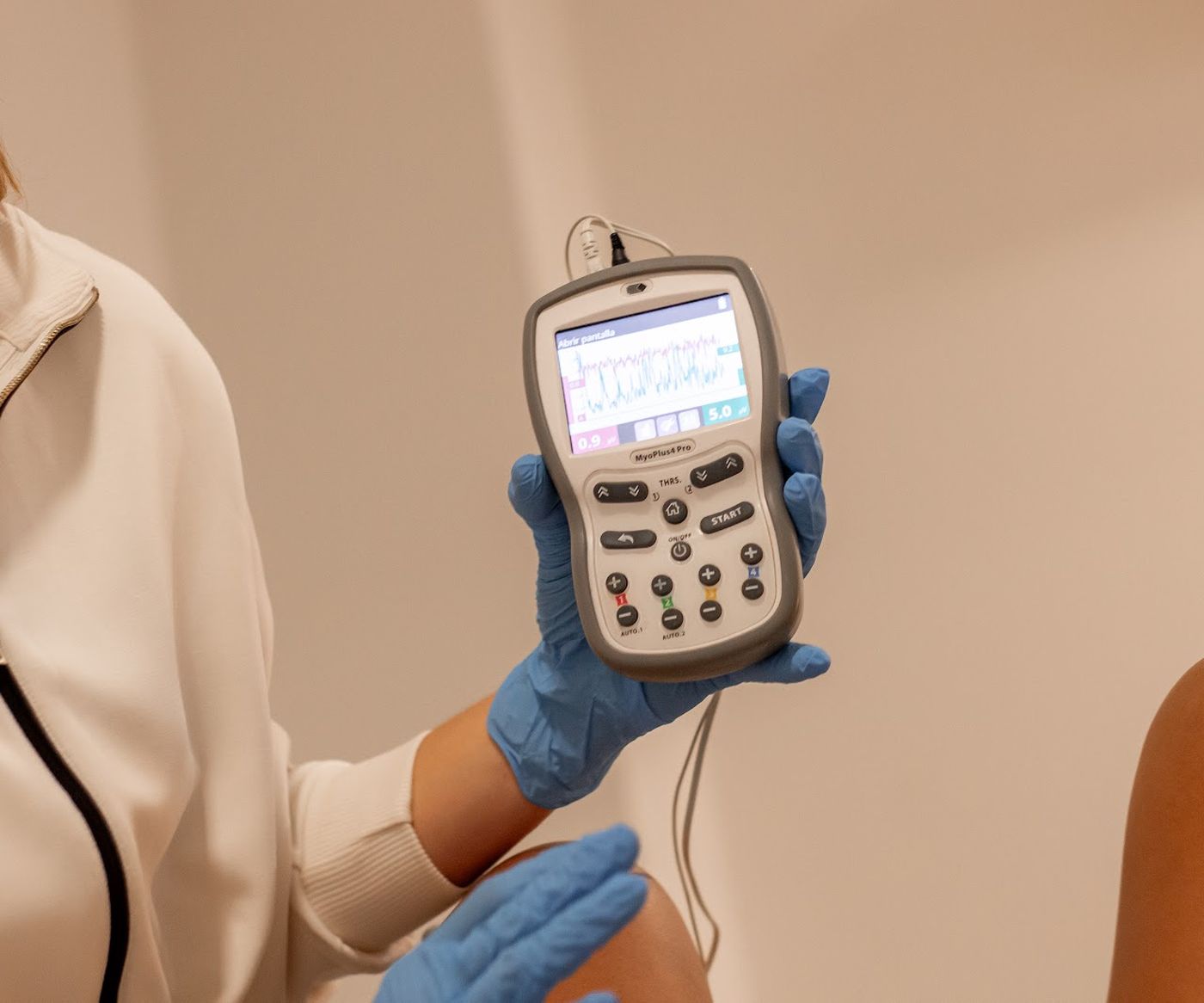



Article content
What fecal and wind incontinence is
It is difficulty controlling the passage of wind or stools. It can range from wind you can’t hold in to leakage of stools, and sometimes makes you avoid going out, doing sport or having sex.
We know how hard it is to talk about. You’re not the only one, and it isn’t something you have to live with without asking for help.
Why it happens
- Vaginal births with a tear or episiotomy.
- Weak pelvic floor muscles.
- Falling estrogen levels in menopause.
- Chronic constipation and repeated straining.
- Surgery in the area.

“Many patients take years to talk about it; here you can do so from day one”

How we treat fecal incontinence
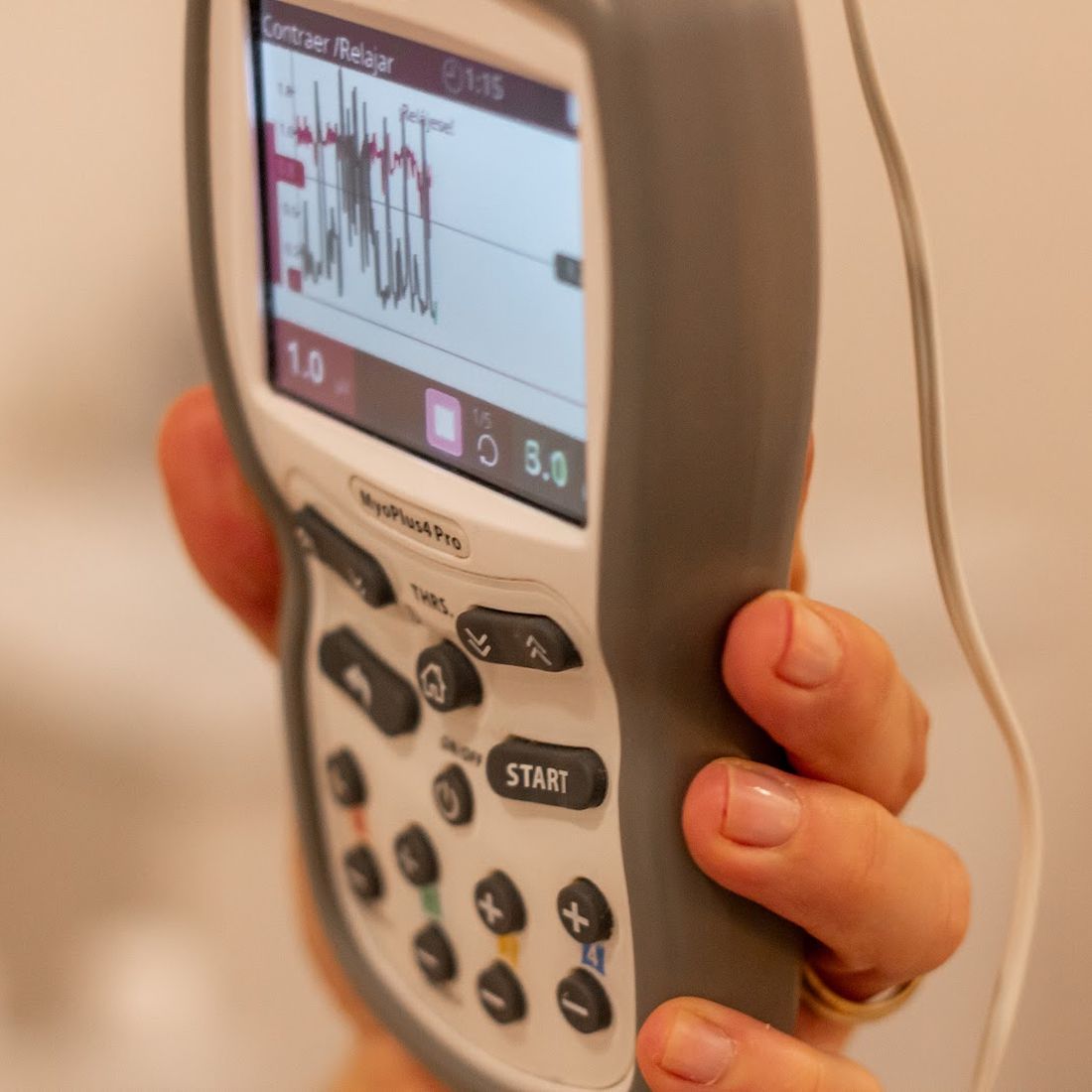
We strengthen the muscles with probes that let you see whether the contraction is correct.
It helps activate the muscles when it’s hard to contract them voluntarily. It can be vaginal or anal, and we decide with you.
We work on scars, muscle knots and mobility of the area.
They reduce pressure on the pelvic floor and improve the abdominal wall.
We review diet, routine and toilet posture so your stools are easier to control.
Article content
After a birth, at any time
Some women notice symptoms just after giving birth, and others years later, especially in menopause. It’s never too late to seek help.
If you’ve had a tear repaired that affected the sphincter, it’s a good idea to see a specialist physiotherapist, always in agreement with your medical team.


What do we work on in physiotherapy for fecal incontinence?
We start with an assessment of your pelvic floor and habits. From there we work on strength, coordination and control, with a plan designed for you.
Strength and control of the pelvic floor muscles.
Work on scars and tension.
Coordination with breathing and the abdomen.
Guidelines for everyday life.



Your journey at the clinic starts like this
STEP 1.
Initial assessment
All patients start with an initial one-to-one session.
- We analyze your case in depth.
- We carry out the necessary examination.
- We explain what is happening and why.
- We design a personalized treatment plan.
- All with no further commitment.
STEP 2.
STEP 3.
Follow-up and progress
Your process doesn’t end after one session. It evolves with you.
- We regularly reassess your progress.
- We adjust the plan when necessary.
- You can combine one-to-one and group sessions depending on your progress.


Frequently asked questions
If you’re asking yourself these questions, you’re not the only one. Here we answer them clearly.
It depends on the cause, but in many cases it can be improved. At the assessment we see how your muscles are and what we can achieve.
It’s common, but you don’t have to accept it. It can be treated with physiotherapy.
If the leakage is new, if you see blood or if there’s a change in your bowel habits, see your doctor first.
It’s a calm conversation. We ask only what’s necessary, explain every step and nothing is done without your consent.
Yes, with adaptations. At first it’s best to avoid impact and hard efforts, and we adjust things with you as we go.
It depends on each patient: your starting point, whether there is a deeper injury or condition, and how committed you are to the exercises at home. After the first session we decide on the right treatment. If you need individual follow-up, most people notice an improvement with a first pack of 5 sessions. From there, if you follow the guidelines at home, you may only need to come back for occasional check-ups. If there is a deeper injury, you may need to go beyond that first pack.