




Physiotherapy for sciatica and pelvic pain in pregnancy in Valencia
If it hurts to walk or turn over in bed, or pain runs down your leg, you don’t have to put up with it until the birth. We help you with safe techniques for each trimester.
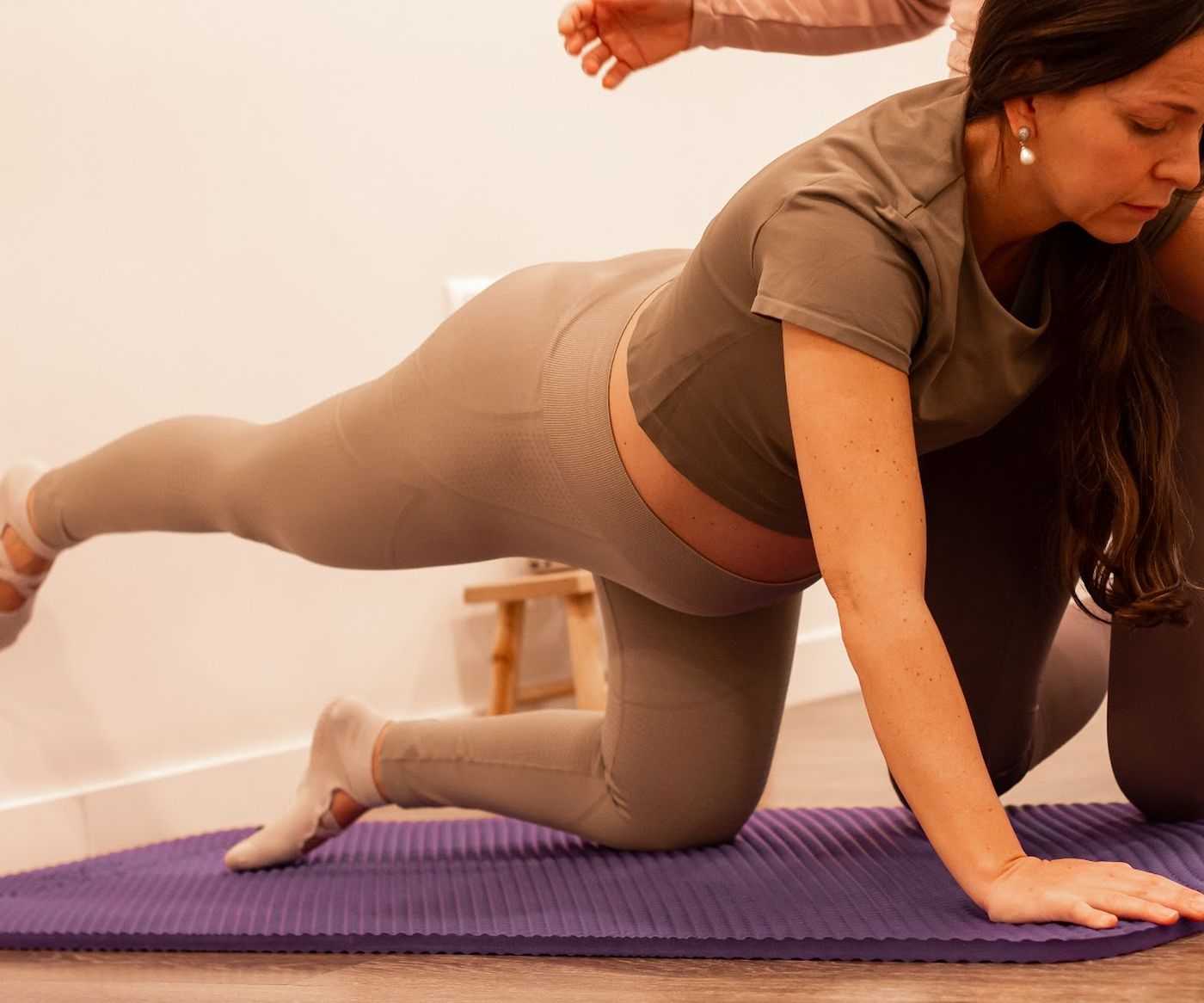



Article content
Why the pelvis hurts in pregnancy
Your body changes every week. Your center of gravity shifts forward, the curve in your lower back increases and the ligaments that support the uterus have to bear more weight. That’s why discomfort is common, especially from the second trimester.
Sciatica in pregnancy
Sciatica is compression of the sciatic nerve or the nerve roots that form it. It can appear in the second or third trimester. Its most common symptoms are:
- Intense pain in the buttock, thigh or calf, sometimes reaching the foot.
- Weakness in the legs.
- Cramps or a burning sensation.
- Severe lower back pain.
It is often confused with piriformis syndrome, which is very common in pregnancy and causes similar symptoms. That’s why it’s worth having it properly assessed.
Round ligament pain
This is a sharp pain in the lower belly that can spread to the groin. It usually appears between weeks 16 and 20, with sudden movements or quick changes of position, and lasts from a few seconds to a few minutes. It is not a risk to the baby, although it is often mistaken for a contraction.

“Your body changes every week, and the treatment changes with it”

How we treat pain in pregnancy
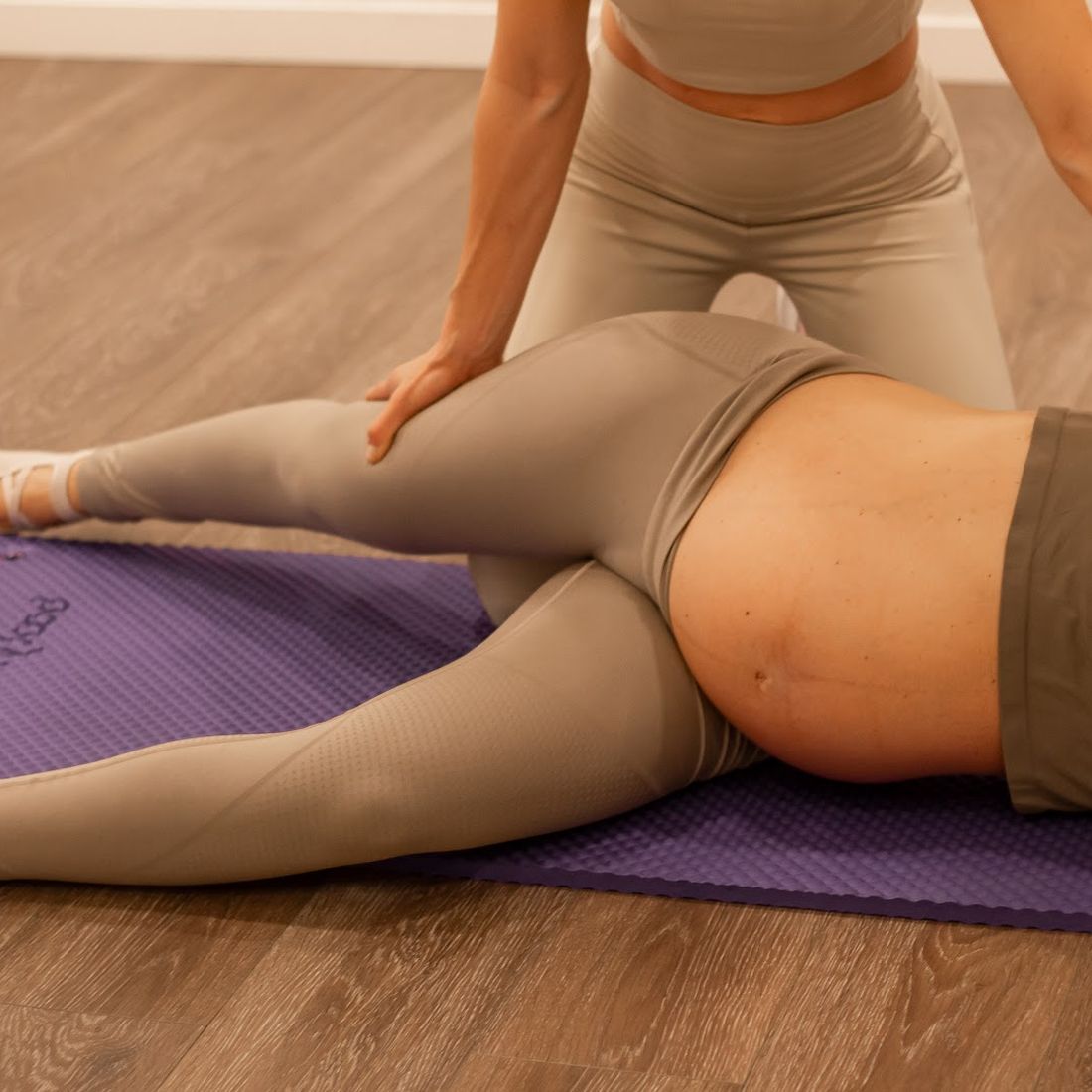
We examine your spine, pelvis and muscle tension, with tests to find out what is causing your pain.
We work on the lower back, sacrum, buttocks and legs with techniques that are safe in each trimester.
Of the back of the body, especially the quadratus lumborum, hamstrings and glutes.
When the lower back or sacrum is locked.
You learn how to move, get up and activate your postural muscles to put less load on the area.
Article content
What you can do at home
- Get up and turn slowly, without sudden movements.
- Sleep on your unaffected side with a large cushion between your legs.
- If you’re traveling, stop every two hours or less and stretch your legs.
- Shorten your walks while the pain lasts.
- Try alternating cold and hot water in the shower.
If you’ve had sciatica, herniated discs or chronic lower back pain before, it’s a good idea to look after it from the early weeks.


What do we work on in physiotherapy for pelvic pain in pregnancy?
Treatments are non-invasive and adapted to your week of pregnancy. We aim to relieve pain, improve pelvic mobility and keep you active safely.
Relief of lower back and glute tension.
Posture and everyday movements.
Mobility of the pelvis and spine.
Simple routines to do at home.



Your journey at the clinic starts like this
STEP 1.
Initial assessment
All patients start with an initial one-to-one session.
- We analyze your case in depth.
- We carry out the necessary examination.
- We explain what is happening and why.
- We design a personalized treatment plan.
- All with no further commitment.
STEP 2.
STEP 3.
Follow-up and progress
Your process doesn’t end after one session. It evolves with you.
- We regularly reassess your progress.
- We adjust the plan when necessary.
- You can combine one-to-one and group sessions depending on your progress.


Frequently asked questions
If you’re asking yourself these questions, you’re not the only one. Here we answer them clearly.
They are very similar. An assessment and a few simple tests tell them apart.
Yes, with techniques adapted to each trimester and done by professionals with specific training.
If abdominal pain is constant or intense, especially in the first trimester, if there is bleeding or contractions, or if you lose strength or sensation, seek help straight away.
Usually not. It is a brief pain caused by stretching. If it lasts a long time or worries you, get it checked.
In most cases, yes, with adaptations. With active sciatica it’s best to shorten your walks and avoid anything that increases the pain.